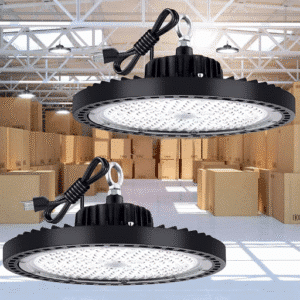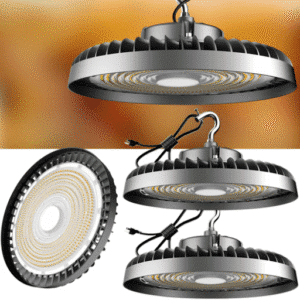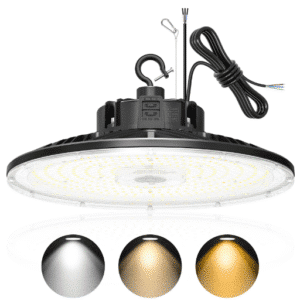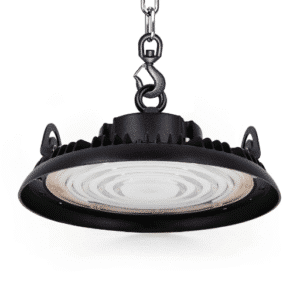

An IP65 high bay light is dust-tight and protected against low-pressure water jets from any direction, making it the minimum protection level for most industrial and warehouse environments where dust, moisture, or occasional washdown occurs. If you are specifying lighting for a factory, distribution center, or food processing facility, understanding IP ratings is not optional — it is the difference between fixtures that last 50,000 hours and fixtures that fail in 6 months.
David is a facilities manager at a distribution center in Ohio. In 2024, his team installed standard IP20 high bays throughout a new lumber storage wing to save on upfront costs. Within six months, 40% of the fixtures had failed. Fine sawdust had infiltrated the driver housings, causing overheating and premature shutdown. The “savings” from choosing unprotected fixtures cost him $18,000 in emergency replacements and lift-rental fees — not counting the downtime.
That is what happens when IP ratings are misunderstood or ignored. This guide breaks down exactly what IP ratings mean, what IP65 delivers for high bay lighting, how it compares to IP66, IP67, and IP69K, and how to select the right protection level for your facility. For the complete strategic framework on industrial lighting, see our guide to (factory lighting solutions).
Key Takeaways
- IP65 means completely dust-tight (6) plus protected against water jets from any direction (5), tested at 12.5 L/min and 30 kN/m2 pressure.
- IP20 fixtures in dusty industrial environments fail 40-60% faster than IP65-rated equivalents because dust ingress destroys drivers and optics.
- IP66 uses more than 3x the water pressure of IP65; IP67 covers temporary submersion; IP69K handles high-pressure, high-temperature washdown.
- NEMA 4 and 4X are the closest North American equivalents to IP65, with 4X adding corrosion resistance.
- Gasket degradation from thermal cycling can reduce effective IP rating after 5-7 years; inspect seals during routine maintenance.
What Is an IP Rating? The Complete Breakdown

The Two-Digit Code Explained
IP stands for Ingress Protection. The rating is a two-digit code defined by IEC 60529, the international standard that tells you exactly how well an electrical enclosure keeps foreign objects and water out.
The first digit measures protection against solids. It ranges from 0, no protection, to 6, completely dust-tight. A 6 means no dust enters the enclosure under test conditions. The second digit measures protection against liquids. It ranges from 0, no protection, to 9K, resistance to high-pressure, high-temperature washdown. A 5 means protected against low-pressure water jets from any direction.
Together, IP65 means the enclosure is dust-tight and can withstand water jets. But the code does not tell you everything. It does not cover corrosion resistance, impact protection, or operation under extreme temperatures. Those require separate ratings and material specifications.
Who Sets the Standard
The International Electrotechnical Commission (IEC) publishes and maintains the 60529 standard. Testing must be performed in certified laboratories using standardized nozzles, precise water pressures, and defined spray distances. A manufacturer cannot simply claim an IP rating. They must test the fixture, document the results, and in many cases, submit to third-party certification by organizations like UL, TUV, or SGS.
This matters because counterfeit or exaggerated IP claims exist, particularly among low-cost imports. If a price seems too good to be true for an IP65-rated high bay, the rating may not have been verified by an accredited lab.
Why IP Ratings Matter for High Bays
High bay lights mount at 15 to 50 feet. When a fixture fails, you need a lift, a technician, and downtime. The cost of replacing a single high bay often exceeds 300inlaborandequipmentalone.SpecifyingthewrongIPratingturnsa300inlaborandequipmentalone.SpecifyingthewrongIPratingturnsa150 fixture into a recurring maintenance expense.
Industrial environments expose fixtures to dust, moisture, chemical vapors, and temperature swings. A driver running at 85 degrees C inside a sealed housing performs very differently from one breathing dusty warehouse air. The IP rating is your first line of defense against the environment.
IP Rating Chart: Every Code Explained
Solids Protection (First Digit)
| First Digit | Protection Level | What It Means |
|---|---|---|
| 0 | No protection | No test performed |
| 1 | Objects > 50mm | Protected against large objects like a hand |
| 2 | Objects > 12.5mm | Protected against fingers |
| 3 | Objects > 2.5mm | Protected against tools and thick wires |
| 4 | Objects > 1mm | Protected against most wires and screws |
| 5 | Dust protected | Limited dust ingress; no harmful deposits |
| 6 | Dust tight | Complete protection; no dust enters |
For industrial high bays, the first digit should almost always be 5 or 6. A 4 might stop screws, but it will not stop the fine particulate matter found in warehouses, mills, or processing plants.
Liquids Protection (Second Digit)
| Second Digit | Protection Level | Test Conditions |
|---|---|---|
| 0 | No protection | None |
| 1 | Dripping water | Vertical dripping |
| 2 | Dripping water tilted 15 degrees | Tilted enclosure |
| 3 | Spraying water | Up to 60 degrees from vertical |
| 4 | Splashing water | From any direction |
| 5 | Water jets | 6.3mm nozzle, 12.5 L/min, 30 kN/m2 |
| 6 | Powerful water jets | 12.5mm nozzle, 100 L/min, 100 kN/m2 |
| 7 | Temporary immersion | Up to 1m depth for 30 minutes |
| 8 | Continuous immersion | Manufacturer-specified depth and duration |
| 9K | High-pressure, high-temperature washdown | 80 degrees C water, 80-100 bar pressure |
The jump from 5 to 6 is significant. IP66 testing uses the same nozzle type but at more than 3x the pressure of IP65. The jump to 7 is about submersion, not jets. And 9K is a completely different test protocol designed for automated clean-in-place systems.
Complete IP Rating Reference Table for Industrial Lighting
| IP Code | Solids Protection | Liquids Protection | Typical Industrial Use |
|---|---|---|---|
| IP20 | Finger-sized objects | None | Dry offices, retail |
| IP54 | Dust limited | Splashing water | Light manufacturing, storage |
| IP65 | Dust tight | Water jets | Warehouses, food processing splash zones |
| IP66 | Dust tight | Powerful jets | Heavy washdown areas, outdoor exposed |
| IP67 | Dust tight | Temporary immersion | Wet locations, potential flooding |
| IP68 | Dust tight | Continuous immersion | Underwater, extreme environments |
| IP69K | Dust tight | High-pressure, high-temp | Food and beverage CIP systems |
IP65 High Bay Lights: What IP65 Means Specifically

The IP65 Breakdown
An IP65 high bay light is tested to two distinct standards. The 6 means dust-tight. During testing, the fixture is placed in a dust chamber with talcum powder circulated under vacuum. No dust may enter the enclosure in quantities that could interfere with safe operation or impair functionality.
The 5 means protected against water jets. The test uses a 6.3mm nozzle delivering 12.5 liters per minute at 30 kN/m2 pressure. The nozzle is held 3 meters from the fixture and sprayed from all angles for at least 3 minutes. After the test, the fixture is opened and inspected. No water may enter in quantities that could cause harm or impair operation.
This is a rigorous test. It is not a light misting. It is a directed jet meant to simulate real-world conditions like hose-downs, roof leaks, and pressure-washer overspray.
What IP65 Does NOT Mean
IP65 is not waterproof in the sense of submersion. If your fixture will be subject to standing water, flooding, or underwater conditions, you need IP67 or IP68. Patricia, a maintenance supervisor at a beverage bottling plant in Florida, learned this the hard way. She assumed IP65 meant her fixtures could handle any water exposure. When a roof leak flooded several high bays during a summer storm, water entered through cable glands and housing seams. The fixtures were not damaged by the leak itself; they were damaged because IP65 does not test for submersion. She now specifies IP67 for any area with roof-leak risk.
IP65 also does not mean high-pressure washdown. If your sanitation crew uses 1,500 psi hot-water rigs, you need IP66 at minimum and likely IP69K. The 30 kN/m2 pressure in the IP65 test is roughly 4.3 psi. A typical pressure washer operates at 1,500 to 3,000 psi. The difference is not subtle.
Finally, IP65 does not cover chemical resistance. The IEC 60529 test uses clean water. It says nothing about how the gasket, housing, or lens will respond to chlorine, caustic soda, or industrial solvents. For chemical exposure, you need to specify compatible materials — 316 stainless steel, chemical-resistant epoxy powder coat, or polycarbonate lenses — in addition to the IP rating.
Typical Applications for IP65 High Bays
IP65 is the right specification for most general industrial environments. This includes warehouses with moderate dust levels, food processing packaging areas, general manufacturing floors with occasional cleaning, covered outdoor loading docks, and automotive service centers. It is the baseline for any facility where dust is present and water exposure is possible but not extreme.
For the specific requirements of food processing environments, see our detailed guide to (food processing plant lighting).
IP65 vs IP66 vs IP67 vs IP69K: Which Do You Need?
IP65 vs IP66
The only difference between IP65 and IP66 is the water jet pressure. Both are dust-tight. Both use the same nozzle type. But IP66 tests at 100 kN/m2 — more than 3x the 30 kN/m2 of IP65.
Upgrade from IP65 to IP66 when your facility uses pressure washers, experiences heavy rain on exposed fixtures, or has direct hose-down protocols. The cost premium is typically 10 to 20 percent. For most warehouses and manufacturing floors, IP65 is sufficient. For washdown corridors, rendering plants, and exposed outdoor mounting, IP66 is the safer choice.
IP65 vs IP67
IP67 adds temporary submersion protection. The fixture is immersed in 1 meter of water for 30 minutes. No water may enter in harmful quantities. IP65 does not test for submersion at all.
Choose IP67 when fixtures mount in areas prone to flooding, when they may be temporarily submerged during cleaning, or when installed in outdoor locations without adequate drainage. IP67 is overkill for most warehouse and factory ceilings, but essential for tunnel lighting, pump stations, and certain outdoor canopy applications.
IP65 vs IP69K
IP69K is a completely different test. It uses high-pressure water at 80 to 100 bar, delivered through a specialized nozzle at specific angles, with water temperature at 80 degrees C. This test was developed for road vehicles but has been adopted by the food and beverage industry for clean-in-place systems.
IP69K is necessary when automated sanitation rigs blast fixtures directly with high-pressure, high-temperature water. It is standard in dairy processing, meat rendering, and facilities using clean-in-place protocols. For manual washdown with a standard hose, IP66 is usually sufficient. For automated high-pressure rigs, IP69K is mandatory.
Selection Decision Framework
Ask three questions to select the right IP rating. First, what solids are present? If dust, fiber, or particulate matter is airborne, you need at least a 5 in the first digit. Second, what liquid exposure occurs? Occasional splashing or roof leaks warrant a 5. Direct pressure washing warrants a 6. Submersion risk warrants a 7. Automated high-temperature washdown warrants 9K. Third, what is the cost of failure? In a 24/7 operation where a lift rental costs $800 per day, over-specifying by one IP level is cheaper than one emergency replacement.
IP Ratings vs NEMA Ratings: The Cross-Reference

Why Two Rating Systems Exist
IP ratings come from the IEC and are used globally. NEMA ratings come from the National Electrical Manufacturers Association and are standard in North America. If you work on international projects, you will see IP. If you work with North American electrical contractors and inspectors, you will see NEMA. Many facilities use equipment with both rating systems, so understanding the cross-reference prevents specification errors.
IP to NEMA Cross-Reference Table
| IP Rating | Closest NEMA Equivalent | Key Differences |
|---|---|---|
| IP54 | NEMA 3, 3S | NEMA 3 adds ice protection; 3S adds external mechanism operation |
| IP65 | NEMA 4, 4X | NEMA 4X adds corrosion resistance; IP65 does not cover corrosion |
| IP66 | NEMA 4, 4X | IP66 water test more closely matches NEMA 4 spray test |
| IP67 | NEMA 6 | Both cover temporary submersion |
| IP68 | NEMA 6P | NEMA 6P adds prolonged submersion and corrosion resistance |
The critical difference is corrosion. NEMA 4X explicitly requires corrosion-resistant materials like stainless steel. IP65 says nothing about material compatibility with sanitizers, salt air, or industrial chemicals. If you need both water jet protection and corrosion resistance, specify NEMA 4X or add a material requirement to your IP65 specification.
When to Specify Which
Use IP ratings for projects with international specifications, European equipment, or when you need precise gradations between protection levels. Use NEMA ratings for North American projects, when working with local electrical inspectors, or when corrosion resistance is a primary concern. Many Probapro fixtures carry both IP and NEMA ratings for maximum flexibility.
Selecting IP65 High Bays for Your Application
Warehouse and Distribution
Warehouses generate dust. Concrete floors shed particulate. Forklifts stir up debris. Cardboard fibers hang in the air. IP65 is the minimum sensible rating for any warehouse high bay. IP54 may suffice in exceptionally clean distribution centers, but the cost savings are minimal and the risk of dust ingress is real.
James is a project engineer at a manufacturing plant in Michigan. He initially specified IP65 for the entire facility, including washdown corridors. After the first sanitation audit, he had to replace 18 fixtures in direct-wash zones because the IP65 rating could not handle the pressure. He now uses a zone-based approach: IP65 for general assembly, IP66 for washdown corridors, and IP69K for clean-in-place rooms. The upfront planning took an extra day. The replacement cost he avoided exceeded $12,000.
For guidance on laying out fixtures across different zones, see our factory lighting layout design methodology.
Food Processing and Beverage
IP65 is appropriate for splash zones, packaging areas, and dry storage in food plants. It is not sufficient for direct washdown corridors or areas exposed to high-pressure sanitation. In food facilities, IP ratings must be paired with NSF certification for food-zone installations. A fixture can be IP65 and still fail a USDA inspection if it is not NSF certified.
Manufacturing and Assembly
Dust-heavy environments like machining, woodworking, and textiles need the dust-tight 6 in the first digit. Chemical exposure is a separate concern. If your facility uses cutting fluids, solvents, or corrosive cleaners, specify compatible housing materials in addition to the IP rating. A powder-coated aluminum housing with an IP65 rating will still corrode if exposed to peracetic acid or high-concentration chlorine.
Outdoor and Canopy Applications
IP65 works for covered outdoor areas where direct rain is blocked but wind-blown moisture and dust occur. For fully exposed outdoor mounting, IP66 or IP67 is recommended because wind can drive rain into housings at angles and pressures that exceed the IP65 test protocol.
IP Rating Verification and Maintenance
How to Verify a Manufacturer’s IP Claim
Request the test certificate. A legitimate IP65 claim should be backed by documentation from an accredited testing laboratory. Look for third-party certification marks from UL, TUV, SGS, or Intertek. These organizations verify that the manufacturer’s testing followed IEC 60529 protocols.
Red flags include vague claims like “waterproof” or “weather-resistant” without a specific IP code, prices significantly below market rate for the claimed rating, and manufacturers who cannot produce test documentation. Counterfeit IP ratings are common in the low-cost lighting market.
IP Rating Degradation Over Time
An IP65 rating applies to the fixture as tested from the factory. It does not guarantee that rating forever. Gaskets compress and harden over time. Thermal cycling — the repeated heating and cooling of the LED housing during operation — accelerates gasket degradation. After 5 to 7 years of typical industrial use, the effective IP rating of a fixture may drop below its original certification.
This is particularly important for LED high bays because the driver generates heat. A housing that cycles between 30 degrees C at startup and 75 degrees C at steady state creates thermal stress on seals that a passive enclosure never experiences.
Maintaining IP Integrity After Installation
Use proper torque when installing or servicing fixtures. Over-tightening compresses gaskets permanently. Under-tightening leaves gaps. Always use manufacturer-specified replacement gaskets. Generic o-rings may not have the correct compression set or chemical compatibility.
After any maintenance that opens the housing, verify that seals are seated correctly and that no debris is trapped between the gasket and the mating surface. A single hair or fiber can create a leak path that nullifies the IP rating.
Common IP Rating Mistakes

Assuming IP65 Means Waterproof
This is the most common and most expensive mistake. Waterproof is not a technical term. IP65 protects against water jets. It does not protect against submersion, high-pressure spray, or prolonged water exposure. If your fixtures will be submerged, specify IP67 or IP68. If they will face pressure washers, specify IP66 or IP69K.
Ignoring the First Digit
Buyers often focus on water protection and overlook dust protection. In industrial environments, dust is frequently the bigger threat. Fine particulate matter infiltrates driver housings, coats heat sinks, and reduces thermal dissipation. A fixture with a 5 or 6 in the first digit lasts significantly longer in dusty conditions than one with a 4 or lower.
Installing IP20 Fixtures in Industrial Environments
IP20 fixtures belong in offices and retail spaces. They offer no dust protection and no water protection. Using IP20 high bays in a warehouse or factory to save 15 to 20 percent on fixture cost is a false economy. The total cost of ownership — including replacements, lift rentals, and downtime — almost always favors IP65.
Forgetting About Chemical Exposure
IP ratings test with clean water. They do not test for chlorine, caustic soda, hydraulic fluid, or cutting oil. If your environment has chemical exposure, specify both the correct IP rating and the correct housing material. For guidance on hazardous location requirements, see our guide to (explosion proof lighting for factories).
Need help selecting the right IP-rated fixtures for your facility? Probapro engineers can assess your environment and recommend the correct protection level. Get an IP rating assessment.
Frequently Asked Questions
What does IP65 mean on a light fixture?
IP65 means the fixture enclosure is completely dust-tight (6) and protected against low-pressure water jets from any direction (5). The fixture is tested with a 6.3mm nozzle delivering 12.5 liters per minute at 30 kN/m2 pressure for at least 3 minutes.
Is IP65 enough for outdoor use?
IP65 is sufficient for covered outdoor areas like loading docks and canopies where direct rain is blocked. For fully exposed outdoor mounting where wind-driven rain occurs, IP66 or IP67 is recommended because wind can force water into housings at pressures exceeding the IP65 test.
What is the difference between IP65 and IP66?
Both are dust-tight. The difference is water jet pressure. IP65 is tested at 30 kN/m2. IP66 is tested at 100 kN/m2 — more than 3x the force. Choose IP66 for pressure-wash environments, heavy rain exposure, or direct hose-down applications.
Can IP65 lights be submerged in water?
No. IP65 does not test for submersion. It tests for water jets from a nozzle held at a distance. For temporary submersion up to 1 meter, specify IP67. For continuous submersion, specify IP68.
What IP rating do I need for a food processing plant?
It depends on the zone. Dry storage can use IP54. Production and packaging areas need at least IP65. Washdown corridors need IP66 or IP69K. Always pair IP ratings with NSF certification for food-zone installations.
How do I know if a manufacturer’s IP claim is real?
Request the test certificate and verify it was issued by an accredited lab like UL, TUV, SGS, or Intertek. Check that the certificate matches the exact model number you are ordering. Be wary of prices significantly below market rate or claims that use vague language like “waterproof” without a specific IP code.
Does IP65 protect against chemicals and corrosion?
No. The IEC 60529 test uses clean water only. IP65 says nothing about how the fixture will respond to chlorine, acids, solvents, or salt air. For chemical exposure, specify compatible materials such as 316 stainless steel, chemical-resistant powder coat, or polycarbonate lenses separately from the IP rating.
What is the NEMA equivalent of IP65?
NEMA 4 is the closest North American equivalent to IP65. NEMA 4X adds corrosion resistance, which IP65 does not cover. If your project uses NEMA specifications and you need corrosion protection, specify NEMA 4X rather than NEMA 4.
Conclusion
IP ratings are not marketing labels. They are standardized, tested measurements of how well a fixture enclosure protects against the environment. An IP65 high bay light is dust-tight and water-jet resistant, making it the right baseline for most warehouses, manufacturing floors, and food processing splash zones.
The key is matching the rating to the actual conditions. IP65 is not submersible. It is not high-pressure washdown rated. And it says nothing about chemical resistance. Know what the numbers mean, verify manufacturer claims with test certificates, and inspect seals over time to maintain protection.
Specifying the right IP rating upfront prevents the kind of premature failure that turns a lighting upgrade into a maintenance headache. The few dollars saved on a lower-rated fixture rarely cover the first replacement call.
For the complete strategic framework on industrial lighting, from fixture selection to layout design, see our factory lighting solutions guide.
Ready to specify IP-rated high bays for your facility? Probapro engineers can assess your environment, recommend the correct protection level, and deliver a specification that matches your actual conditions. Request your free lighting assessment.
This guide provides general information on IP ratings and industrial lighting protection levels. Always consult a qualified electrical engineer and your local Authority Having Jurisdiction for project-specific compliance verification.