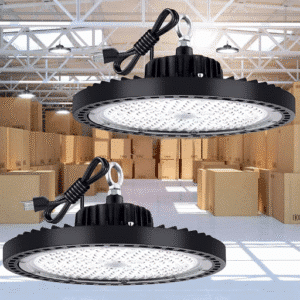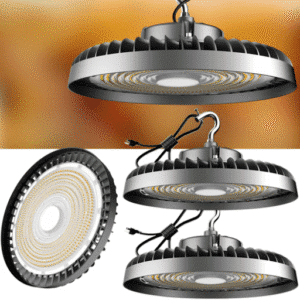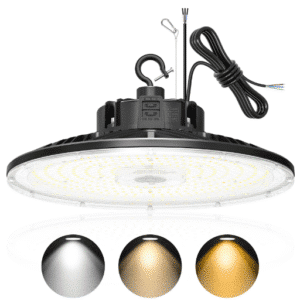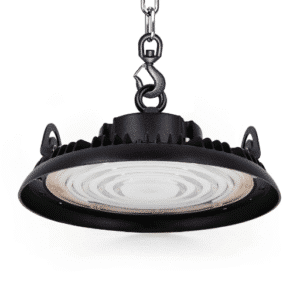

Smart factory lighting uses sensors, wireless networks, and automated controls to adjust illumination based on occupancy, daylight, and production schedules. It delivers an additional 20 to 40 percent energy savings on top of LED baseline reductions, with typical payback periods of 12 to 36 months.
Carlos is a facilities manager at a distribution center in Ohio. In 2024, his facility completed an LED retrofit, replacing 200 metal halide high bays with efficient LED fixtures. The energy bill dropped 65 percent. But Carlos noticed something: the shipping dock was fully lit at 2 a.m. when only two forklift operators were working. The break room stayed bright all weekend even though the plant was closed. He had solved the fixture problem, but not the control problem.
That is where smart factory lighting comes in. It is not about buying new fixtures. It is about adding intelligence to the fixtures you already have, or specifying smart-ready fixtures for your next project. This guide covers every control type, every major protocol, the real energy savings, and a step-by-step implementation plan that works in real factories.
For the broader strategic framework on factory lighting design, see our complete guide to (factory lighting solutions).
Key Takeaways
- Smart factory lighting adds sensors, wireless connectivity, and automation to LED fixtures for an extra 20 to 40 percent energy savings beyond LED baseline.
- Motion sensors save 30 to 50 percent in intermittent-use areas; daylight harvesting saves 20 to 40 percent in perimeter zones; scheduling eliminates after-hours waste.
- Bluetooth Mesh is the most retrofit-friendly wireless protocol; DALI offers the most granular control but requires dedicated wiring; 0-10V is the simplest and cheapest.
- Incremental cost for smart controls is 30to30to80 per fixture, with payback typically in 12 to 36 months.
- Start with a pilot zone, measure baseline and post-installation savings, then scale across the facility.
What Is Smart Factory Lighting?

Beyond Basic LED
Standard LED fixtures deliver fixed light output. You flip a switch, they turn on. You flip it again, they turn off. Smart factory lighting adds four capabilities: sensing, connectivity, control, and analytics.
Sensing means the fixture knows what is happening around it. A motion sensor detects whether anyone is in the aisle. A daylight sensor measures how much natural light is coming through the skylight. Connectivity means the fixtures talk to each other and to a central controller, either through wires or wireless mesh networks. Control means the system can dim, brighten, or switch fixtures automatically. Analytics means you can see energy consumption, occupancy patterns, and maintenance status on a dashboard.
How It Differs from Standard LED
The difference is automation versus manual operation. A standard LED high bay runs at full output whenever the circuit is energized. A smart LED high bay runs at the minimum output needed for the current conditions. If the aisle is empty, it dims to 20 percent. If the sun is pouring through the window, it dims to compensate. If the shift ends, it turns off. The result is measurable: according to the U.S. Department of Energy, LED combined with smart controls can achieve 60 to 85 percent total energy reduction compared to legacy HID systems.
For the baseline comparison between LED and traditional lighting, see our analysis of (LED vs metal halide retrofit savings).
Types of Smart Lighting Controls for Factories
Occupancy and Motion Sensors
Occupancy sensors are the most common smart control in factories. They detect presence and either switch fixtures on or dim them when the space is vacant. There are three sensor technologies to know.
Passive infrared, or PIR, detects body heat. It is inexpensive and reliable for most factory applications, but it requires a direct line of sight. Ultrasonic sensors emit high-frequency sound waves and detect changes in the reflected pattern. They work around corners and through partitions, which makes them useful in areas with obstructions. Microwave sensors use radar-like signals and are the most sensitive, but they can detect motion through walls, which may cause false triggers in tightly packed facilities.
Motion sensors deliver the biggest savings in areas with intermittent use: shipping docks, storage aisles, break rooms, and restrooms. According to Lawrence Berkeley National Laboratory, occupancy sensors reduce lighting energy by 30 to 50 percent in low-occupancy areas.
Daylight Harvesting
Daylight harvesting uses photosensors to measure ambient natural light and automatically dim electric fixtures to maintain a constant total illuminance. Near skylights, windows, or translucent wall panels, this can reduce electric lighting load by 20 to 40 percent during daytime hours.
The key is proper sensor placement. The photosensor must face the same direction as the daylight source, not toward the fixtures it controls. The dimming curve must be calibrated so workers do not notice abrupt changes. Done right, daylight harvesting is invisible to occupants but visible on the energy bill.
Dimming and Scheduling
Time-based scheduling dims or switches off lighting during known low-activity periods. A three-shift factory might run production areas at 100 percent during first and second shift, then dim to 30 percent during third shift when only maintenance crews are present. Non-production areas like offices and warehouses can shut down completely after hours.
Task tuning adjusts light levels to the actual needs of each zone. Assembly lines might need 500 lux, while storage aisles only need 200 lux. Smart controls let you set different maximum output levels by zone, eliminating over-lighting.
Zone and Scene Control
Zone control groups fixtures logically: all lights in Building A, all lights in the shipping department, all lights on Line 3. Scene control creates pre-set configurations: “Production Mode” at full output, “Cleaning Mode” at 70 percent with all zones on, “Emergency Mode” at 100 percent regardless of schedule. These controls are managed through a central dashboard or mobile app.
Carlos eventually installed occupancy sensors on his 200 fixtures, using Bluetooth Mesh controllers. The shipping dock now dims to 20 percent after 10 minutes of no motion. The break room shuts off entirely on weekends. The annual energy savings from controls alone were $14,000 on top of the LED retrofit savings.
Want to see how motion sensors and zone controls work in your facility? Probapro offers smart-compatible LED high bays with integrated control options. Explore smart lighting solutions.
Smart Lighting Control Protocols: A Factory Comparison
Choosing a control protocol is like choosing a communication language for your lighting system. The four main options in industrial settings are 0-10V analog dimming, DALI, Bluetooth Mesh, and Zigbee. Each has strengths, weaknesses, and ideal use cases.
0-10V Analog Dimming
0-10V is the simplest and oldest dimming standard. A low-voltage control pair carries a DC voltage signal between 0 and 10 volts. At 10 volts, the fixture runs at full output. At 0 volts, it is off or at minimum output. At 5 volts, it is at roughly 50 percent.
The advantage is cost and compatibility. Nearly every LED driver supports 0-10V. The wiring is simple: just a two-conductor low-voltage pair. The disadvantage is that it is one-way communication. The controller tells the fixture what to do, but the fixture cannot report back its status, energy use, or faults. It also cannot support individual fixture addressing without additional wiring. 0-10V is best for basic dimming in budget-constrained retrofits.
DALI (Digital Addressable Lighting Interface)

DALI is a two-way digital protocol designed specifically for lighting control. Each fixture has a unique address on the DALI bus. The controller can command individual fixtures or groups, and the fixtures can report status, energy consumption, and fault conditions back to the controller.
DALI-2, the current standard, supports up to 64 fixtures per bus line, with up to 128 lines per controller. That is over 8,000 individually addressable fixtures. The downside is infrastructure. DALI requires a dedicated two-wire bus run to every fixture. In new construction, this is straightforward. In existing facilities, it can be expensive. DALI is best for new builds or major renovations where detailed individual control is required.
Bluetooth Mesh
Bluetooth Mesh is a wireless protocol built on Bluetooth Low Energy. Unlike standard Bluetooth, which is point-to-point, Mesh creates a network where every fixture acts as a relay. Messages hop from fixture to fixture across the facility, creating a self-healing network that does not depend on a single gateway.
A single Bluetooth Mesh network can support up to 32,000 nodes. No additional wiring is needed beyond the power supply. Fixtures can be added, moved, or reconfigured without pulling new cable. This makes it the most retrofit-friendly option for existing factories. The Bluetooth Special Interest Group manages the standard, and most major lighting manufacturers now support it.
Zigbee
Zigbee is another wireless mesh protocol that has been used in building automation for years. It operates on the 2.4 GHz band and requires a gateway or coordinator to manage the network. Zigbee has a mature ecosystem of sensors, switches, and controllers, and it integrates well with broader building automation systems.
The disadvantage in industrial settings is potential interference. Factory WiFi, cordless phones, and microwave equipment also use the 2.4 GHz band. In facilities with heavy wireless traffic, Zigbee networks can experience latency or dropped messages. Zigbee is best when integrating lighting controls into an existing building automation platform.
Protocol Comparison
| Protocol | Wiring | Two-Way Communication | Fixture-Level Control | Retrofit Friendly | Typical Cost per Fixture |
|---|---|---|---|---|---|
| 0-10V | Low-voltage pair | No | No | Yes | 10−10−20 |
| DALI | Dedicated bus | Yes | Yes | Difficult | 40−40−80 |
| Bluetooth Mesh | Wireless | Yes | Yes | Excellent | 30−30−60 |
| Zigbee | Wireless | Yes | Yes | Good | 30−30−60 |
For guidance on selecting fixtures that are compatible with smart controls, see our (high bay lighting for factory guide).
Energy Savings and ROI of Smart Factory Lighting
Beyond Basic LED Savings
An LED retrofit alone cuts factory lighting energy by 50 to 75 percent compared to metal halide. Smart controls add another 20 to 40 percent on top of that LED baseline. The combined effect is a 60 to 85 percent total reduction versus legacy HID. For deeper case studies and demand-charge analysis, see our (factory lighting energy savings guide).
Here is how the savings break down by control type:
- Motion sensors: 30 to 50 percent reduction in shipping, storage, break rooms, and restrooms
- Daylight harvesting: 20 to 40 percent reduction in perimeter zones with natural light
- Scheduling: 15 to 25 percent reduction from eliminating after-hours and off-shift waste
- Task tuning: 10 to 20 percent reduction from eliminating over-lighting in low-task areas
These numbers are not additive in a simple way. A zone with motion sensors and daylight harvesting might see a 45 percent reduction, not 70 percent, because the savings overlap.
ROI Calculation Framework
The incremental cost for smart controls ranges from 30 to 30 to 80 per fixture, depending on the protocol and sensor types. For a 100-fixture factory at 50 per fixture, the control upgrade costs 50 per fixture, the control upgrade costs 5,000.
If those 100 fixtures previously consumed 15,000 kWh annually at 0.12 per kWh, the baseline LED energycost is 0.12 per kWh, the baseline LED energy cost is 1,800. A 35 percent additional reduction from smart controls saves 5,250 kWh, or $630 per year. The simple payback is 7.9 years. But that is a conservative scenario.
In a more realistic factory with 6,000 operating hours, 200 fixtures, and mixed control types, the annual savings from controls alone might be 3,000to3,000to6,000. The payback drops to 12 to 36 months. In high-rate regions like California at $0.20 per kWh, payback can be under 12 months.
Total Cost of Ownership
Over 10 years, smart controls deliver savings far beyond their incremental cost. They also extend LED driver lifespan by reducing thermal stress through dimming. And they provide data: you can see which zones are over-lit, which sensors are miscalibrated, and where occupancy patterns have changed.
Rachel is a plant engineer at a food processing facility in California. Her perimeter production lines had glare complaints from morning sun. She installed photosensors with 0-10V dimming on 40 fixtures along the north wall. The system dims the electric lights as sunlight increases, maintaining constant 400 lux at the work surface. Complaints stopped. Energy use in those zones dropped 28 percent. The project cost $2,800 and paid back in 14 months.
For layout and spacing considerations when planning sensor placement, see our (factory lighting layout design methodology).
Integration with Factory Systems

Building Management Systems
Smart lighting does not have to operate in isolation. Most modern control platforms support BACnet or Modbus, the standard protocols for building management systems. This lets you monitor lighting energy alongside HVAC, compressed air, and process equipment from a single dashboard. Facilities teams gain visibility into true lighting costs without logging into a separate lighting app.
Manufacturing Execution Systems
Advanced integrations tie lighting to production schedules. When the MES signals that Line 3 is starting its shift, the lighting controller brings that zone to full output. When the MES reports a line shutdown for maintenance, the lights dim to task-appropriate levels. Some facilities even use lighting color or intensity as visual indicators: amber means changeover in progress, full white means production active.
Safety and Emergency Systems
Every smart lighting system must respect life safety codes. Fire alarm panels can send a signal to the lighting controller that overrides all schedules and dimming commands, bringing every fixture to full output for egress. Emergency lighting circuits remain hardwired independently and are not controlled by the smart system, ensuring they function even if the network fails.
Cybersecurity Considerations
Wireless lighting networks in factories raise legitimate security concerns. Best practices include: segmenting the lighting network on its own VLAN, separate from production WiFi and corporate networks; requiring authenticated access to the lighting management app; and maintaining a firmware update schedule to patch vulnerabilities. Bluetooth Mesh and Zigbee both use AES-128 encryption, which is adequate for lighting control but should still be part of a layered security strategy.
For the compliance baseline that applies to all factory lighting, including automated systems, see our guide to (OSHA factory lighting requirements).
Smart Factory Lighting Implementation: Step-by-Step
Phase 1: Assessment and Zone Mapping
Walk the facility and identify high-opportunity zones. Shipping docks, warehousing aisles, break rooms, and perimeter production lines are typically the best candidates. Audit current energy use and occupancy patterns. A simple log of who is in each zone and when will reveal where controls will have the most impact.
Phase 2: Protocol Selection
Match the protocol to your facility profile. Existing LED fixtures with 0-10V drivers? Add wireless controllers and sensors on Bluetooth Mesh. New construction with detailed control requirements? Design in DALI from the start. Already have a building automation system using Zigbee? Extend it to lighting.
Phase 3: Pilot Installation
Start with one zone. A single shipping dock or one production aisle is enough to validate the concept. Install sensors, configure the network, and run for 30 days. Measure energy consumption before and after. Document any issues with false triggers, network coverage, or user complaints.
Phase 4: Full Deployment
Roll out by zone, not by building. This lets you apply lessons from the pilot to each subsequent area. Commission every sensor: verify motion detection range, adjust timeout settings, and calibrate daylight sensor setpoints. A motion sensor set to 30 seconds will annoy workers. A sensor set to 30 minutes will miss savings. The right timeout is usually 10 to 15 minutes for factory environments.
Phase 5: Optimization
After 90 days of operation, review the data. Which zones are saving more than expected? Which sensors are triggering too often or not often enough? Adjust dimming curves and schedules based on actual occupancy patterns. Train maintenance staff on how to replace sensors, reset controllers, and update firmware. A smart system that nobody understands becomes a dumb system with extra parts.
James is an operations director at an automotive plant in Michigan. His facility runs three shifts, but third shift only operates two of the six production lines. He installed zone-based scheduling with Bluetooth Mesh controls. At 11 p.m., the unstaffed lines dim to 20 percent. At 6 a.m., they return to full output. The controls alone saved $18,000 annually in energy costs. His maintenance team checks the dashboard every Monday morning and has not touched a light switch in eight months.
Common Smart Factory Lighting Mistakes to Avoid

Over-specifying sensors in constantly occupied areas. Motion sensors in a continuously staffed assembly line add cost and complexity with minimal savings. Put sensors where occupancy is intermittent.
Ignoring network coverage. Wireless signals can be blocked by metal racking, machinery, and thick walls. Conduct a site survey before committing to a wireless protocol. In some factories, a hybrid approach with wired zones and wireless extensions works better.
Setting motion sensor timeouts too short. A timeout of 2 minutes sounds efficient, but it creates nuisance shutoffs that train workers to wave at sensors or leave lights on manually. Start with 10 to 15 minutes and adjust based on observed behavior.
Failing to train maintenance staff. When a sensor fails or a controller loses its pairing, someone needs to know how to fix it. Document the network map, keep spare sensors on hand, and train at least two people on the management app.
Not planning for firmware updates. Wireless controllers and smart drivers receive firmware updates that fix bugs and add features. Without an update policy, your system will eventually fall behind, and security vulnerabilities may go unpatched.
Frequently Asked Questions
What is the payback period for smart lighting controls?
Payback typically ranges from 12 to 36 months, depending on operating hours, electricity rates, and the mix of control types. Facilities in high-rate regions with significant intermittent-use zones often see payback under 18 months.
Can smart controls be added to existing LED fixtures?
Yes, in most cases. If your existing fixtures have 0-10V dimmable drivers, you can add wireless controllers and sensors without replacing the fixtures. Bluetooth Mesh retrofit modules are designed specifically for this purpose. Fixtures without dimming drivers may require driver replacement or full fixture swap.
Do wireless lighting controls interfere with factory WiFi?
Bluetooth Mesh and Zigbee operate on the 2.4 GHz band, which is shared with WiFi. In practice, interference is rare because lighting control traffic is low-bandwidth and intermittent. For critical facilities, consider operating WiFi on the 5 GHz band and reserving 2.4 GHz for IoT devices, or use DALI for lighting and keep wireless for non-critical sensors.
What happens if the control network fails?
Fixtures are programmed with default behaviors that persist even if the network is down. Most systems default to full output when communication is lost, ensuring safety. Emergency lighting circuits are never controlled by smart networks and remain fully operational.
How much does smart factory lighting cost per fixture?
The incremental cost for smart controls is 30 to 30 to 80 per fixture, depending on protocol and sensor types. A basic 0-10V daylight sensor might add 15. A Bluetooth Mesh controller with integrated motion sensors might add 15. A Bluetooth Mesh controller with integrated motion sensor might add 50. Full DALI infrastructure in new construction might add 60to60to80 per fixture.
Conclusion
Smart factory lighting is the next logical step after LED retrofit. The fixtures are already efficient. The controls make them intelligent. Motion sensors eliminate waste in empty spaces. Daylight harvesting leverages free natural light. Scheduling aligns energy use with production rhythms. And zone control gives facilities managers visibility they have never had before.
The technology is not experimental. Bluetooth Mesh, DALI, and 0-10V dimming are proven standards with mature product ecosystems. The savings are measurable and predictable. The implementation is straightforward if you start with a pilot, choose the right protocol for your facility, and train your team to maintain the system.
The factories that will lead the next decade in operational efficiency are not just upgrading to LED. They are making those LEDs think. Start with your highest-opportunity zone. Run a 30-day pilot. Measure the results. Then scale.
For the complete strategic framework on factory lighting, from retrofit to smart controls, see our (factory lighting solutions) guide.
Ready to add smart controls to your factory lighting? Probapro engineers can assess your facility, recommend the right protocol and sensor strategy, and deliver a phased implementation plan. Request your free smart lighting assessment.