
Explosion-proof lighting for factories is enclosed in housings that contain internal explosions and prevent igniting surrounding flammable gases or dust. NEC classifies hazardous factory locations as Class I (gases), Class II (dusts), or Class III (fibers). Division 1 means ignitable concentrations exist normally; Division 2 means they exist only under abnormal conditions. ATEX uses Zones 0, 1, and 2 instead of Divisions.
Tom is a project engineer at a chemical plant in Texas. He received a specification for new lighting in the solvent recovery building. The spec said “Class I, Division 1, Group C, T3.” He called three suppliers. Supplier A quoted Ex d flameproof fixtures. Supplier B quoted Ex e increased safety units. Supplier C recommended purged enclosures. Each supplier claimed theirs was the right choice. Tom needed a decision tree, not a sales pitch.
That is the reality of explosion proof lighting. The codes are precise. One wrong classification and you are ordering fixtures that will not pass inspection, or worse, fixtures that will not protect your people. This guide gives you the complete factory-focused framework: how to classify your hazardous areas, which protection method matches each classification, how to specify fixtures that satisfy both NEC and ATEX, and how to maintain them without shutting down production.
For the broader strategic framework on factory lighting design, see our complete guide to factory lighting solutions.
Key Takeaways
- Explosion-proof lighting contains internal explosions to prevent igniting surrounding hazardous atmospheres; the correct classification is everything.
- NEC uses Classes (I/II/III), Divisions (1/2), and Groups (A-G); ATEX uses Zones (0/1/2 and 20/21/22) and Equipment Protection Levels (Ga/Gb/Gc).
- Ex d (flameproof) is the standard for high-wattage fixtures in Division 1/Zone 1; Ex e (increased safety) works for junction boxes and low-power fixtures.
- LED explosion-proof fixtures run 30 to 50 percent cooler than HID, last 50,000 to 100,000 hours, and eliminate most hazardous-zone maintenance entries.
- Conduit sealing is mandatory in Division 1. A missed boundary seal can propagate flame through the entire conduit system.
What Is Explosion Proof Lighting and Why Factories Need It

The Physics of Ignition in Industrial Environments
Three ingredients create an explosion: fuel, oxygen, and an ignition source. In a factory, the fuel might be solvent vapors from a paint line, dust from a grain elevator, or hydrogen from an electrolysis cell. Oxygen is everywhere. The ignition source is what you control.
Lighting fixtures can ignite hazardous atmospheres through hot surfaces, arcing inside the housing, or sparking from a failed ballast.
An unprotected LED driver in a solvent area can reach 90C. If the solvent’s auto-ignition temperature is 200C, you have a safety margin. But a failed HID ballast can reach 300C. The margin disappears. Explosion-proof lighting is designed to eliminate that risk.
Regulatory Scope: Where Explosion Proof Lighting Is Required
Any factory area where flammable gases, vapors, dusts, or fibers are present in ignitable concentrations requires hazardous location lighting. Common factory applications include solvent handling rooms, paint booths, chemical mixing stations, gas compressor enclosures, grain processing areas, dust collection systems, and pharmaceutical powder handling suites.
For the general factory compliance framework that underpins hazardous location requirements, see our guide to OSHA factory lighting compliance requirements.
Hazardous Location Classification Systems (NEC vs ATEX vs IECEx)
The NEC Class/Division System (North America)
The National Electrical Code (NEC), Article 500, is the standard for North American hazardous location classification. It organizes hazards into three classes.
| Class | Hazard Type | Common Factory Examples |
|---|---|---|
| Class I | Flammable gases and vapors | Solvent recovery, paint mixing, natural gas compression |
| Class II | Combustible dusts | Grain milling, metal grinding, powder coating |
| Class III | Ignitable fibers and flyings | Textile mills, cotton gins, woodworking |
Within each class, Division defines how often the hazard is present. Division 1 means ignitable concentrations exist under normal operating conditions. Division 2 means they exist only under abnormal conditions, such as equipment failure or spillage.
Groups further classify the hazard by material. For Class I gases: Group A (acetylene), Group B (hydrogen), Group C (ethylene), Group D (propane). For Class II dusts: Group E (metal), Group F (coal/carbon), Group G (grain/flour/starch).
The ATEX/IECEx Zone System (Europe/International)
ATEX Directive 2014/34/EU and the IECEx scheme use a zone system instead of divisions. Zones describe the probability of a hazardous atmosphere being present.
| Zone | Definition | Approximate NEC Equivalent |
|---|---|---|
| Zone 0 | Hazard present continuously or for long periods | (Stricter than Division 1) |
| Zone 1 | Hazard likely during normal operation | Division 1 |
| Zone 2 | Hazard not likely, and if present, only briefly | Division 2 |
| Zone 20 | Combustible dust cloud present continuously | (Stricter than Division 1) |
| Zone 21 | Dust cloud likely during normal operation | Division 1 |
| Zone 22 | Dust cloud not likely, brief presence only | Division 2 |
Equipment Protection Levels (EPL) match the zone. Ga for Zone 0, Gb for Zone 1, Gc for Zone 2. A fixture rated Gb is acceptable for Zone 1 but not Zone 0.
NEC Division vs ATEX Zone: Side-by-Side Comparison
| Hazard Likelihood | NEC (North America) | ATEX/IECEx (International) | Equipment Protection Level |
|---|---|---|---|
| Normal operations | Division 1 | Zone 1 | Gb |
| Abnormal conditions only | Division 2 | Zone 2 | Gc |
| Continuous presence | (No direct equivalent) | Zone 0 | Ga |
Multinational factories and suppliers need to understand both systems. A European parent company may specify ATEX Zone 1 while the U.S. facility operates under NEC Division 1. The fixture requirements are similar but the certification marks differ.
How to Classify Your Factory’s Hazardous Areas
Step 1: Identify the Hazard Type
Walk the facility and identify what is actually present. Is it a gas or vapor? That is Class I. Is it combustible dust? That is Class II. Are there ignitable fibers? That is Class III. Many factories have multiple classes in different buildings or zones. Do not assume the entire plant is Class I just because one room handles solvents.
Step 2: Determine the Likelihood of Presence
Division or Zone depends on operating conditions, not worst-case scenarios. A solvent tank vent that releases vapors during normal filling operations is Division 1. A storage room where a drum might leak is Division 2. A catastrophic tank rupture is not a classification factor, because no lighting system is designed for that level of hazard.
Step 3: Identify the Gas or Dust Group

The group determines the minimum ignition energy and the required fixture construction. Use this table for common factory materials.
| Material | NEC Group | Auto-Ignition Temperature | Typical T-Code |
|---|---|---|---|
| Acetylene | A | 305C | T2 |
| Hydrogen | B | 400C | T1 |
| Ethylene | C | 450C | T1 |
| Propane | D | 450C | T1 |
| Metal dust | E | Varies | T3-T1 |
| Coal dust | F | 180C | T3 |
| Grain dust | G | 230C | T3 |
Step 4: Determine the Temperature Class (T-Code)
The temperature class, or T-code, is the maximum surface temperature the fixture can reach under fault conditions. It must be below the auto-ignition temperature of the hazard. T1 is 450C. T6 is 85C.
| T-Code | Maximum Surface Temperature | Common Applications |
|---|---|---|
| T1 | 450C | Most hydrocarbon gases |
| T2 | 300C | Acetylene, some solvents |
| T3 | 200C | Propylene, diesel fuel vapors |
| T4 | 135C | Diethyl ether, ethyl acetate |
| T5 | 100C | Rare; specialized chemicals |
| T6 | 85C | Carbon disulfide, some refrigerants |
You can always select a lower T-code than required. A T3 fixture is acceptable in a T1 environment. But a T1 fixture in a T3 environment is a violation.
Real Factory Classification Examples
- Paint mixing room: Class I, Division 1, Group D, T3 (solvent vapors present during normal mixing)
- Solvent storage: Class I, Division 2, Group D, T3 (vapors only if a container leaks)
- Grain processing: Class II, Division 1, Group G, T3 (dust clouds during milling)
- Dust collector: Class II, Division 2, Group F, T3 (dust only if the collector fails)
Chen is a safety director at a pharmaceutical plant in New Jersey. His facility has solvent areas (Class I) and powder handling suites (Class II). His European parent company required ATEX compliance. He had to create a unified specification that worked for both NEC and ATEX auditors. By mapping each zone to both systems and selecting dual-certified (UL and ATEX) fixtures, he passed both inspections on the first visit.
Explosion Proof Fixture Types and Protection Methods
Explosion-Proof (Flameproof) Enclosures – Ex d
Ex d housings are built to withstand an internal explosion without rupturing. If an arc ignites gas inside the fixture, the flame is cooled as it escapes through precision-machined flame paths. The escaping gases are too cool to ignite the surrounding atmosphere.
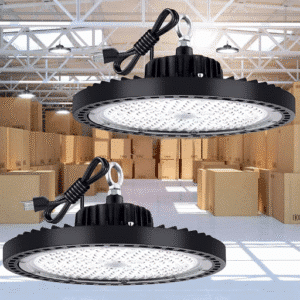
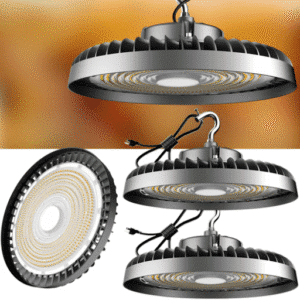
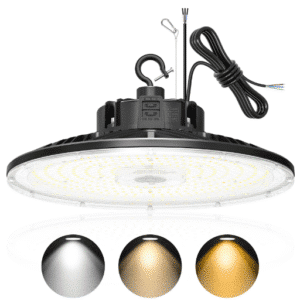
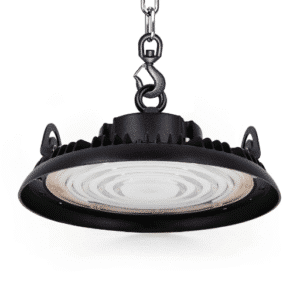
Ex d is the standard for high-wattage fixtures in Division 1 and Zone 1. Most explosion-proof LED high bays, linear fixtures, and wall packs use this protection method.
The housings are heavy cast aluminum with thick walls and threaded joints.
Increased Safety – Ex e
Ex e construction prevents arcs, sparks, and hot surfaces through enhanced design. Terminals are separated. Creepage and clearance distances are increased. Temperature rise is strictly limited. Ex e does not contain an explosion; it prevents one from starting.
Ex e is ideal for junction boxes, terminal enclosures, and low-power fixtures where internal arcing is unlikely. It is not suitable for high-wattage fixtures with drivers that could fail thermally.
Intrinsic Safety – Ex i
Ex i limits the electrical energy available to a circuit to a level below what is needed to ignite the hazardous atmosphere. Even a short circuit cannot release enough energy to spark. Ex i is used for sensors, controls, and low-voltage lighting circuits, not for primary illumination.
Purged and Pressurized – Ex p
Ex p maintains a positive pressure inside the enclosure with clean air or inert gas. The hazardous atmosphere cannot enter. If pressure drops, power is automatically cut. Ex p is used for large enclosures, analyzer shelters, and control rooms located inside hazardous areas.
Factory Fixture Selection Matrix
| Classification | Protection Method | Typical Fixture Type |
|---|---|---|
| Division 1 / Zone 1 | Ex d (flameproof) | LED high bay, linear, wall pack |
| Division 1 / Zone 1 | Ex p (purged) | Large control panels, shelters |
| Division 2 / Zone 2 | Ex d or Ex e | LED high bay, linear, flood |
| Division 2 / Zone 2 | Ex e | Junction boxes, terminals |
| Sensors/controls | Ex i | Low-voltage circuits only |
Tom, the Texas project engineer, finally understood why his suppliers disagreed. For high-wattage high bay fixtures in a Class I, Division 1 solvent area, Ex d was the only practical choice. Ex e would not handle the thermal load. Ex p would require continuous air supply infrastructure that the building did not have. Ex d fixtures went on the purchase order.
Specifying Explosion Proof LED Fixtures for Factory Applications

Why LED Dominates Hazardous Location Retrofits
Metal halide and high-pressure sodium fixtures in hazardous locations require annual relamping. Each relamp means a hot work permit, gas testing, confined space entry, and production downtime. LED fixtures rated for 50,000 to 100,000 hours eliminate most of those entries.
LEDs also run 30 to 50 percent cooler surface temperatures than equivalent HID. That improves your safety margin against the T-code limit. And they start instantly. No hot restrike delay after a power blip.
Key Specifications to Require
Require these numbers on every specification sheet: lumens per watt (target 130+), color rendering index (80+ for general, 90+ for inspection), color temperature (4000K to 5000K for most factories), operating temperature range (-40C to 50C minimum), and L70 rating (50,000 hours minimum).
Delivered lumens matter more than nominal lumens. A fixture rated at 20,000 lumens but only 120 lm/W is less efficient than one delivering 18,000 lumens at 150 lm/W.
Ingress and Impact Ratings for Factory Conditions
IP65 is the minimum for dust-tight and water-jet protection. IP66 is required in washdown areas. Class II dust areas need IP6X (dust-tight). IK08 withstands 5-joule impact. IK10 withstands 20 joules and is recommended near compressors, pumps, and crane zones where vibration and impact are constant.
Mounting and Mechanical Considerations
Pendant mounting is standard for high bays. Ceiling mount works for low-clearance areas. Wall mount illuminates vertical surfaces. Stanchion mount is used for outdoor tank farms and loading racks. Verify the conduit entry type: threaded NPT is most common in North America; cable glands are preferred in ATEX installations.
Certifications to Verify
Every fixture must carry the correct certification for your jurisdiction. UL 844 for North America. ATEX 2014/34/EU for Europe. IECEx for international markets. FM Global approval for insurance compliance. A UL-listed fixture is not ATEX-certified. An ATEX fixture is not NEC-compliant. Verify the marks match your project’s requirements.
Installation Requirements and Common Mistakes
Conduit Sealing and Boundary Requirements
Conduit sealing is the most commonly overlooked requirement in hazardous location installations. If gas enters the conduit and ignites inside the fixture, the flame can travel through the conduit to every other fixture on the same circuit. NEC 501.15 requires seals within 18 inches of enclosures in Division 1. Boundary seals are required where conduit crosses from Division 1 to Division 2, and from Division 2 to non-hazardous.
Seals must be rated for the specific gas group and must be installed after the conductors are pulled. Pre-filled seals are available for faster installation. Never use standard conduit fittings in place of listed sealing fittings.
Factory-Specific Installation Challenges
Crane bay mounting introduces vibration that can loosen conduit and crack seals. Use flexible conduit with vibration-resistant fittings near crane runways. Washdown areas in food and pharma facilities require IP66 or IP69K fixtures with gasketed conduit entries. Outdoor hazardous areas need UV-resistant housings and drainage weeps to prevent condensation buildup.
For layout and spacing guidance in production areas, see our (factory lighting layout design methodology).
Integration with Non-Hazardous Factory Lighting
Most factories have both hazardous and non-hazardous zones. The lighting system should transition cleanly between them. Boundary seals prevent flame propagation. Unified control systems can dim or switch both zone types from a single panel, provided the control wiring is properly segregated. Zone-based switching lets operators turn off non-hazardous lighting during off-shifts while maintaining hazardous zone illumination for safety.
Common Installation Mistakes
- Using non-sealed conduit in Division 1.
- Installing Division 2 fixtures in a Division 1 area to save money.
- Specifying a T1 fixture in a T3 environment.
- Inadequate grounding and bonding across explosion-proof enclosures.
- Missing maintenance disconnects within sight of fixtures.
Maintenance and Replacement in Hazardous Zones
Why Maintenance Is the Hidden Cost
Lisa runs maintenance at a grain processing facility in Ohio. Her Class II, Division 1 dust zones had 40 HID fixtures that needed relamping every 10,000 hours. Each entry required a hot work permit, gas testing, confined space certification, scaffolding, and an 8-hour production shutdown. The cost per entry was 1,200.Shemade12entriesperyear.Thatis1,200.Shemade12entriesperyear.That’s 14,400 annually just to change lamps.
She retrofitted to LED explosion-proof fixtures rated for 75,000 hours. In the first three years, she made zero relamping entries in those zones. The retrofit paid for itself in 18 months through avoided maintenance costs alone, before counting the 65 percent energy savings.
Safe Maintenance Protocols
Every maintenance entry into a hazardous zone requires de-energization and lockout/tagout. Hot work permits are required if the work could produce sparks or heat. Gas testing must confirm the atmosphere is safe before entry. Temporary lighting must be rated for the same classification as the zone. Never use a standard portable light in a Division 1 area.
Maintenance Disconnect Requirements
NEC requires a disconnecting means within sight of every fixture or group of fixtures. In hazardous areas, this often means an explosion-proof disconnect switch mounted adjacent to the fixture. The disconnect must be accessible without entering the hazardous zone. Plan disconnect locations during design, not during the first maintenance call.
Cleaning and Inspection Schedule
Dust accumulation on lenses reduces light output by 20 to 30 percent. In Class II areas, schedule lens cleaning quarterly. Inspect gasket integrity annually; replace gaskets that are cracked or compressed. Check for corrosion in chemical environments. Corroded housings lose their flame-path integrity and must be replaced.
Cost and ROI: Explosion Proof LED Retrofit Economics

First Cost vs Life-Cycle Cost
Explosion-proof LED fixtures cost 2 to 4 times more than standard LED fixtures. A 150W explosion-proof LED high bay might cost 800to800to1,200. A standard 150W LED high bay costs 250to250to400. But the comparison is misleading. The real competitor is the HID fixture it replaces.
A 400W metal halide explosion-proof fixture consumes 450W with ballast losses. The LED equivalent delivers the same lumens at 150W. That is a 67 percent reduction in demand. In a 24/7 chemical plant, that difference adds up fast.
Energy Savings Calculation
Consider a 50-fixture chemical plant running 24/7. Before: 50 fixtures at 450W = 22.5 kW. After: 50 fixtures at 150W = 7.5 kW. Savings: 15 kW. At 0.12/kWh,annualenergysavings=0.12/kWh,annualenergysavings=15,768. Demand charge savings at 15/kW/month=15/kW/month=2,700/year. Total first-year savings = $18,468.
Maintenance Cost Avoidance
At 1,000 per entry and 12 entries per year for the HID system, annual maintenance cost=1,000 per entry and 12 entries per year for the HID system, annual maintenance cost=12,000. LED maintenance in the first 5 years is near zero. Over 5 years, the HID system costs 60,000 in maintenance entries.TheLEDsystemcosts60,000inmaintenanceentries.The LED system costs 5,000 in inspections and cleaning.
Insurance and Compliance Value
FM Global and many insurers offer premium discounts for LED retrofits in hazardous locations. The lower surface temperatures reduce fire risk. The reduced maintenance entries reduce confined space exposure. And a documented LED retrofit with certified fixtures strengthens your position during OSHA or insurance audits.
For the general economics of LED retrofits, see our comparison of LED vs metal halide retrofit savings.
Frequently Asked Questions
Can I use a standard LED fixture in a Division 2 area?
No. Standard LED fixtures are not constructed to contain internal explosions or prevent surface temperatures from exceeding hazardous limits. Division 2 requires fixtures listed for hazardous locations. The protection level can be lower than Division 1, but the fixture must still carry the appropriate certification.
What is the difference between explosion-proof and intrinsically safe?
Explosion-proof (Ex d) contains an explosion inside a heavy housing. Intrinsically safe (Ex i) limits electrical energy to a level that cannot ignite the atmosphere. Ex d is used for primary lighting. Ex i is used for controls, sensors, and low-voltage circuits.
How do I know if my existing fixtures are still compliant?
Check the certification label for the Class, Division, Group, and T-code. Verify that the label matches the actual hazard in the zone. Inspect the housing for cracks, corrosion, or missing bolts that could compromise flame-path integrity. If the label is missing or illegible, replace the fixture.
Can explosion-proof fixtures be dimmed or controlled?
Yes, if the driver and control system are both rated for the hazardous classification. 0-10V dimming is common. Bluetooth Mesh and DALI controls are available in intrinsically safe or explosion-proof enclosures. The control wiring must be segregated from power wiring per NEC 501.10.
What happens if I install the wrong T-code fixture?
If the fixture’s maximum surface temperature exceeds the auto-ignition temperature of the surrounding gas, it becomes an ignition source. In a Division 1 area, that is a Serious OSHA violation. In practice, it means your insurance may not cover an incident, and your AHJ can red-tag the installation.
Conclusion
Explosion proof lighting for factories is not just about compliance. It is about selecting the right protection method for the actual hazard, installing it with proper sealing and grounding, and maintaining it without repeated production shutdowns.
The classification system seems complex until you break it into four steps: identify the hazard, determine the likelihood, match the group, and verify the T-code. After that, selecting the fixture is straightforward. Ex d for high-wattage Division 1 lighting. Ex e for junction boxes and low-power enclosures. Ex p when you have clean air infrastructure. And LEDs when you want to stop making maintenance entries.
One wrong classification or one missed seal can cost more than the entire lighting project. Get the classification right before ordering fixtures. Verify certifications. Seal the conduit. Document everything.
For the complete strategic framework on factory lighting, from general production to hazardous zones, see our factory lighting solutions guide.
Need a hazardous location lighting assessment? Probapro engineers can classify your zones, specify dual-certified fixtures, and deliver a documented report for your AHJ and insurance auditor. Request your free hazardous location assessment.