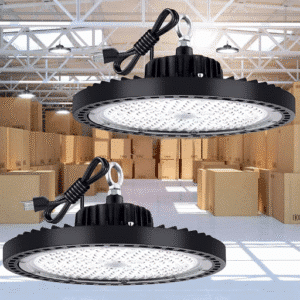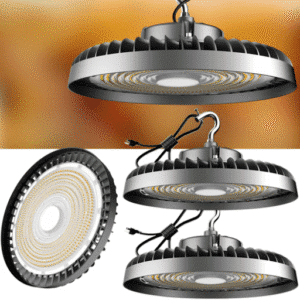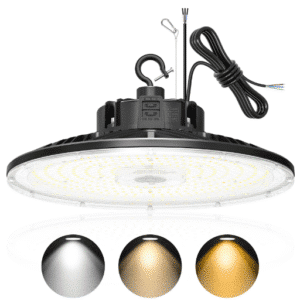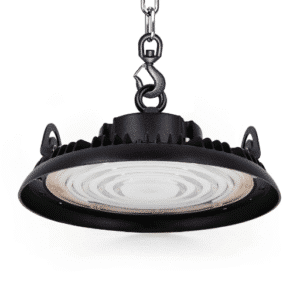

How many lumens do you actually need for high bay lighting? Most warehouses need such-and-such lumens per square foot of floor areas for general activities, while detailed assembly or inspection areas may need up to 125 lumens. The number shall assume some dependency on height, task involved, and light loss in the real world.
What would you feel if the online high bay lighting calculator stated an inaccurate answer approximately 40 percent short of the reality. Sarah Chen, who served the distribution center of 25,000 square feet in Ohio as a facility manager, said the standard square-footage formula: area times foot-candles equals total lumens. As soon as the high bay lighting was hung and that method of lighting forced to be tested, the light meter reached 22 foot-candles. She required 30 foot-candles. It is not the fault of the formula. She missed two well-known, professional lighting-design-hint correction factors.
A good lumens guide to high bays allows you to learn precisely the lumens required for a given space. You will review calculating total lumens; learning about the Coefficient of Utilization and the Light Loss Factor; building choice of luminary output relative to ceiling height; convincing fire marshal and building inspection that, according to IES suggestions and energy codes, the light levels are acceptable.
Key Takeaways
- About 30-50 lumens per square foot are required in general warehouse spaces, 10-30 lumens for storage only, and up to 75-125 lumens for inspection areas.
- Total lumens to be divided by nominal fixture output in such cases are when the double correction factors of CU 0.55-0.80 and LLF 0.70-0.85 are properly introduced.
- 15-20 feet high-ceilings require 10,000 to 22,000 lumens per fixture, while 30 to 40 feet high-ceilings need 30,000+ to 55,000+ lumens.
- In regular warehouses, 90° beams must be used; above 30 ft ceilings, go for 60°, and below 20 ft ceilings, use 120° beam angles.
- The calculated wattages should always be checked that they fall within the permissible limits for lighting power density within ASHRAE 90.1.
What Are Lumens and Why Do They Matter for High Bay Lighting?

Lumen is a unit of the light output of UFO high bay fixtures used among other industrial lights. More lumens equal more light coming out of the fixture. But lumens alone do not tell you the brightness that might be observed on the floor. There are other factors affecting this: ceiling height, beam angle, light reflectance, and dirt all play a role in determining how many of these lumens make it to the work plane.
Lumens vs. Wattage vs. Foot-Candles
When determining the number of lumens needed for high-bay lighting, it is important to understand the differences, as they would help a lot in understanding how light output concepts work. In order to get clarity, let us consider a 200W LED high bay putting out a real 30,000 lumens. This luminaire may deliver 35 foot-candles on the floor at 25 feet with a 90° beam angle. It may only provide 15 foot-candles at the same height below the 40-foot mounting point.
The distance does not matter linearly. Doubling lumens won’t double foot-candles in terms of distance. This is why the question here is how many lumens for high-bay lighting should really be decided by mounting height even more than any single factor.
Why Ceiling Height Changes Everything
Light spreads as it travels. The inverse square law means that doubling the distance from fixture to floor reduces illuminance by a factor of four. A fixture that delivers 50 foot-candles at 15 feet delivers only 12.5 foot-candles at 30 feet. This is why higher ceilings demand higher-lumen fixtures, narrower beam angles, or both.
Want to match wattage to your ceiling height first? See our high bay light wattage guide for a complete ceiling-height-to-wattage decision matrix.
How Many Lumens Per Square Foot by Activity: Warehouse Lumens Per Square Foot Guide
The Illuminating Engineering Society (IES) publishes recommended light levels for industrial spaces, and understanding these benchmarks is the first step in determining how many lumens for high bay lighting your facility requires. These are the targets your design should hit at the work plane, measured in foot-candles or lux.
IES Recommended Light Levels Table
| Activity | Foot-Candles | Lumens/Sq Ft (Raw) | Lumens/Sq Ft (Adjusted) |
|---|---|---|---|
| Inactive storage | 10–20 | 10–20 | 18–35 |
| Active warehousing / picking | 20–30 | 20–30 | 35–55 |
| Loading docks / packing | 20–30 | 20–30 | 35–55 |
| Manufacturing / assembly | 30–50 | 30–50 | 55–90 |
| Detailed inspection | 50–100 | 50–100 | 90–180 |
| Precision work / QC | 100+ | 100+ | 180+ |
Adjusted column includes CU (0.65) and LLF (0.85) corrections. OSHA requires a minimum of 5 foot-candles for general warehouse areas under 29 CFR 1926.56, but modern facilities typically design for 20–30 fc.
The warehouse lumens per square foot column shows raw light needed before real-world losses. Use this warehouse lumens per square foot figure as your baseline before applying correction factors. Most online calculators stop here. That is where they fail. The adjusted column shows what you actually need to specify after accounting for the two correction factors explained in the next section.
Looking to design your warehouse lighting layout? Check out our (warehouse lighting layout guide).
From Foot-Candles to Lumens: The Basic Formula
The starting formula for any high bay lighting calculator is simple:
Total Lumens Needed = Floor Area (sq ft) × Target Foot-Candles
For a 20,000 sq ft warehouse targeting 30 foot-candles:
- 20,000 × 30 = 600,000 raw lumens
This is the number most calculators give you. It is also 30 to 50 percent too low for an actual installation. Keep reading to learn why.
How Many Lumens for High Bay Lighting by Ceiling Height

Once you know your total lumen budget, you choose fixtures with enough output for your mounting height. Higher ceilings need more lumens per fixture to maintain the same foot-candles at the floor.
15–20 ft Ceilings: 10,000–22,000 Lumens
Upon knowing the total lumen budget, fixtures must be selected that would perform optimally at the mounting height. Higher ceilings require more lumens per fixture in order to maintain the same foot-candles on the floor.
15–20 ft Ceilings: 10,000–22,000 Lumens
The light does not go far owing to the elevated height. Lesser-lumen fixtures work very well; wider beam angles (90° to 120°) provide quite nice coverage. Normally a 100W to 150W LED high bay, with an output of 14,000–22,500 lumens, is okay for most typical warehouses.
Best fit:Moderate to low ceilings such as small warehouses, workshops, or retail backrooms as fast comparison-seeking groups manually calculate how many lumens for high bay lighting.
For those facilities in this segment who chose how many lumens for high bay lighting for their space, the 150W UFO high bay light could provide up to 22,500 lumens at 150 lm/W efficacy. That way, it offers 40 foot-candles at 18 feet spaced properly.
20–30 ft Ceilings: 20,000–35,000 Lumens
This is a standard range of ceiling heights in a warehouse. It is an area in which the cages create enough coverage and limit the points where luminaries can produce a distinguishing shadow at the sags between the cages. A 150- to 200-W luminance source can be set up, ranging between 22,000 and 35.000 lumens.
Best fit: Standard warehouses, distribution centers, manufacturing floors, and gymnasiums.
30–40 ft Ceilings: 30,000–55,000+ Lumens
At and above 30 ft, the loss of light becomes so substantial that high-output luminaires with focused light beams become a must. Typically, a 200-300 W luminaire produces 30,000–55,000 lumens. A narrow beam spread (60–90 degrees) helps shine the light where it is needed.
Best fit: Large distribution centers, heavy industrial facilities, and bulk storage establishments.
A 200W UFO high bay may produce up to 30,000 lm. For settings with ceiling heights of 35 ft and greater, or perhaps even facilities replacing 400W+ metal halide systems, larger-lumen high-wattage fixtures will be a consideration, or divvying three or more fixtures will be seen as invaluable.
40+ ft Ceilings: 40,000–70,000+ Lumens
Very high ceilings demand specialized solutions. A 300W to 400W LED fixture or linear high bay array producing 40,000 to 70,000+ lumens is often necessary. For facilities needing rapid hook-mount, chain-mount, or pendant-mount deployment at extreme heights, the D11 UFO high bay light ships with pre-installed hanging hardware and field-adjustable settings.
Best fit: Aviation hangars, super high-bay distribution centers, and large assembly plants.
Efficacy Matters: Why 150 lm/W Changes the Math
Efficacy is lumens per watt. A fixture with 130 lm/W needs more wattage to produce the same lumens as a fixture with 170 lm/W. In 2026, 150 lm/W is the commercial baseline for quality high bay LED lights. Probapro fixtures exceed 170 lm/W, which means lower energy costs for the same light output.
When comparing fixtures, always check the efficacy rating. A cheaper fixture with lower efficacy will cost more to operate over its lifetime.
Want a comprehensive understanding of UFO high bay light? Check out our (UFO high bay light guide).
The Complete Calculation: From Square Footage to Fixture Count
Here is the five-step process for how many lumens you need for high bay lighting. Professional lighting designers use this exact method. Most online guides skip steps three and four. Do not skip them.
Step 1: Determine Target Foot-Candles
Use the IES table above. For most warehouses, 20–30 foot-candles is the right target. This is the starting point for how many lumens you need for high bay lighting in any warehouse or industrial facility. If you are wondering how many lumens do I need for a warehouse of a different size, the same five-step process applies regardless of square footage. This high bay lighting calculator method works for any industrial facility. If your operations include detailed picking or inspection, move to 30–50.
Step 2: Calculate Total Raw Lumens Needed
Multiply floor area by target foot-candles.
Example: 25,000 sq ft warehouse, 30 fc target
- 25,000 × 30 = 600,000 raw lumens needed for this high bay lighting project
Step 3: Apply Coefficient of Utilization (CU)
The Coefficient of Utilization accounts for light that never reaches the work plane. It is absorbed by ceilings, walls, and floors, or lost in the fixture itself. CU depends on three things:
- Room cavity ratio: The shape of your space (tall and narrow vs. wide and low)
- Surface reflectance: Light-colored ceilings and walls reflect more light
- Fixture efficiency: Better optics deliver more light downward
Typical CU values for warehouse high bays:
| Ceiling/Wall/Floor Reflectance | Wide Room (Low RCR) | Narrow Room (High RCR) |
|---|---|---|
| 80/50/20 (light) | 0.75–0.85 | 0.60–0.70 |
| 70/50/20 (standard) | 0.70–0.80 | 0.55–0.65 |
| 50/30/10 (dark) | 0.55–0.65 | 0.45–0.55 |
For a typical warehouse with white ceilings, gray walls, and concrete floors, use CU = 0.65.
Adjusted lumens: 600,000 ÷ 0.65 = 923,000 lumens
Step 4: Apply Light Loss Factor (LLF)

The Light Loss Factor accounts for lumen depreciation over time. LEDs lose output as they age. Dust and dirt on the fixture lens also reduce light. LLF combines two sub-factors:
- Lamp lumen depreciation: LEDs typically maintain 70% output at L70 (70,000+ hours for quality fixtures)
- Dirt depreciation: Depends on your environment
Typical LLF values:
| Environment | LLF |
|---|---|
| Clean (offices, clean rooms) | 0.90 |
| Moderate (typical warehouse) | 0.85 |
| Dirty (mills, foundries, workshops) | 0.70–0.75 |
For a standard warehouse, use LLF = 0.85.
Adjusted lumens: 923,000 ÷ 0.85 = 1,086,000 lumens
Step 5: Divide by Fixture Lumen Output
Now you know how many total lumens your fixture system must deliver on day one. Divide by the lumen output of your chosen fixture.
Example: Using fixtures that output 28,000 lumens each
- 1,086,000 ÷ 28,000 = 38.8 fixtures
- Round up to 39 fixtures
Consider the raw calculation from this perspective. 600,000 ÷ 28,000 = 21.4 luminaires. The uncorrected answer is off by 45%. The mistake that Sarah Chen made is her use of the raw number, which led to the ordering of 42 luminaires based on the raw working of 600,000 11m/lumens, under the assumption that she would use the 14,000 lumen version. Actually she only needed 39 luminaires each of 28,000. Her 14,000-lumen lights were giving her half of what she needed, but she did not apply the corrections.
Spacing, Beam Angle, and Uniformity
Getting the lumen count right is only half the battle in any high bay lighting installation. If fixtures are spaced too far apart, you get dark valleys between them. Too close, and you waste money and create glare.
Spacing-to-Mounting Height Ratio
The standard rule for UFO high bays: space fixtures at 1.0 to 1.5 times the mounting height apart.
| Mounting Height | Recommended Spacing |
|---|---|
| 15 ft | 15–22 ft |
| 20 ft | 20–30 ft |
| 25 ft | 25–37 ft |
| 30 ft | 30–45 ft |
| 40 ft | 40–60 ft |
Offset fixtures from walls by roughly half the spacing distance. This prevents wall-washing and puts light where work actually happens.
Beam Angle Selection
Beam angle controls how light spreads. The wrong angle creates hot spots directly below fixtures and dark zones between rows.
| Beam Angle | Best For | Mounting Height |
|---|---|---|
| 60° | High ceilings, focused throw | 30 ft and above |
| 90° | Standard warehouses, balanced coverage | 20–30 ft |
| 120° | Low ceilings, wide spread | 15–20 ft |
Then, came the calculation of the several lamps of Marcus Ortiz for the warehouse with a 28′ ceiling in Texas from the high bay lumens guide. This called for 90° beams and spaced fixtures at 28 feet. The resulting uniformity ratio was ultimately 2.1:1, which was well within the IES recommendation of 3:1 maximum. Across town, a competitor used 120° beams at the same height. The floor under each compromise fixture lighted up with 45 foot-candles while the midpoint between the rows reckoned just 12. The wide beam threw light all over the walls and not into the aisles.
Uniformity Ratio: Avoiding Dark Spots
Uniformity ratio means the brightest area divided by the darkest area. The IES has an assembled a 3:1 rule that is ideal during warehouse operations. Therefore, if you are averaging 30 foot-candles as a whole, you must not dip below a tolerable count of 10 in any given area.
When poor uniformity comes through in your layout, try tightening the spaces, adjusting the mounting system, or putting more luminaries in there. Only a light measurement grid check after a fixture installation in a high bay could ever offer confirmable assurance. Use photometry software modeling, such as Dialux or AGi32, in more complex layouts to simulate uniformity before purchasing.
UFO vs Linear: Same Lumens, Different Results
Deciding on lumens should depend on the type of fixture at hand. UFO fixtures and linear fixtures both consume 30,000 lumens, yet both cast different floor patterns. Ignorance of that fact can end in costly misapplication, bearing that in mind.
Light Distribution Patterns
UFO fixtures throw light downward in a circular pattern. Linear fixtures spread light in an elongated oval. The same lumen count delivers different foot-candles depending on where you measure.
When UFO Delivers More Floor Lumens
Choose UFO when you need:
- Open floor areas with minimal obstructions
- High mounting heights where focused throw matters
- Maximum lumens per watt (UFO fixtures often exceed 160 lm/W)
UFO fixtures concentrate light. In open warehouses, this means more lumens reach the floor and fewer are lost to walls and racks.
When Linear Wins on Aisle Coverage
Choose linear when you need:
- Aisleways with tall racking on both sides
- Long, narrow work areas like production lines
- Even coverage across rectangular zones
Linear fixtures align with aisle geometry. The elongated distribution pattern puts light where pickers walk instead of on top of shelving.
If you are unsure which form factor fits your layout when deciding how many lumens for high bay lighting you need, our UFO vs linear high bay comparison breaks down coverage patterns, installation complexity, and total cost of ownership.
Code Compliance and Energy Limits

Designing for the right lumens is not enough. After you calculate how many lumens your space requires for high bay lighting, your design must also comply with energy codes that limit total wattage per square foot.
ASHRAE 90.1 Lighting Power Density
ASHRAE 90.1 sets maximum Lighting Power Density (LPD) in watts per square foot. For warehouse spaces, the 2022 standard allows:
| Space Type | Maximum LPD (W/sq ft) |
|---|---|
| Fine material storage | 0.9 |
| Medium/bulky material storage | 0.6 |
| Warehouse (general) | 0.8 |
| Manufacturing (low detail) | 1.0 |
| Manufacturing (high detail) | 1.3 |
Example check: 39 fixtures × 200W = 7,800W total. In a 25,000 sq ft warehouse: 7,800 ÷ 25,000 = 0.31 W/sq ft. This is well below the 0.8 W/sq ft limit for general warehouse spaces.
LED high bays make compliance easy. A comparable metal halide system would need significantly more wattage to deliver the same lumens.
Meeting IES Targets Without Exceeding Code
The key is efficacy. At 150 lm/W, you deliver more lumens per watt than older technologies. This means you can hit IES foot-candle targets while staying far below LPD limits. If your calculation shows you are near the LPD ceiling, switch to higher-efficacy fixtures rather than reducing light levels.
Frequently Asked Questions
How many lumens do I need for a warehouse?
How many lumens do I need for a warehouse depends on size, ceiling height, and activity. For a 20,000 sq ft warehouse with 25-foot ceilings and general warehousing activity:
- Target: 30 foot-candles
- Raw lumens: 20,000 × 30 = 600,000
- After CU (0.65) and LLF (0.85): 1,086,000 lumens
- Using 28,000-lumen fixtures: 39 fixtures
Which span scores best on perceived brightness, 5000 Kelvin or 4000 Kelvin?
Remember that color temperature is an important factor to consider in lux-bay measurements. From a human vision perspective, scotopic sensitivity makes 5000K seem more luminous than 4000K at the same lumen level. The cooler color thus stimulates more of the rod cells in the eyes, which mostly facilitate peripheral and low-light vision. In the case of a warehouse where visual acuity matters, 5000K probably allows you to aim for the lower end of the foot-candled range while maintaining the same visual perception. Both are fine, but 5000K lighting luminance values are used much more.
How many high bay lights do I need for a 30 ft ceiling?
It won’t be merely the ceiling height that will determine how many lumens are enough for high bay lighting to be hung at a 30 ft height. For this computation, it will also depend upon the floor area, target foot-candles, and how many lumens the fixture actually puts out. As a rule of thumb, one would use 30–45,000 lumens per fixture speaking in the context of an approximately 30,000 sq ft warehouse and 30 ft ceilings, and one to an 800–1,000 ft warehouse. Follow the five-point calculation below for an exact number.
Do we need less lumens with moton sensors?
Motion sensors do not call for a perceived drop in lumens at full output. The only offset is effective hours with energy savings. If you are using daylight harvesting or dimming controls, you might be able to design something at a lower level of certain maintained light level, assuming your system adjusts output as needed. Nevertheless, for plain on-off motion sensors, the system is designed for full foot-candles output.
How does dirt or aging impact lumen output over time?
Premium LEDs keep 70% of initial output at L-70, depending on the fixture, over 50,000 to 100,000 hours. Dirt accumulates quickly. The lenses of the fixtures could lose 10-15% of the output due to accumulated dirt or aging within a couple of years in moderate warehouse environments. Consideration of the Light Loss Factor is required. Regularly scheduled lens cleaning is a necessity to maintain the initial output at the design light level.
Conclusion
The light level for high bay needs lumens based on 4 factors: floor area, ceiling height, use, and real-world light loss. The formula of area times footcandles is merely the first step. One must account for the Coefficient of Utilization and Light Loss Factor before selecting the fixtures unless one is to have installations where actual light levels will be missed by 30 to 50 percent.
Use the IES targets as your baseline. Match fixture output to your ceiling height. Space fixtures at 1.0 to 1.5 times mounting height. Verify uniformity with a light meter after installation. And confirm that your total wattage stays within ASHRAE 90.1 LPD limits.
Need a quick lumens per square foot warehouse reference? Bookmark this high bay lumens guide and share it with your team. Whether you are calculating warehouse lumens per square foot for a new build or a retrofit, this guide gives you the exact numbers you need. Browse our full range of industrial LED high bay fixtures to find the lumen output and efficacy your project demands. Or read our guide on how to choose UFO high bay lights to match wattage, beam angle, and color temperature to your exact application.