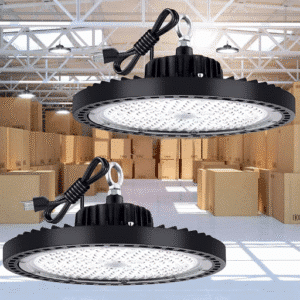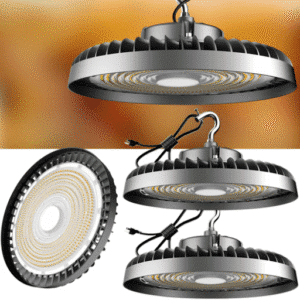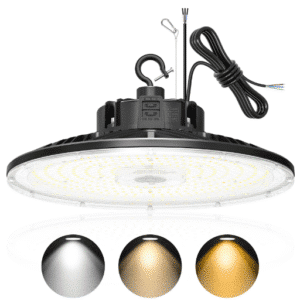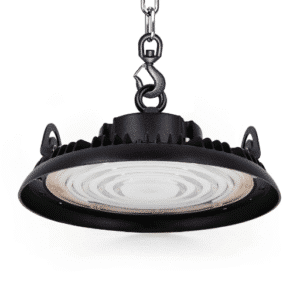

To plan an XD5 high bay retrofit, audit your existing fixtures, decide whether a retrofit kit or full XD5 replacement makes sense, remove or bypass the old ballast, choose the matching XD5 wattage, and apply for rebates before you buy. Most retrofit failures aren’t product failures. They’re planning failures.
Mike, a contractor in Dallas, learned that the expensive way. He replaced 100 metal halide high bays with XD5 150W fixtures, installed them cleanly, and passed inspection. Then he opened the rebate packet. His utility required pre-approval before purchase. He had already bought the fixtures. That single missed step cost his client roughly $12,000 in incentives.
This guide helps you avoid that mistake. You’ll learn when a metal halide to LED retrofit calls for a kit versus full XD5 replacement, what the XD5 replaces, how to calculate high bay retrofit ROI, how to handle ballast bypass safely, and how to capture 2026 rebates. By the end, you’ll have a practical playbook for an XD5 high bay retrofit that saves energy, passes inspection, and pays back fast.
Key Takeaways
- An XD5 high bay retrofit usually means full-fixture replacement, not a retrofit kit, because it eliminates ballast issues and unlocks full DLC Premium rebates.
- A 400W metal halide fixture draws about 458W including ballast losses. The XD5 150W replaces it and can save roughly 176perfixtureperyearat176perfixtureperyearat0.13/kWh.
- Typical payback is 1–3 years, and under 18 months when rebates are captured.
- You must bypass or remove the old HID or fluorescent ballast. Line voltage through a ballast will damage the XD5 driver and void the warranty.
- DLC Premium rebates in 2026 run 50–50–150+ per fixture, with controls bonuses of 10–10–25+, but most programs require pre-approval.
Need help choosing the right XD5 first? Read our complete XD5 UFO high bay light guide to match wattage, beam angle, and voltage to your space.
When to Retrofit vs. Replace Your High Bays

The word “retrofit” gets used two ways. Some people mean installing a retrofit kit inside an existing fixture housing. Others mean replacing the entire fixture with a modern LED unit. If you’re planning a metal halide to LED retrofit, the retrofit vs replace high bay decision controls your rebate eligibility and long-term reliability. For the XD5, the choice matters because the XD5 is a full-fixture replacement, not a lamp-only kit.
Retrofit Kits: Pros and Cons
A retrofit kit keeps your existing fixture housing and swaps in an LED module or corn-cob lamp. The upfront cost is lower, and the install can be faster if the housing is in good shape.
However, retrofit kits usually require ballast bypass. They may void the original fixture listing, limit rebate eligibility, and leave you with old optics and thermal management. Heat kills LEDs faster than almost anything, and an aging housing rarely dissipates it as well as a purpose-built fixture. GRNLED’s full LED high bay retrofit guide covers these trade-offs in more detail.
Full Fixture Replacement with the XD5: Pros and Cons
Replacing the entire fixture with an XD5 gives you a new housing, driver, and optics designed to work together. You get the full 50,000-hour L70 life, clean code compliance, and eligibility for the highest rebates.
The downside is higher upfront cost per fixture and more labor on some ceilings. But you also eliminate the ballast question entirely. For many facilities, that’s worth the difference.
| Factor | Retrofit Kit | Full XD5 Replacement |
|---|---|---|
| Upfront cost | Lower | Higher |
| Existing housing | Kept | Replaced |
| Ballast | Must bypass/remove | Not needed |
| Code listing | May affect original listing | Clean compliance |
| Effective lifespan | Often shorter | Full 50,000-hour L70 |
| Rebate eligibility | Limited | DLC Premium eligible |
Decision Checklist
Choose a retrofit kit only if:
- The existing housings are in excellent condition.
- The fixtures are relatively new and thermally sound.
- Budget constraints are tight and rebates are secondary.
- Local code allows the modification.
Choose full XD5 replacement if:
- The housings are corroded, damaged, or outdated.
- You want maximum rebate value and warranty protection.
- You’re running 24/7 operations where reliability matters most.
- You want a clean, long-term solution rather than a stopgap.
Jennifer, a facilities manager in San Diego, started by pricing retrofit kits. Her existing fluorescent high bay housings were corroded from coastal humidity. She ran the numbers and chose full XD5 replacement. Five years from now, she won’t be chasing down failing kits or arguing with inspectors about modified fixtures.
What the XD5 Replaces

The XD5 is a direct replacement for legacy HID and fluorescent high bays. The key is matching the wattage and lumen output to the existing light level, not just copying the old wattage label.
Wattage Replacement Table
| Legacy Fixture | XD5 Replacement | Typical Mounting Height | Best Use Case |
|---|---|---|---|
| 250W metal halide | XD5 100W | 15–20 ft | Lower light levels, small warehouses |
| 400W metal halide | XD5 150W | 20–30 ft | Standard warehouse, manufacturing |
| 400W+ metal halide | XD5 200W | 25–35 ft | Higher foot-candles, wide aisles |
| 1000W metal halide | XD5 240W | 30–40+ ft | High-rack aisles, high ceilings |
Metal halide numbers are misleading. A “400W” metal halide fixture actually draws about 458W once you include ballast losses. This makes the XD5 150W the right 400W metal halide LED replacement for most 20–30 ft warehouses. LED Lighting Supply’s metal halide to LED conversion guide explains why you should size by delivered lumens, not lamp wattage.
If you are new to round high-bay fixtures, our UFO high bay light guide explains how they differ from linear high bays and when they are the best fit.
Fluorescent High Bay Replacement Notes
Fluorescent high bays are common in older warehouses and retail backrooms. The XD5 replaces them cleanly, but you must remove the ballast and direct-wire line voltage to the fixture leads. T8 and T5 lamps won’t match the lumen density of an XD5, so you’ll usually install fewer fixtures and still gain brightness.
Voltage Compatibility
The standard XD5 accepts 100–277V AC. That covers most North American commercial services. If your facility runs 347V or 480V, you’ll need a step-down transformer or a voltage-specific model. Running the wrong voltage will damage the driver and void the warranty.
XD5 High Bay Retrofit ROI and Energy Savings
Lighting is one of the fastest ways to cut facility operating costs. The XD5 makes that cut large enough to show up on the P&L, which is why high bay retrofit ROI usually starts with energy savings.
Energy Savings Example: XD5 150W vs. 400W Metal Halide
| Metric | 400W Metal Halide | XD5 150W |
|---|---|---|
| Actual system wattage | ~458W (with ballast) | 150W |
| Annual kWh (12 hrs/day) | ~2,006 | ~657 |
| Annual cost (@ $0.13/kWh) | ~$261 | ~$85 |
| Annual savings per fixture | N/A | ~$176 |
That’s a 67% reduction in energy use for that fixture alone. Multiply it across a 100-fixture warehouse and you’re looking at roughly $17,600 per year in energy savings before rebates.
Maintenance Savings
Metal halide lamps last about 15,000–20,000 hours. The XD5 is rated for 50,000 hours L70. That means fewer lift rentals, fewer lamp changes, and less disruption in high-bay spaces where maintenance is expensive and dangerous.
ROI Formula
Use this simple formula for a single fixture:
Payback (years) = Total installed cost per fixture ÷ Annual savings per fixture
A typical installed cost for an XD5 replacement ranges from 300–300–500 per fixture, including labor. With 176inannualenergysavingsplusa176inannualenergysavingsplusa75 rebate, payback lands around 12–15 months. Without the rebate, it’s closer to 20–28 months. Either way, the project usually pays for itself well within the fixture’s warranty period.
Step-by-Step XD5 High Bay Retrofit Process
A retrofit project moves faster when the sequence is clear. Here’s the checklist we recommend for every XD5 high bay retrofit.
- Audit existing fixtures. Count fixtures, note wattage, mounting height, beam spread, hours of operation, and condition of housings.
- Decide retrofit or replace. Use the checklist above. If housings are questionable, replace.
- Choose XD5 wattage and beam angle. Match wattage to the legacy fixture. Use 120° for 13–20 ft, 90° for 20–26 ft, and 60° for 26 ft and above.
- Bypass or remove the ballast. This is non-negotiable. Direct-wire line voltage to the XD5 leads.
- Install the XD5. Use the universal bracket for hook, pendant, U-bracket, or conduit mounting. Add a safety cable on every suspended fixture.
- Add controls if applicable. Motion sensors, daylight harvesting, and 0–10V dimming can increase savings and rebate bonuses.
- Apply for rebates. Submit pre-approval paperwork before purchase or installation, depending on utility rules.
Ballast Bypass for HID and Fluorescent High Bays

The ballast is the silent killer of any ballast bypass LED high bay project. Old HID ballasts are not compatible with the XD5’s direct-wire driver. Line voltage routed through a ballast will damage the driver and void the warranty.
Why It Matters
A metal halide ballast limits current and creates a high-voltage pulse to start the lamp. LED drivers regulate their own current. Sending ballast-shaped power into an LED driver is like feeding diesel into a gasoline engine. It may run briefly, then it fails.
HID Ballast Removal
For metal halide and high-pressure sodium fixtures:
- Disconnect power and verify zero voltage.
- Remove the lamp and reflector.
- Remove or bypass the capacitor, ignitor, and ballast.
- Run line, neutral, and ground directly to the XD5 leads.
Fluorescent Ballast Bypass
For fluorescent high bays:
- Disconnect power and verify zero voltage.
- Cut out the ballast.
- Direct-wire the sockets so line voltage reaches the XD5 input leads.
- Cap unused dimming leads separately if controls are not installed.
Safety and Code Notes
Ballast bypass work should be done by a qualified electrician or under local code requirements. Lockout/tagout, voltage verification, and proper grounding are mandatory. Hyperlite’s ballast removal safety guide is a strong technical reference for installers.
DLC Rebates and Incentives in 2026
Rebates can change the economics of an XD5 retrofit dramatically. A DLC rebate LED high bay program can cover 50–50–150+ of the fixture cost, but only if the product is DLC Premium listed and pre-approved. The rules are specific, and missing them is expensive.
DLC Premium vs. Standard
The DesignLights Consortium (DLC) qualifies LED products for utility rebates. DLC Premium is stricter than DLC Standard and typically unlocks 15–30% higher rebate values. The XD5 is DLC Premium listed, which puts it in the top rebate tier for most programs.
| Rebate Tier | Typical Rebate per Fixture | Notes |
|---|---|---|
| DLC Standard | 35–35–100 | Lower efficiency threshold |
| DLC Premium | 50–50–150+ | Higher efficiency and quality requirements |
| Controls bonus | +10–10–25+ | Requires networked or sensor-based controls |
Pre-Approval Process
Most utilities require pre-approval before you purchase or install. The typical process is:
- Submit an application with fixture specs, project scope, and estimated energy savings.
- Receive approval with a reservation letter or incentive commitment.
- Purchase and install qualifying fixtures.
- Submit invoices and completion documentation.
- Receive the rebate check.
Skipping step one is the most common rebate mistake. Mike in Dallas missed it. Don’t repeat it.
Controls Bonuses
Adding motion sensors, daylight harvesting, or 0–10V dimming can trigger additional incentives. In 2026, controls bonuses commonly add 10–10–25 per controlled fixture. Those controls also reduce runtime, which increases energy savings beyond the rebate itself.
Section 179D Federal Tax Deduction
The Section 179D energy-efficient commercial building deduction remains available in 2026. However, projects generally must begin construction before June 30, 2026, to qualify under current rules. Check with your tax advisor before counting it into your ROI. MC Power’s overview of 2026 LED lighting incentives and rebates covers the federal angle in more detail.
Common XD5 High Bay Retrofit Mistakes
Here are the mistakes we see most often in the field. Avoid them and you avoid callbacks.
- Leaving the ballast inline. The number one driver killer. Bypass or remove it.
- Wrong wattage or lumen match. Don’t assume 400W MH = 400W LED. Size by output and application.
- Ignoring ceiling height and beam angle. A 120° optic on a 40 ft ceiling wastes light on walls. A 60° optic on a 15 ft ceiling creates hot spots.
- Missing rebate pre-approval. Most utilities won’t honor retroactive applications.
- Overlooking the safety cable. Suspended fixtures need secondary support. Inspectors will flag it.
- Skipping controls evaluation. Motion sensors and dimming can pay for themselves quickly and increase rebate value.
For more on installation pitfalls, read our (XD5 UFO high bay installation guide).
Real-World Retrofit Scenarios

Mike in Dallas: 100-Fixture Warehouse Retrofit
Mike’s project was a 100-fixture warehouse with 400W metal halides running 12 hours a day. He chose XD5 150W replacements. Energy savings alone came to about 17,600 per year. The retrofit passed inspection, but it missed the rebate pre-approval window and left roughly $17,600 per year. The retrofit passed inspection, but they missed the rebate pre-approval window and left roughly 12,000 on the table. The lesson: file rebate paperwork before you buy.
Jennifer in San Diego: Fluorescent High Bay Replacement
Jennifer managed an older distribution center with corroded fluorescent high bays. Retrofit kits looked cheaper on paper, but the housings were failing. She chose full XD5 replacement with 90° optics for 24 ft ceilings. The installation took two weeks, but the facility gained brighter, more uniform light and qualified for a strong DLC Premium rebate.
Tom in Ohio: Rebate-Driven Retrofit with Controls
Tom, a maintenance supervisor, had tried cheap corn-cob retrofit lamps in a previous job. They failed within 18 months from heat buildup. On his new XD5 retrofit, he added motion sensors and applied for the controls bonus. The project paid back in 14 months, and two years later he had zero failures.
FAQ
Can I retrofit a 400W metal halide with an XD5?
Yes. The XD5 150W is the standard replacement for a 400W metal halide. It delivers comparable or better light levels while cutting energy use by about two-thirds.
How much does an XD5 high bay retrofit cost?
A typical installed cost is 300–300–500 per fixture, including labor and any needed electrical work. Costs vary by ceiling height, access difficulty, and whether old ballasts must be removed.
How long is the payback period?
Most XD5 retrofits pay back in 1–3 years. With rebates, the payback can drop to under 18 months.
Do I need an electrician?
Local codes vary, but a qualified electrician should handle line-voltage connections, ballast bypass, and grounding. Commercial permits and inspections usually require it.
What rebates are available for XD5 retrofits?
In 2026, typical DLC Premium rebates range from 50–50–150+ per fixture, with controls bonuses adding 10–10–25+. Programs differ by utility, and pre-approval is usually required.
What wattage LED replaces 400W metal halide?
The XD5 150W is the standard replacement for a 400W metal halide. It delivers similar or better light levels at roughly one-third of the energy use. Match the beam angle to your ceiling height for even coverage.
Can I retrofit an HID high bay with LED?
Yes, but you must bypass or remove the HID ballast. The XD5 is a direct-wire fixture, so line voltage through an old ballast will damage the driver. Always follow lockout/tagout and local electrical code.
Should I choose a retrofit kit or full XD5 replacement?
If your housings are sound and rebates are not a priority, a kit may work. For most industrial retrofits, full XD5 replacement is the safer long-term choice. It eliminates ballast issues, maximizes rebates, and delivers the full rated lifespan.
If your housings are sound and rebates are not a priority, a kit may work. For most industrial retrofits, full XD5 replacement is the safer long-term choice. It eliminates ballast issues, maximizes rebates, and delivers the full rated lifespan.
Conclusion
An XD5 high bay retrofit is a straightforward project when it’s planned before the first fixture is touched. The biggest wins come from choosing full replacement when housings are aging, bypassing the ballast cleanly, sizing the right wattage for the ceiling height, and applying for rebates before purchase.
The payoff is real: lower energy bills, reduced maintenance, better light quality, and faster payback than most facility upgrades. Get the planning right, and the XD5 does the rest.