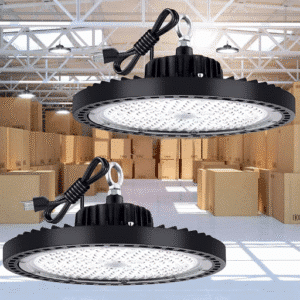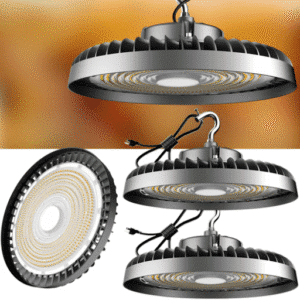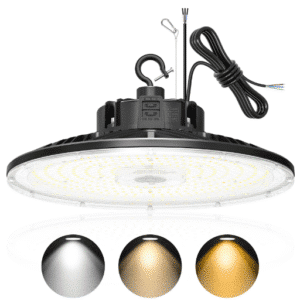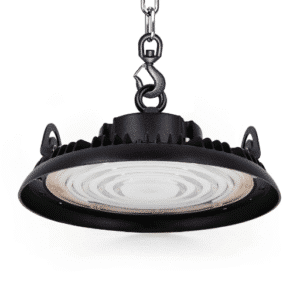

LEDs in the range of 20 to 50 foot-candles would suffice for cold storage illumination. Cold storage lighting requires fixtures that are rated -30C or less, provided they have vapor-tight housings rated at IP65. Standard warehouse high bays should never be taken into negative temperatures. The drivers, seals, and housings of standard warehouse high bays are not developed or constructed to withstand thermal cycling, condensation, and frost accumulation.
When Mr. Dave Kowalski did retrofit the freezer at Midwest Cold Logistics in 2024, he yet again called for the 200W UFO high bays his team had deployed in the dry warehouse. The tech data read as “industrial grade.” It did not read “rated to -40C and above.” By March 40 percent of the drivers in these fixtures were known to have failed. All aluminum housings had signs of corrosion from condensation. His maintenance team was now renting a lift by the day to swap fixtures in -15F temperatures at rates of triple overtime for 20-minute work cycles before mandatory warming breaks.
Should you manage food distribution centers, refrigerated storage facilities, or pharmaceutical cold chain utilities, you are aware of how costly a lighting failure in a freezer can be. The cost of a rental for a lift alone might outstrip those for installations. This guide exactly furnishes you with requisite lighting necessities for these conditions, foot-candle targets, luminaire specifications, and calculation steps so that you are able to plan a system fit for sub-zero environments, pass any inspection, and remain within energy code. Whether you are researching LED cold storage lighting in the pursuit of new construction, or considering retrofitting in an existing facility, an understanding of these requirements before selecting a product will save you from costly replacements.
Key Takeaways
- Cold storage needs 20-30 fc for bulk storage; 30-50 fc for case-picking and inspection tasks.
- At a minimum, the gadgets or accessory products must be certified and rated at -30 °C (though that is highly discouraged) for retrofit lighting within warehouses; a high probability of device failure exists at -20 °C.
- IP65 is the accepted minimum and IP66 or higher when the freezer house is in compliance with all requirements for hosing.
- Bear in mind a roughly 10-20% increase in IES-paid-for lighting once added for the fogging of the lenses due to frost accumulation.
- The ASHRAE 90.1 criteria limits the energy use for refrigerated warehouses between 0.45-0.65 W per square foot based on regulatory jurisdiction.
What Makes Cold Storage Lighting Different from Standard Warehouse Lighting

Complying with the requirements for low-temperature lighting in cold storage facilities, it must be understood that there is no freezing equivalent of traditional warehouse lighting with a set back on thermostat settings. It is highly specialized and has four major opposing forces that regular fixtures have in no wise provisioned.
Enemy One: Subzero Temperatures
Everyday LED drivers are fully operational only down to between -20C to -30C temperatures because electrolytic capacitors have suffered extensive degradation below -20C. At the -30C freezing point, considerable numbers of drivers shut down. By -40C, the solder joints on the board can turn so brittle as to crack due to temperature cycling. Cold-rated lights use a capacitor specifically designed to be operated in extremely low temperatures, a class of low-temperature greases in the driver housing, a flexible circuit board in the driver that withstands subzero ambience.
Compared to cool white fluorescent tubes or mercury vapor discharge lamps hurting the eyes and found in some grow rooms, blue LEDs favor photographing the no natural flame, growling ballast, and in an efficient manner squeezes 27 lumens per watt out of a 2-watt colored diode. The only way to operate them at constant high temperatures and strong reflection at an angle of about 30 degrees to the light’s direction. Also, solar panels should be limited to red diodes.
Enemy Two: Condensation and Moisture
Every time a freezer door is opened, warm humid air rushes in and condenses on every cold surface. The lights inside the unit and fixtures themselves create internal condensation as they cycle on and off, if the housing has any microscopic gaps. This moisture corrodes electrical contacts, damages passivated LED chips, and busts open drivers over time.
This is the reason why IP65 is a purely must for cold storage. With IP65 fixtures, said fixtures are dust-tight and protected from low-pressure water jets. For facilities with either high-pressure wash-down protocols or heavy condensation, IP66 or IP67 is generally considered safer. Vapor-tight housings with continuous gaskets and stainless steel latches are standard for every freezer that is expected to experience regular door cycle.
Enemy Three: Corrosion
The vulnerability of regular steel in abrasive conditions is associated with a synergistic effect of moisture, temperature cycling, and cleaning chemicals that fosters rapid corrosion. The standard powder-coated steel housings will indeed rust. In cold storage, a die-cast aluminum with a marine-grade finish or 316 stainless steel are materials that serve as a very long-term solution. Thermal shock resistance is higher for polycarbonate lenses than it is for glass, which also do not break when struck by the mast of a forklift or the product which falls.
Enemy Four: Thermal Cycling Stress
Freezer lights cycle a few hundred times per month. Each cycle brings a substantial thermal cycle to a fixture: from -20C ambient to internal operating temperature above 60C at the LED junction and back down. Standard housings and gaskets break under this stress. Cold-rated luminaires use silicone gaskets rated for a wider temperature range and designed for inverse compression, such that they expand and contract with thermal variation without losing the seal.
Want a comprehensive understanding of UFO high bay light? Check out our (UFO high bay light guide).
Cold Storage Lighting Requirements: IES Foot-Candles by Task
The Illuminating Engineering Society (IES) divides cold storage tasks into classes with different illuminance setpoints. Meeting the lighting needs of cold storage starts with understanding these classes. The values below represent maintained illuminance, which means that your design has to accommodate for light loss over time so that the facility would still be above the target levels resulting from frost accumulation and lumen depreciation.
Foot-Candle Targets by Area Type
| Area / Task | Target Horizontal fc | Target Lux | Notes |
|---|---|---|---|
| Bulk pallet storage | 20-30 fc | 215-320 lx | Forklift travel, pallet orientation |
| Case-picking aisles | 30-50 fc | 320-540 lx | Label scanning, barcode reading |
| Staging / loading dock | 30-40 fc | 320-430 lx | Paperwork, inspection |
| Processing / packaging | 50+ fc | 540+ lx | Quality control, detailed inspection |
| Maintenance mezzanines | 40-60 fc | 430-650 lx | Close tool work |
| Truck loading bays | 20-30 fc | 215-320 lx | Exterior-adjacent, lower ambient |
Sources: IES Recommended Practice for Industrial Lighting (RP-7) and ANSI/IES standards for cold storage facilities.
Vertical Illuminance for Pallet Face Scanning
Here is where most cold storage lighting guides fail. They focus entirely on horizontal foot-candles, the light hitting the floor. In a refrigerated warehouse, vertical illuminance on pallet faces is just as critical. Pickers scan barcodes at eye level. Forklift operators read labels on stacked goods. Quality inspectors check expiration dates on vertical surfaces.
IES guidelines recommend about 50 to 70 percent vertical illumination with respect to horizontal target, as measured on the vertical plane of pallet faces. For the case-picking aisle, targeting 40 fc horizontal, design for 20 to 28 fc vertically. Just sizing the floor for level brightness will make barcode scanning difficult and slow down the operation.
Frost Derating: Why You Need More Lumens Than the Table Suggests
A coating of frost on the lens will cause an accumulating effect over time that will reduce the output of light 10% to 20%. Ice crystals can scatter the light before it leaves the fixture. Dust and a film of condensation compound the problem. Presently, standard IES tables are written under the concept of a clean lens in a fully climate-controlled environment. Cold storage is not one.
A good and easy but practical method to address the problem is to multiply the theoretically found lumen requirement with a defrosting factor of 1.10 to 1.20 before selecting fixtures. For instance, consider if 300,000 maintained lumens is identified by your photometric plan. Lighting has to be selected to provide for 330,000-360,000 lumen package to maintain this headroom above dust accretion time. The same in turn will deal with less apparent foot-candle protection and very low surface reflectance for picking up additional inefficiency from slack impermeable warehousing to rack surfaces and turn antinomically efficient floor finishes covered with ice.
Operational technology from Great Lakes Distribution created a -10 F freezer in 2023 using IES standard values of 35 fc for case-picking aisles. Half a year since they started, light meters were reading only 28 fc: Frost had consumed 20 percent of the light output. A 35 fc target with the adjusted illumination from the source, through 1.15 frost loss, was indicated for the engineering. The repair was disjointed, necessitating an additional four fixture-sets and the patching-in of the second installation in a running freezer.
Cold Storage Lighting Fixture Requirements and Specifications
Specifying cold storage lighting fixtures means checking every component against subzero realities. Use this checklist as your baseline.
Temperature Ratings: -40C Is the Standard
Cold-rated light fittings require a specific range of operating temperatures. The lowest approved freezer-rated temperature is -30C (-22F). A performance benchmark is available at -40C (-40F). The -40 mark actually includes nearly everything in the commercial and industrial markets, especially including the blast freezer sector.
Standard drivers of LEDs fail below a fall-off colder than -20C. Cold-rated drivers come equipped with solid-state capacitors or other low-temperature rated components. In reviewing specs, we want to ensure that the assembly housing the installation, not just the LED module, is rated for that specific temperature limit. There are manufacturers who rate the diode without upgrading the drivers, which eventually fail.
IP and Vapor-Tight Requirements
| Environment | Minimum IP Rating | Recommended |
|---|---|---|
| Refrigerated warehouse (above 32F) | IP65 | IP65 |
| Freezer (below 32F, moderate condensation) | IP65 | IP66 |
| Freezer with wash-down protocols | IP66 | IP67 |
| Food processing adjacent to cold storage | IP66 | IP69K |
Vapor-tight construction, which involves complete sealing of the enclosure via continuous silicon gaskets, and not just from rubber grommets surrounding wire entries, the lens will need to compress onto the housing with latching or threaded fasteners. Any opening, however minuscule, becomes a passage for condensation within weeks of the fixture being placed in a freezer. While recommending the use of vapor-tight LED light fixtures for walk-in coolers and freezer-section aisles, it should somehow be ensured that the gasket is continuous, and the housing has no seams or penetration points.
Impact Resistance for Forklift Zones
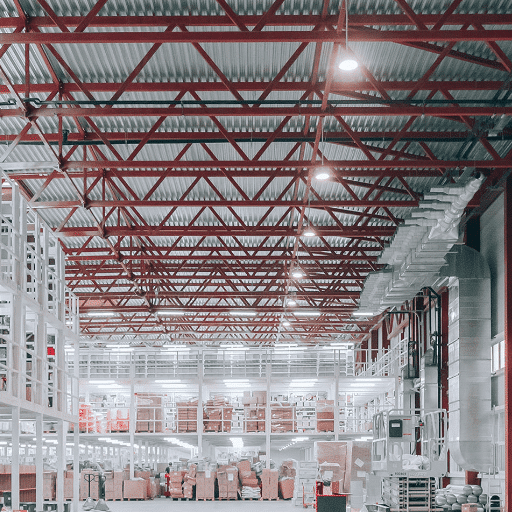
Forklifts and pallet jacks are used in close aisles at cold storage facilities-nearly guaranteeing their constant utilization. Therefore, fixture strikes are common occurrences. The minimum impact rating for any cold storage fixture is IK08 (5 joules), which can handle a direct hit from equipment or falling product. IK10 (20 joules) is suggested for high-traffic aisles and on loading dock areas.
NSF Certification for Food-Handling Facilities
If your cold storage facility is handling food, beverage, or pharmaceutical products, it is quite possible that NSF certification will be required by health inspectors and plant auditors. The NSF/ANSI 2 standard is for fixtures utilized for applications involving splash zones-enabling them to withstand incidental spray while cleaning and conform to sanitary design standards.
Fixtures that are labeled NSF rated have either having smooth sphericalwhite or clear enclosures or have been made restricted with no seams whatsoever wherein food particles or bacteria can gather. Being hermetically sealed to be maintained, it goes without saying that NSF-rated bulbs are imperative should be selected to ensure that your auditor will pass your compliance audits.
CCT and CRI Recommendations
- Color Temperature (CCT): 4000K to 5000K is optimal for cold storage. Cool white light improves contrast on labels and barcodes, reduces eye strain in low-temperature environments, and helps maintain worker alertness.
- Color Rendering Index (CRI): Minimum 80. For facilities with quality control or product inspection tasks, CRI 85+ ensures accurate color identification of labels, packaging, and product condition.
Housing Materials and Corrosion Resistance
- Die-cast aluminum with marine-grade powder coating: Resists corrosion, dissipates heat effectively, and keeps fixture weight manageable for ceiling mounting.
- 316 stainless steel hardware: Required for facilities with aggressive cleaning chemicals or salt-laden environments (seafood processing).
- Polycarbonate lenses: Shatterproof, impact-resistant, and thermally stable. Tempered glass is acceptable but heavier and more fragile.
Probapro’s D11 UFO high bay carries an IP65 rating, IK08 impact resistance, and an operating range of -40C to +50C. It is designed for exactly these dual-threat environments where temperature, moisture, and impact converge. View the D11 UFO high bay light specifications for full technical details.
The Complete Calculation: Sizing Lights for a Cold Storage Warehouse
This is the section most facility managers bookmark. Here is the six-step process for sizing cold storage lighting for a racked warehouse, including the frost derating factor that standard calculators ignore. Following this method ensures your cold storage lighting requirements are met with maintained lumens, not just initial output.
Step 1: Determine Task and Target Foot-Candles
Identify your primary task and IES target. For this example, we will use a case-picking aisle in a -10F freezer targeting 40 fc horizontal and 25 fc vertical.
Step 2: Calculate Floor Area and Account for Racking
Racked aisles have less open floor than open warehouses. Light must travel down the aisle and illuminate vertical pallet faces, not just the floor. For photometric purposes, use the aisle footprint:
Aisle Area = Aisle Length x Aisle Width
For a 200 ft x 12 ft aisle:
- Aisle area = 2,400 sq ft
- Target = 40 fc
- Total Raw Lumens = 40 x 2,400 = 96,000 lumens
Step 3: Apply Coefficient of Utilization (CU)
The Coefficient of Utilization accounts for light absorbed by surfaces before reaching the target. In cold storage, CU is typically lower than in dry warehouses because:
- Dark metal racking absorbs more light than light-colored walls
- Frost and ice on surfaces reduce reflectance
- Narrow aisles create more absorption opportunities
For a typical cold storage aisle with light-colored walls and metal racking, CU usually falls between 0.50 and 0.65.
Using a conservative CU of 0.55:
Adjusted Lumens = 96,000 / 0.55 = 174,545 lumens
Step 4: Apply Frost Derating Factor
Multiply by the frost factor to account for long-term light loss on lenses:
Frost-Adjusted Lumens = 174,545 x 1.15 = 200,727 lumens
The 1.15 factor is the standard recommendation for freezers with moderate door cycles. Use 1.20 for high-traffic facilities or blast freezers with rapid temperature swings.
Step 5: Apply Light Loss Factor (LLF)
The Light Loss Factor accounts for dirt accumulation and LED lumen depreciation over time. LED fixtures depreciate slower than fluorescent, but freezer environments are dusty and subject to airborne particulates from packaging materials.
A standard LLF for LED in cold storage is 0.80.
Maintained Lumens = 200,727 / 0.80 = 250,909 lumens
This is the total output your fixture array must deliver on day one to still hit 40 fc after years of use with frosted lenses.
Step 6: Divide by Fixture Output and Determine Spacing
Using 24,000-lumen fixtures:
Fixture Count = 250,909 / 24,000 = 10.5 fixtures
Round up to 11 fixtures for layout symmetry. In a 200-foot aisle, space them approximately 18 feet apart. For cold storage aisles, keep the spacing-to-mounting-height ratio between 0.8 and 1.0. Tighter spacing compensates for the lower CU and ensures adequate vertical illuminance on pallet faces.
Worked Example: Midwest Cold Logistics Freezer Aisle
Facility: 200 ft x 12 ft case-picking aisle, -10F freezer, 25 ft racking height, 30 ft mounting height
- Target: 40 fc horizontal, 25 fc vertical
- Aisle area: 2,400 sq ft
- CU: 0.55 (dark racking, narrow aisle)
- Frost factor: 1.15
- LLF: 0.80
- Fixture: 24,000-lumen cold-rated UFO high bay
Calculation:
- Raw lumens: 40 x 2,400 = 96,000
- With CU: 96,000 / 0.55 = 174,545
- With frost factor: 174,545 x 1.15 = 200,727
- With LLF: 200,727 / 0.80 = 250,909
- Fixture count: 250,909 / 24,000 = 10.5 -> 11 fixtures
- Spacing: 200 ft / 11 = 18.2 ft on center
An 18-foot spacing, located 30 feet high, gives an aspect ratio of 0.6, the minimum allowable for pick aisles with some importance on vertical illuminance. Various lumen output-rated fixtures simply remove wavelengths in the equation, but 200W high bay UFO does a neat 30,000 lumens at 150-plus lumens-per-watt-boldy hitting the target with fewer of itself while staying far low of ASHRAE power density stipulations.
Need a simpler starting point for your own facility? Use our (high bay light wattage guide) to match ceiling height and task to the right fixture wattage, then return here for cold-specific spacing and derating.
Fixture Types: UFO, Linear, and Vapor-Tight for Cold Storage

When considering the right cold storage LED lights based on your configuration of space and your task requirements, all types are suitable within freezer conditions, but create very different results.
UFO High Bays for Open Freezer Floors
The light radiates like a circle under high-bay UFO lighting. Best suited for cold room big size, plus large size of pallet storage. staging and loading docks; are these ideal UFO fixtures with pretty much uniform lighting across the floor. For freezer room lighting in bigger applications, UFO fixtures are most commonly used because they give you the highest lumens and need a single-point installation. Their small size and single-point mounting make them easier to install in ceilings of freezers where there is limited room for maneuvering.
100-degree lenses are the most usual choice for open freezer floors, between heights of 25 and 35 feet. This provides enough spreading to make even a distribution sufficient without excessive wastage. The 150W UFO high bay emits 22,500 lumens and throws from a reasonable ceiling with a maximum height of 20 to 25 feet within smaller store cooling rooms.
Linear LED with Aisle-Optimized Optics
Linear fixtures distribute light in an elongated oval pattern that aligns with the long axis of racked aisles. This makes them the preferable choice for narrow case-picking aisles where vertical illuminance on pallet faces is vital. Aisle-optimized linear fixtures use special lenses that force more light to the sides instead of plunging directly down, thus enhancing barcode readability at rack height.
Linear fixtures also cut down the number of units needed for long aisles. Just an 8-foot linear fixture will adequately cover the aisle length and replace two or three smaller UFOs with better distribution.
Vapor-Tight Fixtures for Walk-In Coolers and Freezer Rooms
Vapor-tight linear fixtures are generally used for small refrigerated chambers and freezers that are under 1,000 square feet instead of high bays; they mount directly to the ceiling or walls and can be mounted on the brackets. These luminaires are a fully sealed way to prevent moisture from penetrating back into the light fixture in a small air space that is in stark contrast to ventilation where door cycles result in a rapid buildup of condensation.
At first, vapor-tight lighting fixtures examples are still utilized for many walk-in coolers setups. Dimension options include 2 ft., 4 ft., and large 8 ft. long, with 2,000 to 12,000 lumens of output. For rooms that are over 20 feet high. consider UFO low profile vapor-tights.
When to Use Each Type
| Space Type | Recommended Fixture | Why |
|---|---|---|
| Open freezer floor (bulk storage) | UFO high bay | Circular coverage, easy mounting |
| Racked case-picking aisles | Linear with aisle optics | Vertical illuminance on pallet faces |
| Walk-in coolers (< 1,000 sq ft) | Vapor-tight linear | Sealed construction, surface mount |
| Loading docks | UFO or linear | Depends on ceiling height and layout |
| Blast freezers | Vapor-tight high bay | Extreme sealing, -40C rating required |
Cold Storage Lighting Requirements for Energy Codes and Controls
It is important to design lighting for the amount of lumens needed. After making lumen calculations the lighting design should meet the energy codes to limit the total wattage per square foot of the building. Cold storage illumination requires satisfying both photometric and power density requirements of the energy code.
ASHRAE 90.1 LPD for Refrigerated Warehouses
ASHRAE 90.1 limits lighting power density (LPD) using two methods. For refrigerated warehouses, the Space-by-Space method is almost always used because it differentiates between the refrigerated storage area and adjacent office or processing spaces. According to the U.S. Department of Energy, cold storage facilities spend 15 to 20 percent of total facility energy on lighting, making ASHRAE compliance a significant operational cost factor.
| Method | Refrigerated Storage LPD Limit |
|---|---|
| Space-by-Space (refrigerated storage) | 0.45-0.65 W/sq ft |
| Space-by-Space (loading dock) | 0.60-0.80 W/sq ft |
| Building Area Method (whole building) | 0.55-0.72 W/sq ft |
The exact limit varies by jurisdiction and ASHRAE adoption cycle. Always check your local energy code for the specific value. For our example aisle (2,400 sq ft), the space-by-space limit at 0.55 W/sq ft is:
2,400 sq ft x 0.55 W/sq ft = 1,320 watts maximum
With 11 fixtures at 150W each, you would hit 1,650 watts, exceeding the limit. But if you choose 170 lm/W fixtures, a 150W fixture delivers the same light as a 200W fixture at lower efficacy. At 170 lm/W, you could use 100W fixtures delivering 17,000 lumens each and stay under code with 13 units at 1,300 watts total. High efficacy is not just about energy savings. It is about code compliance.
Occupancy Sensors in Subzero Environments
ASHRAE 90.1 mandates occupancy-based auto-shutoff or dimming in most warehouse spaces. In cold storage, the challenge is finding sensors rated for subzero operation. Standard motion sensors fail below -10C. PIR (passive infrared) sensors can false-trigger in temperature-differentiated environments. Microwave sensors perform more reliably in freezers because they detect movement through Doppler shift rather than heat differential.
When specifying sensors for cold storage, verify the operating temperature range on the sensor datasheet. Look for units rated to -30C or lower. Mount sensors in the warmest available location, typically near aisle entrances or on walls rather than directly on freezer ceilings.
0-10V Dimming and Cold-Rated Controls
Zero-ten VDC facilities are working well with energy-efficient fixtures that are outdoor-approved and have 0-10V dimming, but all control wiring and dimmer modules must survive in the environmental system. Standard 0-10 volt light dimmers are not UL rated for enclosure as per the freezer standard. Use control parts of the same temperature rating as fixtures. In the freezer environment, install control panels outside or with wiring installed according to the due code.
The technology of daylight harvesting has little use for enclosed freezer spaces, significantly fewer energy savings; hence, nothing about skylights or loading docks with overhead doors would reasonably allow light enough for daylight harvesting in this situation. Like motion sensors, operating light switches do the same job, but all photocells have to have the same temperature rating in some way.
Special Cases in Cold Storage Lighting

Meeting cold storage lighting requirements means planning for special cases that do not fit the standard design template. Most facilities have at least one area with unique constraints.
Ammonia Refrigeration Compressor Rooms
The standards of a hazardous location must be met by a system operating an ammonia-based refrigeration setup according to Article 500 in the National Electrical Code. In this scenario, ammonia is identified as a Group B hazardous gas-meaning it is listed here as either a Class I, Division 2 or a Class I, Zone 2, depending on the circumstances in a compressor room or equipment area. Standard fixtures are not allowed as ignition sources whatsoever.
In these particular spaces, the fixtures have to be fully explosion-proof in design, with sealed conduits as well as non-incendiary circuits. Fixtures must be UL or ETL hazardous location listed. If ammonia refrigeration is being used within a facility, electrical engineers need to be brought in during the design phase. There is a huge difference in retrofitting costs compared to paying close attention from the beginning to make sure explosion-proof fixtures are installed in the intended location.
After the inspector failed the installation, the maintenance supervisor at a poultry processing plant in Wisconsin learned of the explosion-proof requirement. Regular high bays had to be removed from the compressor room, exchanged for explosion-proof units with an 8-week delivery, and the conduit had to be re-run using sealed fittings. Unfortunately, this delay cost the facility one month of partial operation during peak season.
Emergency Lighting in Cold Storage
Expressly stated in NFPA 101 (Life Safety Code), emergency lighting is required in every occupied facility, which includes cold storage warehouses. Underloaded fixtures depend on Ni-Cd or lead-acid batteries, thereby suffering capacity loss at 0°C or less at an extremely fast rate. Standard emergency battery may be providing less than 30% of rated runtime at -20°C.
Cold-weather rated units come with LiFePO4 batteries purpose-built for subzero temperatures or all-in-one units with battery warmers. Ensure the warehouse lighting specification allows for freezer-rated fixtures.ĆChallenges are growing even further in 90-minute illumination at room conditions, reducing in duration to as low as 25 minutes at -20F.
Blast Freezers and Ultra-Low Temperature Environments
Blast freezers, by contrast, run at -30C to -40C degrees and are equipped with rapid air circulation that increases the growth of frost on the fixture. In this context, standard cold-rated fixtures run the risk of being ravaged during defrost cycles due to rapid temperature changes. However, in a blast freezer, specify:
- All fixtures planned to be chosen for an application must ensure a minimum temperature of -40C
- Existence of IP67/69K housing so as to withstand defrost washing down
- To uprate frost, the derating factor should be extended to 1.20-1.25
- Preferably, place fixtures at sites remote from the blast airflow
- Vapour-tight construction employing all-steel hardware wherever needed
Frequently Asked Questions
How Many Lumens Do I Need Cold Storage Lights For?
For cold storage, a tall 10,000 sqft warehouse with 25-ft racking and case Picking requires something about 800,000 to 1,200,000 maintained lumens total, depending upon ceiling height, reflectance, and frost accumulation. From the standpoint of 30 to 50 fixtures of 20,000 to 30,000 lumens each. This is achieved by using the six-step calculation given to tailor the length of the aisles and the tasks to be performed.
Is It Possible That Conventional LED High Bays Can Be Put to Use in Cold Storage?
No; the standard LED high bays are usually never come to per some drivers and capacitors minrated to -20C. This treatment extends to an operating freezer down to anywhere from -10F to -20F those two parts in many cases having already failed within months. However, the housings are not vapor-tight. Moisture condensing inside the fixture would degrade the electronics. The seal is not thermally rated; it is meant to keep out rain. The light may power on day one and never again by the sixth month.
What Is the Cold Storage Light Needing IP Rating?
As a necessity for any cold storage environment: IP65 is the lowest rating. IP65 fixtures are water-tight and resistant against water jets. For freezers having significant condensation, regular wash downs, or adherence to food safety requirements, IP66 or IP67 is recommended. To ensure the best-heated air leak prevention for the majority of freezer applications, which will come with vapor-tight IP66 housing, spec LED lights having IP66 ratings. IP69K is enlisted for very high-pressure and high-temperature wash-down environments, often found in areas to process foods that are flanking cold storage.
Do cold storage lights need NSF certification?
NSF certification is necessary for fixtures placed in food processing zones, which include cold storage areas of food products. The fixtures are NSF ANSI 2 certified for use in splash zones. NSF lighting ensures the compliance risk would be nullified when your facility undergoes USA, FDA standards, or any third-party food safety audits. Installation must also comply with sanitary design principles; the latter imposes no requirement for NSF in pharmaceutical-warehouse-cold storages.
How much energy does LED save in comparison to fluorescent lights while cooling them for at least $ 0.11?
In comparison with T5 or T8 fluorescent systems, LED cold storage retrofits can save typically 60-75% energy. In a 30,000 sq. ft. freezer, this means an annual saving of about $8,000 to $15,000 depending on the cost of electricity in your region. Other savings would come from eliminated re-lamping labor, as LED lights last for 50,000+ hours compared to 20,000 hours for degraded fluorescent lamps in cold space. Most cold storage LED retrofits see payback within 18 to 30 months.
Cold Storage Lighting Requirements: Final Checklist
Cold storage lighting requirements are much different from the lighting requirements of a warehouse and of those with thicker walls. They are a different engineering field that needs subzero abilities, such as wet-rated drivers, vapor-tight housing, corrosive-resistance materials, photometric frost adjustments. For you, as a client, to research LED cold storage lighting for a new build or investigate the recommended converted retrofitting of an older fluorescent light installation, these same rules will apply to either pursuit.
The right facilities follow the same steps: identify the task and IES target, calculate maintained lumens with CU, frost derating, and LLF, select cold-rated fixtures with the right IP and temperature specifications, verify energy code compliance, and make sure that the controls and sensors are rated correctly for the surroundings. Attaining all cold storage lighting requirements during the first design is a powerful technique inasmuch as it will prevent callbacks, replacements, and code violations that can plague projects.
The facilities that get it wrong treat the freezer like a cold warehouse. They ignore cold storage lighting requirements and end up with failed drivers, corroded housings, energy code violations, and maintenance bills that cost more than doing it right the first time.
Need help sizing cold storage lighting for your specific facility? Start with our best UFO high bay lights comparison for cold-rated options, or review our high bay lighting installation guide once you know your fixture count.