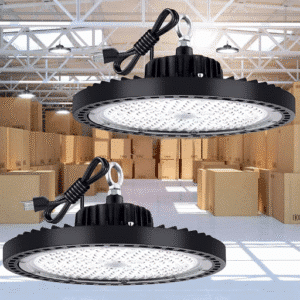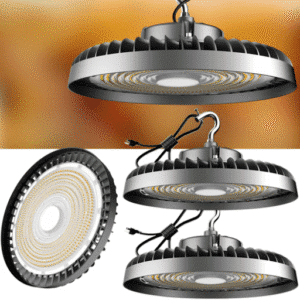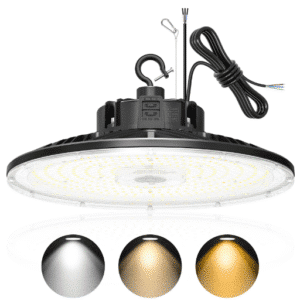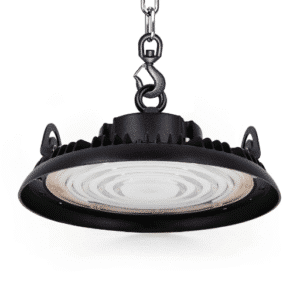

You can retrofit existing warehouse high bays to solar LED through three paths: replace old HID or fluorescent fixtures with all-new solar LED systems, add solar panels and batteries to existing LED fixtures, or install a hybrid grid-tied solar setup. The right path depends on your current fixtures, roof condition, electricity rates, and budget. Existing facilities outnumber new construction by 10 to 1, yet most solar lighting guides assume you are starting from scratch.
Jennifer is a facilities manager in Ohio with a 30,000 sq ft warehouse. Her 400W metal halide fixtures are 15 years old and burn out monthly. She assumed a solar retrofit meant replacing everything.
An engineering assessment showed her roof needed reinforcement, but Path 1 (full replacement) was correct due to fixture age. Her 68,000projecteliminateda68,000projecteliminateda28,000 annual lighting electricity bill. Payback against keeping the metal halide was 2.4 years.
This guide walks through the complete solar LED high bay retrofit process. You will learn the three retrofit paths, when each makes sense, what each costs, and the mistakes that add thousands of dollars to retrofit projects.
Key Takeaways
- Three retrofit paths exist: full fixture replacement (55k−55k−85k), add solar to existing LED (40k−40k−65k), and hybrid grid-tied (50k−50k−75k) for a 20,000 sq ft warehouse.
- Metal halide and fluorescent fixtures must always be replaced; LED fixtures under 5 years old can typically be reused with a solar add-on.
- Solar panels add 2-4 lbs per square foot to roof load. Improper disposal of mercury-containing fixtures carries EPA fines of 1,000−1,000−10,000 per violation.
When Solar Retrofit Makes Sense

Ideal Conditions for Solar Retrofit
Solar high bay retrofits deliver the strongest ROI when several conditions align. Electricity costs must exceed $0.18 per kWh. The facility must operate 12 or more hours daily to generate sufficient energy savings.
Roof space must be available for panel mounting, or ground-mount installation must be feasible. Current fixtures should be 400W metal halide, high-pressure sodium, or T5/T8 fluorescent. All of these are high energy consumers with poor efficiency.
Peak sun hours matter significantly. Facilities in regions with 4.0 or more worst-month peak sun hours see payback periods of 10-15 years. Regions below 3.0 peak sun hours extend payback beyond 18 years unless electricity rates are exceptionally high. NREL provides location-specific solar resource data at NREL Solar Maps.
When Grid-Powered LED Retrofit Is Better
Solar is not always the right answer. If your electricity rate is below $0.12 per kWh, a standard grid-powered LED retrofit delivers faster payback. Limited roof or ground space for panels makes solar impractical regardless of energy costs. Budget-constrained projects should prioritize the grid LED retrofit, which costs one-third to one-half of a solar equivalent.
When Hybrid Is the Right Answer
Critical 24/7 operations that cannot tolerate battery depletion should consider hybrid systems. If your facility already has LED fixtures installed, adding solar as a supplement reduces grid dependency without discarding recent infrastructure investment. Regions with severe seasonal sun variation create winter risk that pure solar cannot handle reliably.
Not sure whether solar or grid-powered LED is right for your facility? Our solar high bay lights vs grid-powered LED comparison breaks down the 10-year TCO by region and electricity rate.
Three Paths to Solar High Bay Retrofit
Path 1: Replace HID/Fluorescent with All-New Solar LED
This path is best for facilities with metal halide, high-pressure sodium, or fluorescent fixtures over 10 years old. The process removes all old fixtures, installs DC-native solar LED high bays, and adds the complete solar generation and storage system.
The cost range for a 20,000 sq ft warehouse is 55,000 to 55,000to 85,000. This path maximizes efficiency because DC-native fixtures eliminate inverter losses. Every component is sized together as a unified system. The downside is the highest upfront cost and the most disruptive installation.
Path 2: Add Solar and Battery to Existing LED High Bays
This path is best for facilities with LED fixtures installed within the last 5 years that are AC-compatible. The process keeps existing fixtures, adds either an inverter or DC driver upgrade, and installs panels, batteries, and charge controllers.
The cost range for a 20,000 sq ft warehouse is 40,000 to 40,000 to 65,000. Path 2 saves 8,000 to 8,000 to 15,000 versus Path 1 by avoiding fixture replacement. However, it requires an electrical compatibility assessment. AC LED fixtures with integrated drivers need an inverter, which adds 5-10% energy loss compared to DC-native systems.
Diego is an operations director in Texas with a 25,000 sq ft distribution center. His LED high bays were installed just 2 years ago. He wanted solar but did not want to waste a recent $12,000 LED investment.
Path 2 cost him 48,000versus48,000versus62,000 for Path 1. By reusing his fixtures and adding a DC driver upgrade, he saved $14,000 and achieved full solar offset for lighting.
Path 3: Hybrid Grid-Tied Solar Retrofit
This path is best for facilities wanting to reduce grid dependency without committing to full off-grid operation. The process installs solar panels and a smaller battery bank while keeping the grid connection as backup.
The cost range for a 20,000 sq ft warehouse is 50,000 to 50,000 to 75,000. The hybrid approach provides the lowest risk because grid power covers shortfalls. It works in regions with low winter sun where pure solar would fail. The trade-off is moderate upfront cost with lower annual savings because grid electricity still supplies part of the load.
Rebecca is a plant engineer in Minnesota running a food processing facility with 24/7 cold storage. She wanted solar but was concerned about winter sun, which drops to 2.8 peak hours in December, and critical uptime requirements.
She chose Path 3 with a hybrid grid-tied system. Solar now handles 70% of her lighting load. The grid covers the remaining 30% and serves as automatic backup.
Retrofit Cost Breakdown

Fixed Costs (Apply to All Three Paths)
Every solar retrofit incurs baseline costs regardless of path. Site assessment and engineering runs 1,500to1,500to3,000. Permits and inspections add 800 to 800 to 2,500 depending on jurisdiction. Panel mounting infrastructure, whether roof or ground, costs 2,000 to 2,000 to 5,000.
Path 1 Costs: Full Replacement
| Cost Item | Range |
|---|---|
| Fixture removal and disposal | 1,500−1,500−3,000 |
| New solar LED fixtures | 7,000−7,000−12,000 |
| Solar panels | 8,000−8,000−15,000 |
| LiFePO4 battery bank | 20,000−20,000−35,000 |
| Charge controllers and inverters | 3,000−3,000−5,000 |
| Electrical retrofit and DC wiring | 3,000−3,000−6,000 |
| Path 1 Total | 55,000−55,000−85,000 |
Path 2 Costs: Add Solar to Existing LED
| Cost Item | Range |
|---|---|
| Electrical assessment (AC-to-DC) | 500−500−1,000 |
| Inverter or DC driver upgrade | 2,000−2,000−4,000 |
| Solar panels | 8,000−8,000−15,000 |
| LiFePO4 battery bank | 20,000−20,000−35,000 |
| Charge controllers | 2,000−2,000−4,000 |
| Wiring modifications | 2,000−2,000−4,000 |
| Path 2 Total | 40,000−40,000−65,000 |
Cost Comparison by Path
| Metric | Path 1 (Full Replace) | Path 2 (Add Solar) | Path 3 (Hybrid) |
|---|---|---|---|
| Total Project Cost | 55,000−55,000−85,000 | 40,000−40,000−65,000 | 50,000−50,000−75,000 |
| Annual Energy Savings | 3,000−3,000−6,000 | 3,000−3,000−6,000 | 2,000−2,000−4,000 |
| Payback vs HID Baseline | 12-18 years | 10-15 years | 15-22 years |
| Payback vs Grid LED Baseline | 8-12 years | 6-10 years | 10-15 years |
| Fixture Reuse | None | 100% | 100% |
| Grid Dependency | None | None | Partial |
For a detailed breakdown of battery sizing and costs, see our (LiFePO4 batteries for solar high bay lights guide).
Step-by-Step Retrofit Process

Phase 1: Assessment (Weeks 1-2)
Start with a complete audit of existing fixtures. Document fixture type, age, condition, and mounting method. Assess roof structure for panel load capacity; solar panels add 2-4 lbs per square foot.
Evaluate electrical panel capacity and identify DC wiring paths from roof to battery location. Collect 12 months of electricity bills to establish baseline lighting load.
Phase 2: Design and Permitting (Weeks 3-6)
Select the retrofit path based on assessment findings. Size the solar array and battery bank using the methodology in our how to size a solar high bay lighting system guide. Submit permit applications to local authorities. Order long-lead items, primarily batteries and panels, which typically require 4-6 weeks delivery.
Phase 3: Pre-Installation Prep (Week 7)
Schedule installation downtime or plan phased installation to maintain partial lighting. Arrange fixture disposal; metal halide contains mercury and fluorescent tubes contain 4-5mg mercury each. The EPA classifies these as universal waste requiring proper recycling under EPA Universal Waste Regulations. Stage all materials and verify compatibility before installation begins.
Phase 4: Installation (Weeks 8-10)
Day 1-2: Remove old fixtures or prepare existing fixtures for solar integration. Day 3-5: Install panel mounting and run DC wiring from roof to battery location. Day 6-8: Install battery bank and charge controllers in a ventilated, temperature-controlled enclosure. Day 9-10: Install fixtures, commission the system, and perform initial testing.
Phase 5: Commissioning (Week 11)
Verify all fixtures operate at design output. Test battery charging and discharging cycles across a full 24-hour period. Configure monitoring systems if installed. Train maintenance staff on DC system safety, which differs from AC electrical safety procedures.
Fixture Compatibility and Reuse
Can You Reuse Existing LED High Bays?
DC-native fixtures are directly compatible with solar battery systems. AC LED fixtures with external drivers can often be adapted with a DC driver swap or by adding an inverter. Integrated AC LED fixtures require an inverter, which introduces 5-10% energy loss and adds cost.
Age is a critical factor. Fixtures under 5 years old are typically worth reusing. Fixtures over 8 years old should be replaced because LED efficiency degrades over time and older drivers may not be compatible with DC input. For help determining lumen requirements when selecting replacement fixtures, see our how many lumens for high bay lighting guide.
What Must Always Be Replaced
Metal halide and high-pressure sodium fixtures must always be replaced. They are inefficient, have short lifespans, and are not DC-compatible.
Fluorescent T5 and T8 tubes must also be replaced. They contain mercury, are inefficient by modern standards, and cannot run on DC power. Old magnetic ballasts must be removed even if you are keeping fluorescent tubes temporarily.
Mounting Hardware Reuse
Hook-style mounts are usually reusable if rated for the new fixture weight. Chain mounts should be inspected for corrosion but are typically reusable. Conduit is reusable if properly sized, though DC wiring may require additional conduit runs between panels, charge controllers, and fixtures.
For detailed guidance on fixture spacing and mounting during retrofit, see our warehouse lighting layout guide and our beam angle for high bay lights article.
Common Retrofit Mistakes to Avoid
Ignoring roof structural load. Solar panels add 2-4 lbs per square foot. Older roofs, especially those over 30 years old, may need reinforcement costing 3,000−3,000−8,000. A structural assessment before design prevents mid-project surprises.
Reusing outdated conduit without checking DC voltage drop. AC conduit sizing does not account for DC voltage drop over longer distances. DC systems typically require wire gauge one to two sizes larger than equivalent AC runs. NEC Article 690 covers solar PV system wiring requirements.
Skipping fixture disposal compliance. Metal halide bulbs contain 10-50mg of mercury each. Fluorescent tubes contain 4-5mg. The EPA fines improper disposal at 1,000−1,000−10,000 per violation. Always use certified hazardous waste recyclers.
Undersizing the inverter on Path 2 projects. The inverter must handle the peak inrush current of all fixtures starting simultaneously. A 20,000 sq ft warehouse with 36 fixtures at 150W each needs an inverter rated for at least 6,000W continuous with 9,000W peak capacity.
Not accounting for installation downtime. Retrofit installation requires lighting downtime. Plan for night or weekend work, or install temporary lighting during the transition. A phased approach (one bay at a time) extends the project but maintains operations.
Forgetting temperature effects on existing fixtures. DC-native solar LEDs have different thermal profiles than AC LEDs. Verify that existing fixture housings can dissipate heat adequately under DC driver configurations.
Payback and ROI by Retrofit Path

Path 1: Full Replacement
Path 1 has the highest upfront cost but delivers maximum efficiency gains. A 20,000 sq ft warehouse with 36 fixtures converting from 400W metal halide to 150W solar LED eliminates approximately 26,000inannuallightingelectricitycostsat26,000inannuallightingelectricitycostsat0.14 per kWh.
Over 10 years, savings total 260,000 minus the 260,000 minus the 55,000-$85,000 project cost. Payback against keeping old HID is 12-18 years. Payback against a grid-powered LED retrofit baseline is 8-12 years.
Path 2: Add Solar to Existing LED
Path 2 offers the lowest upfront cost when LED fixtures are already installed. A facility with existing LED high bays already saves 60-75% versus metal halide. Adding solar eliminates the remaining electricity cost entirely.
Ten-year savings range from 25,000to25,000to50,000. Payback is 10-15 years. This path delivers the best ROI when existing LED is under 3 years old.
Path 3: Hybrid
Path 3 has moderate upfront cost with the lowest risk. The 20,000 sq ft warehouse example reduces grid lighting consumption by 60-70%.
Annual savings are 2,000−2,000−4,000 depending on solar fraction and electricity rate. Ten-year savings range from 15,000to15,000to35,000. Payback is 15-22 years. This path suits facilities with uncertain future energy needs or critical uptime requirements.
Access Fixtures documented a solar LED parking lot case study showing 56.6% lower 10-year TCO compared to grid-powered equivalents. Bosunlighting’s cost breakdown provides additional 20-year solar vs grid comparison data.
Frequently Asked Questions
Can I retrofit fluorescent high bays to solar LED?
Yes, but you must replace the fluorescent fixtures entirely. Fluorescent tubes and ballasts are not DC-compatible and contain mercury. Path 1 (full replacement) is the only viable option for fluorescent retrofits.
Do I need to replace all fixtures or can I add solar to existing LED?
If your LED fixtures were installed within the last 5 years and use external drivers, Path 2 (add solar to existing LED) is often viable. Integrated AC LED fixtures require an inverter upgrade. Fixtures over 8 years old should be replaced.
How long does a solar high bay retrofit take?
A typical 20,000 sq ft warehouse retrofit takes 10-12 weeks from assessment to commissioning. Assessment and permitting consume 6-8 weeks. Actual installation takes 2-3 weeks. Commissioning and testing add 1 week.
What permits do I need for solar retrofit?
Most jurisdictions require electrical permits for DC wiring, structural permits for roof-mounted panels, and building permits for battery enclosure installation. Some areas also require fire department approval for battery storage. Start permit applications during the design phase.
Can I do a phased retrofit one section at a time?
Yes. Phased retrofits allow you to maintain operations in unmodified sections while upgrading one bay or zone at a time. This extends the overall project timeline but eliminates downtime. Plan electrical infrastructure to support future phases.
What happens to my existing electrical panel?
The existing AC panel remains in place for non-lighting loads and hybrid grid connections. A new DC distribution panel is added for the solar lighting circuit. On Path 2 projects, the inverter connects between the DC solar system and the existing AC panel.
Is solar retrofit worth it for a warehouse with new LED already installed?
It depends on your electricity rate and sun exposure. If you pay over 0.18 per kWh and receive 4.0 or more peak sun hours, Path 2 can deliver 10−15 year payback. Below those thresholds, the savings may not justify the 0.18 per kWh and receive 4.0 or more peak sun hours, Path 2 can deliver a 10−15 year payback. Below those thresholds, the savings may not justify the $40,000- $65,000 investment.
How do I dispose of old metal halide fixtures?
Metal halide bulbs and fluorescent tubes are EPA universal waste. You must use a certified hazardous waste recycler. Fixture housings (aluminum, steel) can go to standard metal recycling. Document all disposal for compliance records.
Will retrofitting void my roof warranty?
Possibly. Most roof warranties cover penetration-based mounting but require notification and sometimes approved installers. Ballasted (non-penetrating) mounting systems typically do not void warranties. Check your warranty terms before finalizing panel mounting design.
Can I retrofit only part of my facility?
Yes. Partial retrofits are common for budget-constrained projects or facilities with mixed lighting needs. Solar can power one wing, one floor, or one zone while the rest remains grid-powered. Size the solar system for the retrofitted area only.
Conclusion
Solar LED high bay retrofit comes down to three paths. Replace everything if your fixtures are old and inefficient. Add solar to existing LED if your fixtures are recent and compatible. Go hybrid if you need grid backup for critical operations.
The biggest mistake is assuming solar retrofit requires replacing everything. Diego in Texas saved 14,000 by reusing 2-year-old LED fixtures. The second biggest mistake is ignoring roof load and disposal compliance. Jennifer in Ohio missed a 14,000 by reusing 2-year-old LED fixtures. The second biggest mistake is ignoring roof load and disposal compliance. Jennifer in Ohio early missed a 3,200 roof reinforcement cost that would have blown her budget.
Start with a thorough assessment of your existing fixtures, roof structure, and electrical infrastructure. Then match your conditions to the right path. Get the path right and your retrofit delivers 10-15 years of energy independence. Get it wrong and you spend years recovering from a poorly planned project.
Ready to determine which solar retrofit path fits your facility? Probapro engineers provide free retrofit assessments including fixture audits, roof load analysis, and path-specific ROI projections. Request your facility assessment and get a detailed retrofit plan tailored to your building and existing infrastructure.