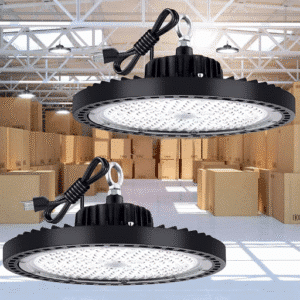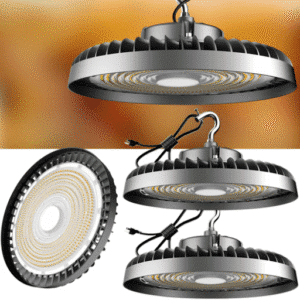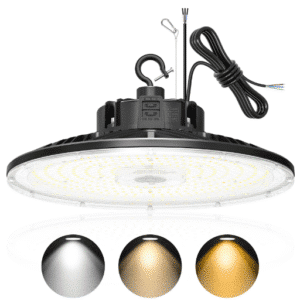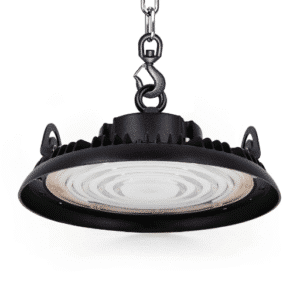

Low bay lighting applications show up in small warehouses, retail floors, workshops, gymnasiums, parking garages, manufacturing assembly areas, and cold storage rooms. Basically any commercial or industrial area with ceilings around 12 to 20 feet kinda ends up in the low bay range. Pick the wrong fixture for the wrong space, and yeah, you end up wasting energy, causing glare, and also cutting down the lifespan of your investment.
That’s pretty much what happened to a regional auto parts distributor last quarter. The facility manager, Tom Reyes, put in 240W high bay fixtures across his 16-foot ceiling warehouse, and he was sure that more watts was basically better light. After about six months in, his team started complaining about glare around aisle 4, the electric bill jumped 38%, and three fixtures had already failed due to heat related driver issues. The solution wasn’t “more lighting”. It was the correct lighting category: low bay.
This guide covers all the main low bay lighting applications, the exact specifications that pair with each use case, and the return on investment you can realistically expect when you specify correctly, from day one. Interested in low bay lighting? Check out our “What is Low Bay Lighting?” guide.
Key Takeaways
- Low bay lighting applies to spaces with ceilings between 12 and 20 feet, including warehouses, retail floors, gyms, workshops, and parking garages.
- Each application demands different lumen targets, beam angles, and IP ratings. One fixture spec does not fit all.
- Switching to LED low bay fixtures typically cuts lighting energy use by 50 to 75% versus metal halide or fluorescent equivalents.
- The biggest specification mistakes are using high bay fixtures in sub-20-foot spaces, ignoring beam angle, and skipping IP ratings in humid or dusty environments.
- Payback for an LED low bay retrofit usually falls between 9 and 24 months, depending on operating hours.
What Counts as a Low Bay Lighting Application?

A low bay lighting application is basically any space with a finished ceiling somewhere between 12 and 20 feet, and it needs uniform, industrial-grade illumination. If you’re below 12 feet, then standard troffers or commercial downlights really take care of it. But above 20 feet, it’s not the same story, because optics, beam angle, and the lumen output of high bay fixtures become the main thing.
So low bay fixtures are engineered for this middle range, you know that sweet spot. They usually deliver something like 2,000 to 20,000 lumens, and the beam angle is often 120 degrees or wider. The wide beam helps with consistent coverage, especially at those lower mounting heights, and it tends to avoid harsh hotspots or glare right underneath the fixture.
When to Choose Low Bay Over High Bay
If your ceiling sits between 12 and 18 feet, default to low bay. The 18 to 22 foot range is a transition zone where either category can work, depending on layout, optics, and the work being done at floor level. Above 22 feet, high bay almost always wins.
Need a deeper breakdown? Read our full guide on (high bay vs low bay lighting).
Industrial Low Bay Lighting Applications
In industrial settings, lighting fixtures have to handle dust, vibration, temperature swings, and basically run 24/7 without giving up. Those are the usual low bay lighting applications, in most cases.
Small and Mid-Size Warehouses
Warehouses with about 14 to 20 foot ceilings are probably the biggest category for these fixtures. For smaller storage spaces (under 20,000 square feet), the goal is pretty consistent coverage across the shelving lines, picking aisles, and also the loading areas.
Recommended specs:
- Wattage: 100 to 150W
- Lumen output: 15,000 to 22,000 lumens
- Beam angle: 120 degrees
- Color temperature: 5000K
- IP rating: IP65 minimum
Switching from metal halide to LED low bay typically cuts warehouse lighting energy use by 60 to 70%, according to DOE Solid-State Lighting research. A 20,000 square foot warehouse running 12 hours per day can save 8,000to8,000to12,000 annually.
See real warehouse savings in action. Use our LED high bay ROI calculator to model payback for your specific facility.
Manufacturing and Assembly Areas

Assembly lines, machine shops, and inspection bays need more than just brightness and stuff. They really need color accuracy, because workers—when they are spotting defects, soldering components, or taking a look at welds—have to rely on a high CRI (Color Rendering Index). Otherwise the flaws can hide a bit, and the colors won’t show up in a faithful way.
Recommended specs:
- Wattage: 100 to 150W
- CRI: 80 minimum, 90+ for fine inspection work
- Color temperature: 4000K to 5000K
- Beam angle: 120 degrees, with optional 90 degree task lighting overhead
Beam uniformity matters as much as raw brightness in manufacturing. Shadow gaps near machinery create safety risks and slow inspection workflows.
Auto Repair Bays and Workshops
Auto repair shops, fabrication workshops and equipment maintenance bays kinda sit firmly in the low bay category. The ceilings are usually 12-16 feet, and most of the work goes on right under vehicles, on work benches and in those enclosed equipment areas too.
Sarah Chen, she’s a fleet maintenance supervisor from Dallas, retrofitted her 8-bay truck shop in 2025 with 150W LED low bay fixtures, which are mounted at 14 feet. Her techs said they got rid of the under-vehicle shadow gaps that basically used to force handheld work lights. For yearly lighting expenses, it went from 6,400 to 1,900, and ballast replacements stopped eating up weekend maintenance time altogether.
Recommended specs:
- Wattage: 100 to 150W
- IK rating: IK08 minimum for impact resistance
- Vibration tolerance: critical for shops near heavy equipment
- IP rating: IP65 for shops with washdown procedures
Commercial Low Bay Lighting Applications
Commercial low bay lighting applications are really about visual comfort, color rendering, and the whole customer experience too, not only efficiency, of course.
Retail Stores and Showrooms
In retail spaces with 14 to 18 foot ceilings (you know, big-box stores, furniture showrooms, and warehouse-style retailers) they use low bay lighting so the products look clear, but nobody gets blinded while walking around. The target is generally 70 to 100 foot-candles on the sales floor, with a steady color temperature, throughout.
Recommended specs:
- Color temperature: 3500K to 4000K (warmer for apparel, cooler for hardware)
- CRI: 85+ for accurate product presentation
- Beam angle: 120 degrees for uniform floor coverage
- Optional dimming for time-of-day adjustments
A regional grocery chain, sort of retrofitted its produce section in early 2026 with 4000K CRI 90+ low bay LED s. Within about 60 days, the store manager said the produce color was more vivid, and there was a noticeable lift in category sales too, in a measurable way. The recommended foot candle ranges for each space type are published by the Illuminating Engineering Society.
Distribution and Logistics Centers
Sub 20-foot distribution centers, especially cross dock facilities and last mile fulfillment hubs, kinda get lumped into the low bay category. Conveyor lines, sortation zones, and shipping lanes really need shadow free illumination at moderate ceiling heights, not just “bright enough”.
These locations do well with motion activated controls, and in fact they can be dialed in further. If you integrate Bluetooth Mesh or occupancy sensors with Probapro UFO LED fixtures , you can cut the lighting load by another 30 to 50% in low traffic areas.
Fitness Centers and Indoor Recreation
Fitness centers, boutique gyms, and indoor recreation rooms with ceilings sitting somewhere around 14 to 18 feet, usually need lighting that is uniform and glare-free , so it doesn’t suddenly blind people while they’re doing overhead movements. Impact-rated housings are also helpful, because they protect fixtures from errant medicine balls and those inevitable dropped bits of equipment.
Institutional and Public-Space Applications

Schools, municipal buildings, and shared public infrastructure represent a growing segment of low bay lighting applications.
School and Community Gymnasiums
Smaller gymnasiums and multipurpose rooms with 16 to 20 foot ceilings sit at the border of low bay and high bay. Choose low bay when ceiling height is under 20 feet and impact resistance matters more than maximum lumen output. For larger competition gyms above 20 feet, see our (gym high bay lighting guide).
Recommended specs:
- IK10 impact rating
- Wire guard or polycarbonate lens
- 100 to 150W output
- 4000K to 5000K color temperature
Parking Garages and Covered Structures
Covered parking decks, especially the ones with low overhead clearance (12 to 16 feet ) kind of depend on low bay fixtures, rated for humidity and condensation, plus occasional impact, so that’s the kind of reliability you really need. In these places IP65 or IP66 ratings are basically non negotiable.
Motion sensor integration is usually the standard here, it’s not something you skip. Parking garages often run 24/7, even when occupancy is low, so automated dimming and occupancy controls, ends up being the single biggest energy saver across the entire low bay category.
Cold Storage and Refrigerated Spaces
In cold storage rooms where the ceiling height is under 20 feet you need fixtures that are good for low temperature work,like down to -40°C, and they should also be guarded against moisture getting in during the defrost cycles. In other words standard low bay fixtures tend to burn out quickly in these places.
How to Specify the Right Low Bay Fixture for Your Application
Use this five-step process to match a fixture to any low bay lighting application.
- Confirm ceiling height. Measure from floor to fixture mounting point, not floor to ceiling deck.
- Calculate target foot-candles. Use IES lighting recommendations for your space type and task.
- Match beam angle to spacing. A 120 degree beam at 14 feet mounting height covers roughly 24 feet of floor diameter at usable illumination.
- Choose the right IP rating. IP65 for general indoor environments, IP66 for washdown or outdoor-adjacent spaces.
- Confirm CRI and color temperature. CRI 80+ for general work, 90+ for inspection or retail color accuracy.
Low Bay Lighting Decision Matrix
| Application | Ceiling Height | Recommended Wattage | Beam Angle | Min IP Rating |
|---|---|---|---|---|
| Small Warehouse | 14 to 20 ft | 100 to 150W | 120° | IP65 |
| Manufacturing | 14 to 18 ft | 100 to 150W | 120° | IP65 |
| Auto Repair | 12 to 16 ft | 100 to 150W | 120° | IP65 |
| Retail Showroom | 14 to 18 ft | 80 to 120W | 120° | IP40 |
| Parking Garage | 12 to 16 ft | 60 to 100W | 120° | IP66 |
| Gymnasium | 16 to 20 ft | 100 to 150W | 120° | IP65 |
| Cold Storage | 14 to 20 ft | 100 to 150W | 90° to 120° | IP66 |
Common Mistakes When Selecting Low Bay Lighting

The same specification errors show up across every low bay lighting application. Avoid these and you will avoid most retrofits.
- Using high bay fixtures in 16-foot spaces. High bay optics focus light too narrowly at low heights, creating hotspots and glare.
- Ignoring beam angle. A 60-degree fixture at 14 feet creates dark gaps between fixtures. Always pair beam angle to spacing.
- Underestimating lumen depreciation. Plan for up to 30% output loss over 50,000 hours. Specify slightly above your initial target.
- Skipping IP ratings in humid or dusty spaces. Auto shops, food production, and refrigerated rooms eat unrated fixtures quickly.
- Choosing the wrong color temperature. 5000K feels harsh in retail. 3000K feels dim in manufacturing inspection.
ROI by Application: What to Expect
Payback varies based on operating hours, energy rates, and the technology being replaced. Here is what to expect for the three most common low bay lighting application types.
24/7 operations (distribution centers, cold storage): 9 to 12 month payback typical. High operating hours accelerate energy savings.
Single-shift warehouses and workshops (12 hours/day): 12 to 18 month payback. Most facilities recover the upgrade within the same fiscal year.
Retail and limited-hour commercial spaces (10 hours/day): 18 to 24 month payback. Slower than industrial use cases, but still well within the 7+ year fixture warranty window.
According to the DOE Energy Efficiency program, commercial lighting accounts for roughly 17% of total commercial electricity use in the United States. LED retrofits remain one of the fastest-payback efficiency investments available to facility teams.
Putting It All Together
Low bay lighting applications kinda cover more ground than most facility managers realize, at least in practice. From a 14-foot warehouse to a 16-foot retail showroom, an 18-foot gymnasium, to a 12-foot parking deck, the right fixture can change day to day operations while also trimming bills. The wrong fixture, wastes energy and can create safety hazards and it also tends to shorten equipment life.
Five rules cover every situation:
- Match ceiling height to fixture class (12 to 20 feet equals low bay).
- Pair beam angle to spacing for uniform coverage.
- Specify IP rating to your environment, never below.
- Choose CRI and color temperature for the task at hand.
- Calculate ROI based on real operating hours, not generic averages.
Low bay lighting applications cover a lot more than most facility managers think. Like from a 14-foot warehouse to a 16-foot retail showroom, and even in an 18-foot gymnasium, then down to a 12-foot parking deck, the proper fixture really changes day-to-day operations while also trimming energy costs. But the wrong fixture, yeah it tends to waste power, can turn into safety hazards, and it shortens equipment life.