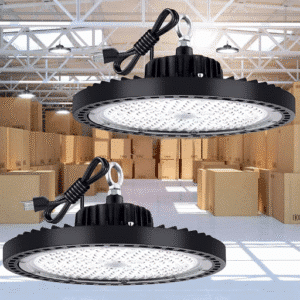
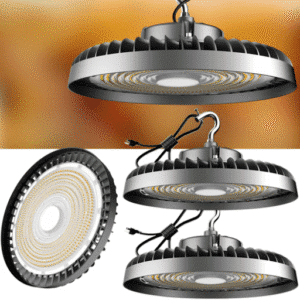
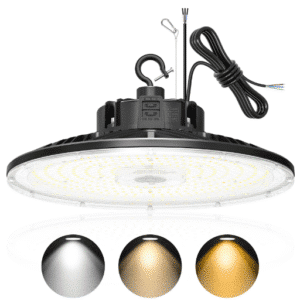
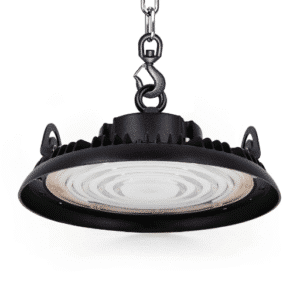
LED high bay lighting is the best in every respect where industrial functioning is concerned: energy consumption, maintenance, light quality, and compliance. A 100-lamp warehouse going from T5HO fluorescent to LEDs generally saves around $6,700 a year purely on electricity alone and with a payback period for 24/7 facilities of fewer than two years.
However, come 2026, the biggest thing will not really be the savings. That will be supply chain risk. Replacement fluorescent tubes are already scarce. State bans are growing. Also, the federal deadline for July 2028 will render fluorescent technology non-compliant in the whole of the U. S. When your facility runs with fluorescent high bays still, there is no question of if-you have to upgrade; now, it only depends on when.
This guide will flesh out energy expenses and the defectiveness of maintenance, juxtaposed with captivating measures, and real-life set-up. Data points will give an assessment when making the right decision for your operation.
Key Takeaways
- On average, the LED high bays use about 60–75% less energy compared to T5HO fluorescents while saving about $67 per fixture on a 24-hour operation.
- Fluorescent high bays have to go through a relamping cycle every 2–3 years in harsh facilities, while LEDs are maintenance-free, with lifetimes exceeding 10 years.
- Seven states have already planned to ban fluorescent tube sales by 2025, while a 120 LPW federal standard took effect in July 2028 that fluorescent technology was unable to meet.
- With major manufacturers phased out of the fluorescent market, replacement tubes are slated for extinction, only for a handful of companies left holding the candle.
- LED upgrades can pay for themselves in a span of 1.7 to 3.5 years within a facility that runs at least two regulatory shifts.
The Regulatory Reality: Why Fluorescent Is Disappearing

The transition from fluorescent to other lighting types is simply not something of the future. It is rather a reality set in action.
State Bans Already in Effect
Seven states have indeed shut down all sales of linear fluorescent tubes by January 2025 in California, Colorado, Hawaii, Maine, Oregon, Rhode Island, and Vermont. Think of T5, T8, and T12 lamps as they are usually mounted in fluorescent high bay fixtures throughout warehouses and factories across the country. Included in these states are Minnesota, Maryland, and Illinois set to commit till 2027. For a deeper comparison of high-bay and low-bay lights, please refer to our complete (guide to high-bay vs low-bay lights).
Even if your territory is still not banning fluorescents as we speak, all the major distributors are already in the process of trimming their inventories as nearly irreversible action is bound to follow. They just simply will not be able to sell illegal products within their major markets. Their plans will now have to sway toward promoting LED options.
Federal July 2028 Deadline
The U.S. Department of Energy has signaled that fluorescent technology is in “permanent decline.” A federal standard requiring 120 lumens per watt is expected to take effect in July 2028. Fluorescent T8 tubes reach about 80–90 lumens per watt. T5HO systems reach roughly 80–105. Neither can meet the new rule. LED high bays already deliver 140–160+ lumens per watt. They are well above the standard.
In practical terms, July 2028 is the end of the legal fluorescent market in the United States.
Supply Chain Collapse
GE, Philips, and Sylvania have exited or cut back on fluorescent production. Replacement tubes are already scarce in many regions. Prices are rising wherever stock remains. For facility managers, this means the cost of keeping fluorescent systems running is climbing fast. That is before you even count energy or maintenance costs.
Want to explore what LED high bay options are available for your facility? See our complete guide to UFO high bay lighting and find the right fixture for your ceiling height and layout.
Energy Efficiency: What the Numbers Actually Look Like
Facility managers encounter energy consumption as their primary comparison between lighting technologies. The difference between LED and T5 is immense and is expanded to a much bigger scale when considering the full system wattage.
System Wattage Comparison
A typical 4-lamp T5HO fluorescent high bay light fixture draws an approximate 234 watts- including ballast losses. Another 150W UFO high bay with the same or higher usable light output draws around 150 watts. This is a massive difference of 36% more at the fixture level without needing to consider multiple other controls and operational efficiencies.
The gap is larger than bulb ratings suggest for two reasons. Fluorescent systems need ballasts that add 10–15% to the stated wattage. LEDs draw exactly what the driver specifies. There is no hidden overhead.
Annual Cost Per Fixture
Under a standard commercial tariff of 0.09 per kilowatt−hour, lights running 24 hours a day, a 100-watt fluorescent high bay would cost around 185 per year to operate. A compatible LED fixture costs about $118 annually. The difference amounts to an annualized amount of 118 per year. Of this, 67 will accrue per fixture annually.
In a 100-fixture warehouse, 6,700 a year is saved in cost-serving electricity costs alone. Scale this up to a 300-fixture distribution center, with the annual energy reduction just exceeding 6,000 yearly in cost-saving electricity costs alone; in a 300-fixture distribution facility, that would rise well above 20,000.
Lumens Per Watt
System efficiency tells the full story. Fluorescent T5HO high bays deliver about 80–105 lumens per watt. Modern LED high bays deliver 140–160+ lumens per watt. LEDs produce more light from every watt of electricity. That means lower operating costs and brighter work environments.
Maintenance and Total Cost of Ownership

Although often overshadowed by energy savings, maintenance costs have been the key deterrent in the true financial feasibility for an LED upgrade, particularly in facilities with high ceilings, where the replacement of each lamp requires a lift, an electrician and production downtime.
Lifespan and replacement frequency
In industrial applications, fluorescent lamps typically last 15,000 – 30,000 hours. That works out to a relamp after every 2-3 years of continuous operation. In striking contrast, LED high bays are rated for anywhere between 50,000 and 100,000+-some 10 to 12+ years free from maintenance under the same operational environment.
Over a 10-year period, a fluorescent system will require 3 to 5 complete relamping cycles. An LED system will require zero.
The Hidden Cost of High-Bay Maintenance
When Marcus Chen reviewed his maintenance logs from 2023, he found a pattern he had missed. His 80 fluorescent high bays needed relamping twice that year. Each event required a rented lift at 200–200–300 per day. He needed an electrician at $75 per hour. Replacement tubes cost $75 per hour. Replacement tubes cost 20–30 each. Some fixtures failed mid-cycle and needed new ballast too. By year-end, his lighting maintenance budget has exceeded 30 each. Some fixtures failed mid-cycle and needed new ballasts too. By year-end, his lighting maintenance budget had exceeded 12,000. That did not even include lost productivity from blocking aisles during repairs.
As the above paragraph explains, the cost of actual relamping in real terms always lasts for 60-75 dollars per fixture inclusive of other costs like labor and lift rental and parts etc. Looking at about a 100-fixture facility, however, over the 10-year period with 3 cycles of relampings or more, maintenance costs are worth more than $13,500.
10-Year Total Cost of Ownership
| Cost Factor | Fluorescent T5HO (100 Fixtures) | LED High Bay (100 Fixtures) |
|---|---|---|
| Initial Fixture Cost | $12,000 | 11,000–11,000–14,000 |
| Energy (10 years, 24/7) | $185,000 | $118,000 |
| Maintenance (relamping/labor) | $13,500+ | Near zero |
| Replacement Tubes/Ballasts | 6,000–6,000–9,000 | $0 |
| 10-Year TCO | $216,500+ | 129,000–129,000–132,000 |
The total cost of ownership gap exceeds $84,000 over a decade for a 100-fixture warehouse. For larger facilities, the savings scale proportionally. For additional per-fixture cost data and ROI scenarios, see Epic Electrical’s 2026 analysis.
Performance and Safety in Industrial Environments

Numbers matter together with how your team experiences on the floor. Light quality, reliability, and environmental performance directly affect the safety of all concerned, as well as productivity and operational excellence.
Instant-On vs. Warm-Up
LED high bays reach full brightness by the time power is directed. In a fluorescent fixture, however, a warm-up period of between 30 seconds and 3 minutes will also be required to achieve full brightness, if colder it takes even more time. For places where a good part of daily operations takes place at night, such as loading docks or emergency actions, this intermittent problem directly affects safety and operations.
Cold Storage and Unheated Warehouses
Fluorescent systems fail at or below 50°F. In cold storage facilities, unheated warehouses, or loading docks during the colder months, fluorescents become dim, fail to start, lessen in intensity, or struggle in producing adequate temperature. LED high bays operate reliably for up to -40°C. Therefore, they should always be considered for such facilities with temperature variation.
Light Quality and Coherence
Routine in fluorescent lamps are malfunctions that manifest as color shifting, flicker, and lessening brightness. This leads to uneven, patchy lighting that hurts worker vision and slows performance. LED high bays preserved with color consistency and flicker-free aspects through the life of the bulb put out even light that maintains appropriate working conditions and safety.
Heat Output and HVAC Load
Fluorescent high bays emit roughly 200–290 BTU per hour. LED fixtures emit approximately 125–135 BTU per hour. In climate-controlled facilities, that reduced heat load translates to lower cooling demand. Industry estimates suggest switching to LED can reduce HVAC energy use by 3–5% in spaces where lighting contributes significantly to the thermal load.
Retrofit vs. Full Replacement: What Works for High Bays?
Some facilities consider inserting LED tubes into existing fluorescent housings as a lower-cost path to conversion. For high bay applications, this approach carries significant drawbacks.
The Problem with LED Tubes in Fluorescent Housings
Old fluorescent high bay housings rely on reflectors to redirect light from 360-degree-emitting tubes toward the work plane. Those reflectors trap a meaningful percentage of light — typically 15–30% — even when fitted with directional LED tubes. You also retain the aging ballast (or must rewire the fixture), which introduces an additional failure point and limits rebate eligibility.
Full LED high bay fixtures are engineered with built-in optics that direct light precisely where it is needed, with no reflector loss and no ballast to fail. They also qualify for significantly higher utility rebates because they are listed as complete, integrated systems.
Need help planning your retrofit? Our high bay lighting installation guide covers spacing, mounting options, and project timelines.
ROI by Operating Schedule

Not every facility runs 24/7, so payback timelines vary. Here is how the numbers break down by usage pattern.
| Facility Usage | Annual Savings Per Fixture | Simple Payback Period |
|---|---|---|
| 24/7 Operations (8,760 hrs/yr) | ~110–110–130 | ~1.7 years |
| Two-Shift (16 hrs/day, ~5,840 hrs/yr) | ~75–75–90 | ~2.5–3.5 years |
| Single-Shift (8 hrs/day, ~2,080 hrs/yr) | ~35–35–45 | ~4–6 years |
| Limited Use (under 20 hrs/week) | ~10–10–15 | 6+ years |
The payback calculation includes energy savings (~67/fixture/yr at 24/7) plus eliminated maintenance costs( 67/fixture/yr at 24/7) plus eliminated maintenance costs( 45–60/fixture/yr in relamping and labor). For two-shift operations, total annual savings typically reach 60/fixture/year (relamping and labor). For two-shift operations, total annual savings typically reach 75–$90 per fixture, yielding payback in roughly 3.5 years.
Facilities with limited operating hours face a weaker direct financial case. However, the supply chain risk and regulatory deadlines still favor LED. Even for single-shift operations, the 10-year TCO advantage remains substantial.
Environmental and Disposal Considerations
Mercury is incorporated into fluorescent tubes and a single tube contains 3-5 milligrams. Broken tubes or used tubes should be treated as hazardous waste. Sadly enough, about 70-75% of the tubes are being disposed of in a cavalier fashion, which amounts to a massive environmental hazard. The last gasp, LED highbays are winning because they do not contain any mercury and can reduce landfill wastage by about 80 percent over their life. It will also reduce carbon emissions due to use of less power.
LED high bay is making a big difference in environmental performance for companies with ESG reporting requirements or anyone interested in planning according to sustainability.
Frequently Asked Questions
Is it viable to replace fluorescent high bays with LEDs?
Correct, to a large extent in industrial locations. If your usage works into 40 hours or more on a weekly basis, you’d find that the long-term energy efficiency gains of LED high bays ($ are typically 2.5 to 3 years) repay capital costs. There are strict governmental guidelines that are being established and enforced for taking down less energy-efficient lighting, and there is a pending outright ban on the supply chain even without others.
Can you put LED tubes in fluorescent high bay fixtures?
In technical terms yes, but high bay applications aren’t advised for this, as ancient reflectors spill light, aged ballasts are an Achilles’ heel, and retrofitted tube installations do not qualify for the highest utility rebates. Full LED fixture replacements offer superior light distribution, better efficiency, and longer life cycle.
Why are fluorescent tubes being banned?
State and federal regulations are phasing out fluorescent technology due to low energy efficiency, mercury content, and the availability of superior alternatives. The federal 120 LPW efficacy standard effective July 2028 will make standard fluorescent tubes federally non-compliant, effectively ending the legal market.
Do LED high bays work in cold storage?
LED high bays cope with the harshest climates for operations even when it plummets down to -40°C, which means their use under cold storage conditions and unheated warehouses, while the use of fluorescent tubes becomes a lot more formidable, as they begin failing around 50°F and cannot start under freezing conditions.
Conclusion: Make the Switch Before the Switch Is Made for You
LED high bay lighting is no longer an alternative to fluorescent. It is the standard for industrial facilities that need reliable, efficient lighting. The energy savings are measurable, the maintenance reduction is substantial, and the regulatory trajectory is clear.
For facilities running multiple shifts, the financial case is strong: payback in under two years for 24/7 operations, and under four years for two-shift facilities. But even where the direct payback is slower, the combination of supply chain risk, state bans, and the July 2028 federal deadline means that delaying the decision carries its own costs.
If you are still running fluorescent high bays, now is the time to plan your replacement. Calculate your annual energy and maintenance costs. Check the availability of replacement tubes in your area. Build a retrofit plan that keeps your operations compliant and your lighting reliable for years to come.
Ready to upgrade your facility? Explore our warehouse lighting solutions and find the right high bay LED fixtures for your ceiling height, layout, and operational needs. Get a custom quote and start cutting costs from day one.