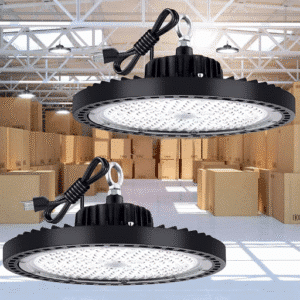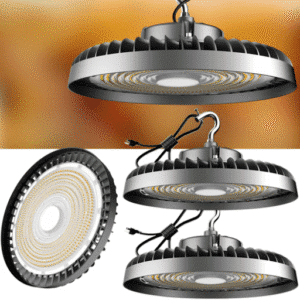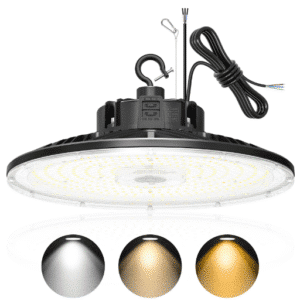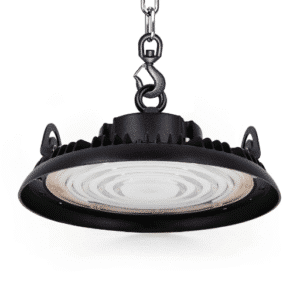

The industrial-grade low bay lighting system functions as a ceiling fixture which operates in areas that have ceiling heights ranging from 12 feet to 20 feet. The fixtures produce between 2000 and 20000 lumens which they distribute through a beam that exceeds 120 degrees to provide even illumination that removes all intense shadows and bright spots when installed at lower heights.
Most facility managers encounter this fundamental problem. They buy lights based on wattage or price alone. They install lights with no further action while they wait for their results which leads to dark areas that consume power and create safety hazards through insufficient lighting.
The selection of a fixture type holds equal significance to the choice of a particular brand.
The guide establishes low bay lighting as its own entity because it exists independently from high bay lighting. The system enables you to determine the exact system requirements which you need to complete your project before making any expenses.
Key Takeaways
- Low bay lighting is built for ceilings 12–20 feet high and uses wide beam angles to prevent glare.
- Using high bay fixtures on low ceilings creates dangerous glare and wastes energy.
- Choose fixtures by lumens and efficacy, not wattage alone.
- The typical LED low bay retrofit achieves cost recovery within 1.5 to 3 years through energy and maintenance savings.
- Industrial applications require equipment to meet three minimum standards which include IP65 and DLC Premium certification and a five-year warranty.
What Is Low Bay Lighting?
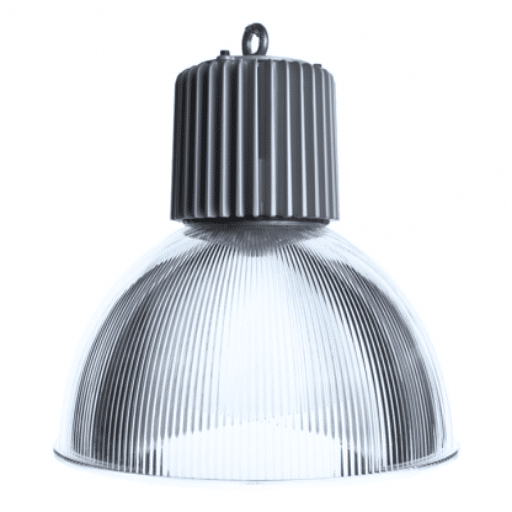
Low bay lighting refers to LED fixtures which designers created to function in spaces with ceilings lower than 20 feet. The units produce light which extends across an entire floor area from their designated distance. For a deeper comparison of high-bay and low-bay lights, please refer to our complete (guide to high-bay vs low-bay lights).
Ceiling Height Range
The industry standard is clear. Low bay fixtures provide optimal performance between 12 and 20 feet. Some manufacturers extend the lower bound to 8 feet, but the core range remains 12 to 20.
Troffer and panel lights become more appropriate for spaces which have heights under 12 feet. High bay fixtures deliver focused lighting, which becomes necessary for work areas that exceed 20 feet height.
If you need to dig deeper into how ceiling structure affects fixture placement, our guide on (ceiling height for high bay lighting) covers the full framework.
Lumen Output and Beam Angle
The majority of low bay LED fixtures produce light output which ranges from 2000 lumens to 20000 lumens. The beam angle represents the primary aspect which defines the system. Standard low bay units use 120-degree optics or wider. The light distribution pattern from this fixture creates an extended coverage area which prevents the formation of bright light spots underneath the lighting device.
A narrow beam which projects from a distance of 15 feet creates a small illuminated area while leaving the remaining space in darkness. The same height enables a 120-degree beam to provide complete floor coverage.
Diffusers and reflectors and specialized lenses serve as standard components for low bay fixtures because of their main function. The optical components create a gentle light output which minimizes glare that affects workers stationed beneath.
How Low Bay Lighting Differs from High Bay
The difference is not just a number on a spec sheet. It is the difference between a safe, productive workspace and one where technicians squint, miss details, and burn through energy budgets.
Want to know (what is high bay lighting)? Please see our related guide.
| Feature | Low Bay Lighting | High Bay Lighting |
|---|---|---|
| Ceiling Height | 12–20 feet | 20–45+ feet |
| Typical Lumen Output | 2,000–20,000 lumens | 10,000–100,000+ lumens |
| Beam Angle | 120° or wider | 60°–120° (often narrower) |
| Glare Control | Diffusers and shallow reflectors | Deep reflectors or lenses |
| Common Wattage | 50–150W | 100W–400W+ |
The installation of 200W UFO high bays into his 16-foot auto repair shop led Marcus to believe that increased power would result in superior lighting. His technicians reported headaches and eye strain within three weeks. Tool chests and vehicle hoods reflected intense light from the narrow beams which created sharp glare.
He installed 80W low bay fixtures that produced 120-degree beam angles. The shop floor achieved complete illumination. The business experienced a 60% reduction in energy expenses. His team members ceased their complaints.
The expense arises when businesses choose incorrect product categories. High bay fixtures use their light distribution to create downward illumination which extends over wide areas. The low ceiling space makes concentrated light hazardous to use.
Low bay fixtures distribute light from their central point to illuminate large areas while maintaining close-range operation. The fixture needs to match the ceiling height.
For taller spaces, see our complete UFO high bay light buyer’s guide for specifications and selection advice.
Where to Use Low Bay Lighting

Low bay fixtures fit a wide range of commercial and industrial environments. Any space with ceilings between 12 and 20 feet that needs consistent, shadow-free illumination is a candidate.
- Small warehouses and storage facilities: Compact buildings with lower rack heights
- Workshops and fabrication shops: Task areas where detail work happens
- Auto garages and service bays: Spaces with reflective surfaces that amplify glare
- Retail stores and supermarkets: Aisles and floor areas needing even coverage
- Manufacturing plants and packaging facilities: Production lines under 20-foot ceilings
- Parking garages and loading docks: Covered areas with moderate ceiling heights
- Gymnasiums and fitness centers: Lower-ceiling courts and training rooms
In larger facilities, you will often see a mix. A distribution center might use UFO high bay lights in the 35-foot main aisles and low bay fixtures in the 15-foot packing and receiving zones. Each area gets the right tool for the job.
For a deeper look at applications and selection criteria, see our (low bay lighting applications) guide.
Key Specifications for Low Bay Lighting Fixtures
The practice of selecting low bay fixtures through wattage assessment results in costly errors which occur too frequently. Different manufacturers produce modern LEDs with varying degrees of efficiency according to their designs. One brand’s 80W fixture outperforms another brand’s 120W fixture. The specific specifications should receive your complete attention.
Wattage, Lumens, and Efficacy
The total light output of a fixture gets measured through the lumens system. A fixture’s efficacy shows how much light it creates through its wattage output which gets measured in lumens using the lm/W system. The minimum required standard should be set at 100 lm/W. Premium industrial fixtures reach 130 to 150 lm/W or higher.
In general warehouses which have 15-foot ceilings, each fixture should provide between 7,500 and 15,000 lumens. Retail spaces which require brighter task lighting should use 10,000 to 20,000 lumens. The total lumens of the room should be calculated through fixtures instead of making assumptions about their individual output.
Beam Angle and Light Distribution
The standard low bay application requires a beam angle of 120 degrees. The design needs 90-degree optics in both narrow aisle zones and dedicated workstation spaces. The use of wider angles decreases fixture requirements but needs precise spacing for maintaining uniform light distribution.
IP Rating, CRI, and Color Temperature
IP Rating: For dusty, damp, or washdown environments, IP65 is the minimum. The first digit (6) means dust-tight. The second digit (5) means protected against water jets. Anything lower risks early failure.
CRI (Color Rendering Index): Choose CRI 80 or higher. The CRI 90+ standard provides better color discrimination for your facility which handles color matching and inspection work and detailed assembly processes.
Color Temperature:
- 3000K (warm white), Showrooms, hospitality, retail displays
- 4000K (neutral white), Offices, general commercial spaces
- 5000K (daylight), Warehouses, workshops, manufacturing
For most industrial applications, 4000K to 5000K provides the best balance of alertness and visual comfort.
Certifications and Warranty
DLC Premium certification requires your project to use UL-listed fixtures as its primary lighting solution. DLC Premium certification enables your project to receive utility rebates which will cover 20 to 50 percent of your equipment expenses. The minimum warranty requirement for commercial applications stands at five years. Premium manufacturers provide warranties that last seven years or longer.
Need fixtures you can trust? Browse our industrial-grade LED low bay lighting solutions to see performance data and request a custom quote.
How to Calculate Your Low Bay Lighting Needs

Guessing leads to over-lighting, under-lighting, or both. Use this straightforward method to estimate your requirements before you buy.
Step 1: Determine Target Foot-Candles
Foot-candles (fc) measure light intensity at the work surface. The Illuminating Engineering Society (IES) publishes recommended levels by space type:
| Space Type | Recommended Foot-Candles |
|---|---|
| Warehouse (general) | 10–30 fc |
| Retail | 30–50 fc |
| Manufacturing / Assembly | 30–75 fc |
| Workshop / Fabrication | 50–75 fc |
| Parking Garage | 5–10 fc |
Step 2: Calculate Total Lumens Required
Use this formula:
Total Lumens = (Square Footage × Desired Foot-Candles) ÷ Light Loss Factor
For LEDs, use 0.8 as the Light Loss Factor. This accounts for dirt accumulation and gradual lumen depreciation over time.
Example: A 3,000 square foot workshop needing 50 foot-candles.
Total Lumens = (3,000 × 50) ÷ 0.8 = 187,500 lumens
If you select fixtures rated at 15,000 lumens each, you need roughly 13 fixtures.
Step 3: Space Fixtures Correctly
Space fixtures should be installed at distances between 1 and 1.5 times their mounting height. The 15-foot ceiling requires fixtures to be spaced between 15 and 22.5 feet. The first row should be installed at a distance which equals half of the total space from the wall to prevent creating dark areas near the perimeter.
The lighting design professional should perform work with more accuracy through the lighting spacing calculator.
LED Low Bay Energy Savings and ROI
The financial benefits of switching from fluorescent or metal halide lighting systems to LED low bay fixtures can be demonstrated through actual measurement. The savings derive from three distinct sources which include decreased energy usage and reduced maintenance expenses and the available utility rebates.
Energy Savings
LED low bay fixtures typically use 50 to 80% less energy than legacy systems. A 100W LED fixture can replace a 250W metal halide unit while producing comparable or greater lumens.
Consider a facility running 120 low bay fixtures 12 hours per day, 250 days per year, at $0.12 per kWh:
- Current: 120 × 250W = 30,000W = 30 kW
- Annual consumption: 30 kW × 12 hrs × 250 days = 90,000 kWh
- Current cost: 90,000 × 0.12=∗∗0.12=∗∗10,800/year**
After retrofit to 100W LED:
- New consumption: 12 kW × 12 hrs × 250 days = 36,000 kWh
- New cost: 36,000 × 0.12=∗∗0.12=∗∗4,320/year**
- Annual savings: $6,480
Maintenance Savings
Metal halide lamps provide illumination for 10,000 to 15,000 hours. Fluorescent tubes provide illumination for 20,000 to 30,000 hours. Quality LED low bay fixtures provide illumination for 50,000 to 100,000 hours.
The service life of the system extends from 17 years to 33 years when operating at 3000 hours each year.
Linda worked as a procurement manager at a regional distribution center which she managed with a $40,000 annual lighting maintenance budget. Her budget faced depletion due to lamp replacements and ballast failures and lift rentals which caused operational interruptions.
She replaced 120 fluorescent low bay fixtures with LED lights which have a lifespan of 100000 hours. The organization reduced its maintenance expenses to less than $3000 each year. The project generated sufficient revenue to cover its expenses within a period of 18 months.
Payback Period
Most LED low bay retrofits achieve payback within 1.5 to 3 years when considering energy savings and maintenance reduction and DLC Premium rebates. Facilities that operate continuously for 24 hours per day and 7 days per week typically achieve payback within 18 months.
Common Mistakes When Choosing Low Bay Lighting

Even experienced facilities teams make these errors. The avoidance of these mistakes will result in financial and temporal and distress savings.
The use of high bay fixtures requires installation on ceilings that have their maximum height requirements. The glare and uneven coverage will harm both productivity and safety. The fixture category should be matched with the appropriate mounting height.
People make purchasing decisions based on watts instead of lumens. Wattage tells you how much power a fixture draws. Lumens tell you how much light it produces.
A 100W fixture at 150 lm/W delivers 15,000 lumens. A 150W fixture at 80 lm/W delivers only 12,000 lumens. The lower-wattage fixture outperforms the higher-wattage one.
The team ignored IP ratings when they worked in dangerous environments. A facilities team at a food packaging plant selected standard low bay fixtures without checking IP ratings. The moisture from daily washdowns destroyed 30% of the housings within 8 months.
The replacement cost exceeded the original purchase price. They switched to IP65-rated units and have had zero failures in three years.
Rebate pre-approval needs to be overlooked by you. Many utility rebate programs require pre-approval before installation. If you install fixtures that do not meet requirements you will lose thousands in incentives. You need to verify DLC Premium listing before you submit your rebate documents.
The organization faces challenges because it lacks effective methods for controlling heat. Cheap fixtures without adequate heat sinks depreciate rapidly. Excessive heat exposure causes LEDs to lose brightness and fail at an early stage. The organization needs to choose lighting fixtures that have die-cast aluminum housings and established thermal management systems.
Conclusion
Low bay lighting exists as its own distinct lighting category which serves different needs than what high bay lights provide. The system serves its design purpose through its dedicated ceiling height requirements and its specific optical needs and its required operational results. The system creates safer work environments through proper fixture height matching which needs lumen measurement instead of wattage and requires layout design work before purchasing.
The right low bay LED fixtures improve visibility through their energy-efficient operation which provides dependable performance throughout multiple years. The process requires you to measure your ceilings and calculate your necessary lumens before selecting certified fixtures that match your specific environment.
Get a Quote — Contact the Probapro team for a free lighting assessment and custom fixture recommendation tailored to your facility layout.