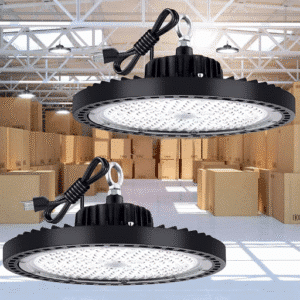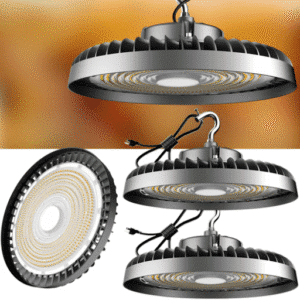

At approximately 2:00 a.m., Derek left his office, which is located in the state of Texas, for a security patrol of the facility. There was not a single employee in the hall stocking. It was midnight and yet the pick aisles were oh so bright with no pickers at all.
Instead, 200 high bay bulbs were burning electricity in an unoccupied building. Even though he had recently undertaken a major upgrade and replaced all the old fixtures that used horribly excessive amounts of energy with LED ones, the hours of operation did not decrease. That’s one-half of his goal achieved.
If you are handling the operations of a warehouse or manufacturing plant, you possibly have had to come to such a harsh conclusion. Even though LED installation plays a major role in power saving, leaving lights on for 12 hrs a day in empty zones is a waste of huge amounts of money each year.
Smart warehouse lighting attempts to bridge this gap by incorporating sensors, wireless controls and data programmed modulations within the existing light fixtures.
This manual helps you understand how smart warehouse lighting functions, which types of controls will give you the highest return on investment, and how to install it, without needing to overhaul the entire facility. By the conclusion of this manual, you will be able to understand how to reduce lighting energy by as much as 80%, and how to determine the payback period for the facility.
Want a comprehensive understanding of UFO high bay light? Check out our (UFO high bay light guide).
What Is Smart Warehouse Lighting?

It is more than just retrofitted LED lighting: this is a combination of efficient lights, environmental sensors, wireless networks, and automation software, all in concert, to produce light where, when, and at the intensity it is needed.
Think of it in terms of three layers:
- Layer 1: Efficient LED hardware – High luminaire efficacy operating on only half the energy Metal Halide or Fluorescent did.
- Layer 2: Sensors and dimming – Motion sensors, daylight sensors, and 0-10 V dimmable drivers adjust the output of fixtures as per the real conditions automatically.
- Layer 3: Networked controls and analytics – Sophisticated wireless protocols have all light fixtures linked into groups or zones. They are set to schedule the lighting without needing to make adjustments. They also provide energy usage reports.
Without Layers 2 and 3, then that’s all it can do for you: bright lights and less bills. But with them, the system becomes interactive and intelligent to the operation.
Control Types and How They Work
Not every zone within a warehouse has the same control requirements. Dock areas, narrow aisles, and clear staging regions all witness different occupancy and daylight exposure scenarios. The right coverage of control enables a project to deliver only 20 percent in savings and others to achieve 80%.
Occupancy and Motion Sensors
Occupancy sensing involves detecting movement and making corresponding control adjustments for ligthing fixtures. The most common types in use for warehousing are Passive Infrared (PIR), ultrasonic, and dual-tech sensors.
- PIR sensors are very good at detecting body heat and movement and perform well in large, open areas, but can miss slow-moving forklifts if not suitably positioned.
- Ultrasonic sensors use unaided frequencies to detect the change in ambient sound patterns. They’re capable of detecting motion through aisle obstructions.
- Dual-tech sensors combine both technologies for the highest accuracy.
In Macy’s Ohio automobile-parts warehouse there were PIR sensors with hooded lenses on all high bays over their racking aisles. These hoods reduced the area of coverage, which then prevented the sensor from detecting motion crossing across the aisle. The lights now dim to 20% after 10 minutes of inactivity, thus brightening at full power should a forklift pass by. In the warehouse, patronage peak times turned into at least 45% less lighting intensity during the first quarter.
Daylight Harvesting
Daylight harvesting often employs photometric sensors to evaluate the natural light coming in through skylights or window bands. The sensor then sends a signal to the dimming driver of the fixture, which duly decreases the artificial output in order to maintain a constant target light level on the work plane.
There are two techniques:
- Open-loop: In this case, the sensor reads incoming daylight and faces the skylight.
- Closed-loop: Here the sensor faces the work plane and quantifies both the natural and the artificial light. Here it is exhibited more often in warehousing as the most precise and dynamic form of control.
In the case of energy daylit buildings, artificial light can be cut back by another 20-60% for baseline consumption during daytime operating hours. Such mandates control features such as daylight response as found in energy codes such as ASHRAE 90.1 and California Title 24 for areas of skylighting.
Scheduling and Zoning
Warehouses are collections of various spaces with different hours. By way of scheduling, one may program lights as required: for instance, lights turn on at 6:00 a.m. for the day shift, are set to a dim level at 3:00 p.m. for the twilight shift, and finally turn off for specific zones that close overnight.
Zoning groups fixtures logically. For example:
- Aisle A1-A10: Motion-sensor control
- Loading Dock 1-4: Scheduled on during receiving hours
- Packing Stations: Task-level dimming with daylight harvesting
- Bulk Storage: Low-traffic occupancy sensors with long timeout settings
Follow-Me and Predictive Pre-Lighting
One more aggressive technique popping up in 2026 is follow-me wireless grouping. One fixture with a sensor reads a forklift coming into the aisle. This fixture’s output serves as an instantaneous input to the follow-up groups along the aisle. This prevents the disturbing eventuality of initiated lights sequentially lighting up one by one and also has implications in safety and would work as a boost to driver confidence.
If you are unsure which wattage and lumen package fits your ceiling height and task requirements, read our (guide on how to choose UFO high bay lights) before finalizing your specification.
Wireless Protocols: Why Bluetooth Mesh Leads

When it comes to scalability for the intelligent warehouse lighting, the fixtures must be able to communicate with one another. Many wired protocols are available, but in the case of large industrial spaces, Bluetooth Mesh is the leading choice.
How Bluetooth Mesh Works
Bluetooth mesh is a decentralized network in which every fixture constitutes a node. Commands travel from fixture to fixture in a process called “flooding.” In case any one fixture is turned off or blocked, the network will naturally select another path of operation. There is therefore no one point of failure and no central hub or router needed.
All this matters for a warehouse because:
1. Range: One single Bluetooth Mesh message can hop on tens of fixtures. This technology can be used to cover hundreds of thousands of square feet.
2. Reliability: The signal loss happens if steel racking or high ceilings are blocking WiFi. Mesh networks around the obstructions.
3. Scalability: Start with 20, and expand to 2,000 light fixtures without requiring a re-architected network.
Bluetooth Mesh vs. WiFi vs. Zigbee
| Feature | Bluetooth Mesh | WiFi | Zigbee |
|---|---|---|---|
| Network type | Decentralized mesh | Star (router-dependent) | Mesh, but smaller scale |
| Range | Unlimited via hopping | 100-300 ft per router | 30-100 ft per node |
| Power use | Very low | High | Low |
| Best for | Large warehouses, high bays | Offices, small retail | Residential, small commercial |
| Hub required | No | Yes | Yes (usually) |
For facilities over 50,000 square feet with 20- to 40-foot ceilings, Bluetooth Mesh is typically the only practical wireless choice.
Real-World Case Study: Yamaha Motor Warehouse
The warehouse facility of Yamaha Motor Corporation in Pleasant Prairie, Wisconsin, has done away with a constant-on lighting system, in favor of a sensor-supported form of Bluetooth Mesh. The project comprises 320 Orion LED high bays with TruBlu sensors on Silvair Bluetooth Mesh technology individually mounted in each of them.
Central override switches were EnOcean wireless, safety, and maintenance devices, while the commissioning and grouping of sensors, timing thresholds, and energy usage reporting, all from a single TruBlu app interface, were in the hands of management personnel. Henceforth, a lighting system was in place ready to respond in real time and tackle instances of wasted energy in lighting hardly visited aisles night in and night out.
Energy Savings and ROI
The quickest payback next to any facility-enhancement is by smart lighting in warehousing. The computations, when considered in each control layer, basically explain it all.
Quantified Savings by Control Type
- Only LED retrofits: 50-75% in lessened lighting costs compared to metal halide or fluorescent
- LEDs + motion sensors: Up to 80% of these areas will reduce costs
- LED + daylight harvesting: Additional 20-60% in economies depending on zones with skylights
- LEDs + integrated controls system: Some integrated systems have documented on each side of 80% reduction in total lighting consumption
A 12-month study by Mecalux of an Italian valve manufacturer’s warehouse showed that by upgrading to LEDs when combined with daylight sensors and motion sensors, up to around 80% reduction in lighting energy use was realized, and payback was only 1.9 years.
Payback Period Math
In the majority of U. S. facilities, a sensor add-on for an existing LED installation pays back in 12 to 24 months. A full Bluetooth Mesh network with brand-new fixtures typically pays back in 2 to 3 years, although utility rebates can potentially bring this viewable time frame significantly lower.
Worked Example:
Imagine a 100,000-square-foot warehouse with 100 LED high bays, running 12 hours per day, 300 days per year, at $0.12 per kWh.
- Baseline LED annual cost: 6,480(100fixturesx150Wx3,600hoursx6,480(100fixturesx150Wx3,600hoursx0.12/kWh)
- With motion sensors (35% additional savings): $4,212 annually
- With daylight harvesting in 40% of the space (additional 25% savings in those zones): ~$3,800 annually
- Total annual savings vs. baseline LED: ~$2,680
- Sensor retrofit cost: ~3,500(3,500(35 per sensor x 100 fixtures)
- Payback period: 3,500/3,500/2,680 = 1.3 years
Every month after payback is pure savings.
Maintenance and Lifespan Benefits
LEDs last from 50,000 to 100,000 hour units and, even with sensors, may be in for a mere 4 to 6 hours’ use on a given day when in aisles of low foot traffic, rather than the allotted 12 hours. This means that money is saved in this regard, as the maintenance and running costs are reduced.
Run your own numbers with our complete (LED high bay ROI calculator guide) to see exact payback for your facility.
Smart Lighting for Safety and Operations

Energy saving could possibly get the attention, but justifying investment often goes together with operational improvements, offering equally convincing reasons to invest.
Instant-On and Worker Safety
Unlike metal halide lamps that take 10-30 minutes to reach full brightness, LED fixtures with motion sensors are instant-on. When a picker or forklift travels into the dark aisle, the light goes to full output immediately. The prevention of any collision risks, improved visibility at aisle crossings, and reduced worker apprehension when confined in poorly lit corners are among expectations from proper aisle lighting.
Integration with Warehouse Management Systems
New-gen smart warehouse illuminants would link to the Warehouse Management System (WMS). Instead of blind reactions to motion, lights themselves could be scripted by WMS to an activity schedule. If the WMS knows that a trailer is scheduled to arrive at Dock 4 at 8:15 a.m., five minutes before, the lights at that dock and the staging area adjoining can power up upon instruction from WMS. This would save energy and, instead of following, stay ahead of the operation.
Predictive Maintenance Alerts
Networked fixtures can monitor their own driver health and lumen output. In case of driver failure or dimmer performance, the system would give maintenance teams as many as hundreds of hours to respond-before the fixture stops operating. This conversion is pretty important as it changes light maintenance from reacting to sincerely crafty timely interventions without considering reactive emergency repairs.
Implementation: A Phased Approach
Now, many organizations are not capable of carrying out a complete smart lighting overhaul within a single budget period. Yet by doing things in steps, savings may be obtained so soon and the system allowed to expand over time.
Phase 1: LED Retrofit with Dimmable Drivers
Substitute for the legacy fixtures with dimmable, high-lumen-output LED high bays, an industry standard. This is the foundation. If operating with non-dimmable fixtures, you will not be able to add sensors or daylight harvesting unless you change the fixtures.
Meanwhile, a 150W UFO high bay is suitable as a base replacement for ceilings of 20-30 feet high. It shines the light needed for most activities in a warehouse but allows wattage use that will maximize the savings the sensor-driven system is capable of.
Phase 2: Add Sensors
After the first completion of dimmable LED installation, add motion sensors and daylight harvesting sensors. It is the phase with the highest returns for most facilities-with a very low sensor price and immediate energy-saving replacement. Target those low-traffic aisles, bulk-storage areas, or light-filled areas.
Phase 3: Network with Bluetooth Mesh
Inclusion of wireless controllers will finally stir into a networked mesh. Hence, a chain of group controlling, remote scheduling, follow-me lighting, and energy analytics lastly are enabled. The third phase is where smart lighting in the warehouse truly becomes a tool for operation rather than just an energy-saving device.
Code Compliance Note
The lighting controls are already regulated under stricter energy codes. ASHRAE 90.1 and California title 24 are been advocating for daylight-responsive controls in spaces adjacent to windows or skylights in new building constructions and substantial renovations. Installing compliant controls now will probably save frustrating total retrofit demands soon.
Common Mistakes When Adding Smart Controls

Previously planned projects often stumble upon common issues when the whole concern is, spending a lot of time and money on the wrong idea.
Installing Sensors on Non-Dimmable Fixtures
Therefore, installing a motion sensor that all it does is turn on and off is actually better than not using any sensor, but it defeats the function of a smart control. Dimmable lighting fixtures allow output to drop as low as 10-30% during the vacant period, maintaining just enough dim lighting as a background, thereby saving a great deal of energy than when the fixture is producing the maximum output.
Using Ceiling Height Instead of Mounting Height for Sensor Range
Detectors see details on the basis of the mounting height. A PIR sensor, mounted at 30 feet up in the air, sees a far wider spot on the floor than when it is mounted just 15 feet high. For example, if your fixture hangs down 3 feet below the ceiling deck, consider using this mounting height into your calculations.
Over-Zoning and Creating Network Complexity
Setting up many tiny sites with their schedules can indeed look tempting; but, in practice, this dramatically increases management overhead and the incarnate opportunity for configuration errors. Start out with just 4 to 6 logical zones and add more only if operation requirements compel them.
Ignoring Utility Rebate Requirements
Many utility rebate programs do demand that the fixtures and controls be DLC (DesignLights Consortium)-qualified or DLC (DesignLights Consortium)-NLC-listed. Make sure that your controllers and sensors comply with these requirements before buying them. A prescriptive rebate usually amounts to USD 30-50 per fixture and translates into 2-3 months less payback period in full, depending upon how the rest of your network configuration turns out.
Conclusion
You may have heard about that futuristic upgrade but nowadays smart warehouse lighting is now a measured and tangible investment that amortizes itself along with energy savings, safety enhancement, and control of operations.
From now on, there is a way to proceed: LED high bays, dimmable at the outset; sensors for dimming or daylight will quickly kick in; link the system with Bluetooth Mesh (or other communications) whenever you would like to get into zone-level automation or analytics. With a lighting energy reduction in the 50% to 80% range, facilities following this path get their money back in under two years.
Derek did get his occupancy sensors placed into his Texas site, and, after 13 months, his energy savings offset the costs of retrofit. He now finds that his nightly patrol overruns present quiet, dark aisles that only light up when needed.
To achieve this outcome, your building doesn’t have to be torn apart. You just need the right fixtures and execution plan.