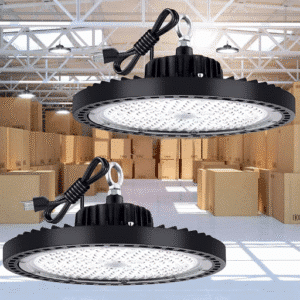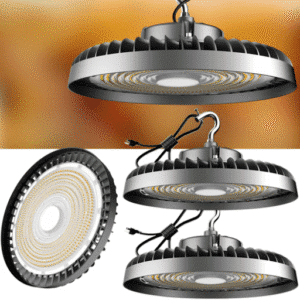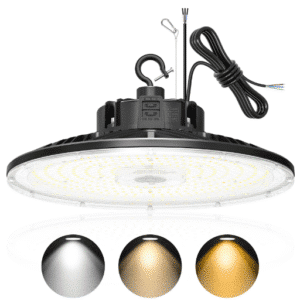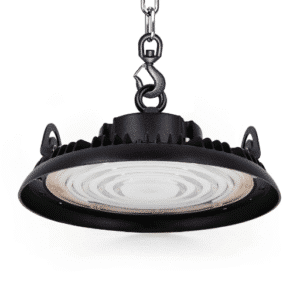

In theory, purchasing high bay LED lamps that we are currently presented with is most financially sound especially when needles kilowatts are used up in large quantities. But, is this really true when the lights are put in use, and does‘t’ benefit the user in economic and environmental terms over time? We will try to seek answer in the frame of this essay and concentrate on solar-powered high bay lights which are also known as LED high bay lights – a hybrid solution which may or may not never see substantial rise in installations.
✦ Benefits of Solar-Powered High Bay Lights

⚡
Energy Efficiency and Cost Savings
Solar-based high bay lights are really environmentally friendly and energy-efficient; their energy requirements are satisfied by natural, inexpensive sunlight. Furthermore, since high-energy-consuming individual establishments generate proportionately greater energy upon the conversion-lighting, waiting for it with all the daylight; these lighting systems can heavily trim energy costs. Lesser gawky presence of grid power will sometimes result in savings of bills — over time this is associated with the big bills of conventional lighting having dramatically broadened the energy’s horizons for the great benefit of establishment stability. At the same time, they reduce carbon emissions, which replenishes sustainability considerations. Again, much of the time, with such a characteristic, it could be said that an investment in solar-backed systems will secure itself over and into the future via the multitude of cost-benefits and reduced environmental impact — thus, a great and clean way to light.
🌱
Environmental Impact
There exists one major merit seen of solar-powered lighting is the positive effect they have left on nature. Opposingly, one important attribute of these systems is that they contribute to the response to global warming, as they reduce greenhouse gas emissions that cause climate change by evaporating irrelevant reliance on fossil fuel. Therefore, pollution from basic energy-generating sources is prevented in a more concrete way; besides, natural surroundings are being provided with sustenance. Today’s solar technology has again taken quite a step in its production; it is not such ecological as would be construed; and its recycling is so much better than would be permissible by far older techniques. This rather attests to the benefits to the environment of these systems.
🔧
Durability and Maintenance
Sleek and modern solar panels are formulated with advanced materials and engineering. These endow them with solidity and longevity; one can expect a long life from these, some 25–30 years typically. While the panels are affixed with tempered glass, they can easily shrug off various inconveniences set by inclement weather like heavy downpours, hail, snow, or extremely high winds.
It needs to be pointed out that the majority of maintenance activities will include mainly cleaning of the solar panel surfaces and removal of dirt, snow, and grime. In case of solar thermal systems, this maintenance work comprises cleaning of mirrors, de-torruption of heat absorbing tin and shading glasses and high pressure washing etc. Inspection of all of its parts for possible wear and tear or even physical damage is carried out.
✦ Comparing Different Wattages of High Bay Lights

Selecting the correct wattage is one of the most critical decisions when planning your high bay lighting installation. Below is a comprehensive breakdown of the most common wattage options, their lumen outputs, and the applications they are best suited for.
| Wattage | Lumen Output | Ceiling Height | Best For |
|---|---|---|---|
| 100W | 13,000 – 15,000 lm | 10 – 15 ft | Small areas, lower ceilings |
| 150W | 19,500 – 22,500 lm | 15 – 25 ft | Mid-size commercial spaces |
| 200W | 26,000 – 30,000 lm | 20 – 30 ft | Large warehouses, factories |
| 240W | 33,000 – 36,000 lm | 20 – 30 ft | Gymnasiums, industrial halls |
| 300W PREMIUM | 40,000+ lm | 25 ft+ | Warehouse-style stores, heavy industrial |
100W and 150W High Bay Lights
In the four walls of the house A glass table light up the room giving the effect of using burning. These POPGEAR LED waterproof string ights which are mostly used in halls, bars, discos and all other entertainment places will create the illusion of a disco party. Furthermore, Disco lights are instrumental in dispelling the childhood memories of a haunted house or witch’s den. Disco lights are very popular today due to their external beauty, which decorates modern interiors. The attractive light and music show provided by these lights can be witnessed in the hall or place where the lights have been installed. The tenant has obtained free access to disco lights that are usually installed in such places as underground bars among others. Out of caution that the intruders will at night come and steal them as they have been harmed before. It is for the very same reason in some forts that, their effects are always switched on throughout the day and at night to observe intruders easily approaching.
200W and 240W Options
When the ceiling height fluctuates anywhere from 20 to 30 feet, 200 watt high bay lights and 240 watt high bays come in handy with their lumen outputs reaching above 26k – 30k and 33k – 36k lumens respectively. These lights are generally used in high watt applications such as large industrial and commercial spaces like warehouses, factories, and gymnasiums. The high use of each of these lights over a similar period should reduce the impact of non-repeatability as the previous ones were; present improper usage of energy. However advance technologies such as LEDs have properly addressed and optimized it. It is determined by the pay and demand ratio of light as to which one to buy among the two.
300W and 5000K High Bay Lights
300-watt LED high bay luminaires that are characteristic with 5000 Kelvin colors have been especially fabricated to provide the bright luminance and similar daylight effect for such high positioned areas with upper level room height such as large warehouses. Steel tube does not very high resistance to the exceptional soft fabric. Due to this color temperature visual appeal of synthetic daylight-white color is guaranteed thereby enhancing clarity while preventing the unwanted contemplation. For 300-watt high output fixture, the lumens count is about 40000 and at times even more. With exceptional LRD technology and reduced lumen maintenance, a light fitting will then withstand more outer exposure compared to any other metal or fluorescent halide lamp in existence.
✦ Choosing the Right High Bay Light for Your Warehouse

📋 Factors to Consider: Lumen Output and Wattage
Picking the right high bay light for a warehouse insists on matching its light output in lumens and watts with the specific requirements of a lighted area. Light output decides the level of brightness, which in turn should be harmonized with the tasks each particular job needs, since detailed work may require higher lumens.
- The amount of energy consumed is also dependent on wattage — an increased efficiency lamp with more lumens per watt will reduce energy costs over time.
- Contemporary high bay LED lights may guarantee over 140 lumens per watt, delivering more illuminating power with the least energy usage.
- The long-term utility makes them the absolute best helpers for towering warehouse installations.
🌡️ Colour Temperature and Lighting Quality
Color Temperature, measured in Kelvin (K), is an important determinant of lighting quality and how a space feels.
The ability to choose the correct Kelvin temperature will strike a good balance between comfort, functionality, and intent within the area and ensure good lighting performance.
⚖️ Types of Fixture: UFO vs. Linear High Bay Lights
| Feature | UFO High Bay | Linear High Bay |
|---|---|---|
| Shape | Circular, compact | Rectangular, elongated |
| Light Distribution | Wide & equal, 360° spread | Directional, elongated coverage |
| Best For | Warehouses, gymnasiums, open factories | Retail aisles, narrow warehouse bays |
| Advantage | Sturdy, high lumen output in limited mount space | Easier directional coverage lighting in ribbon-like areas |
✦ Installation and Maintenance of Solar-Powered High Bay Lights
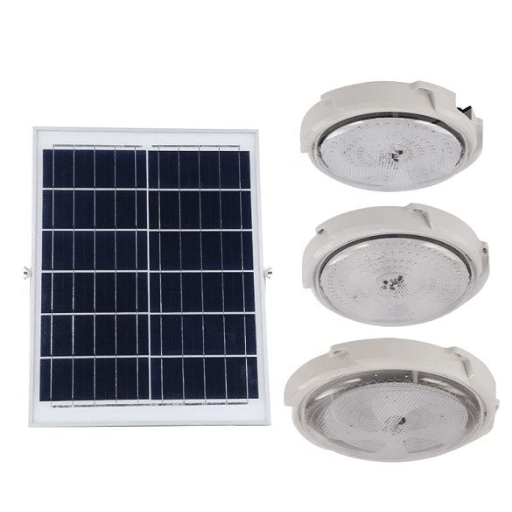
📐 Installation Process Overview
The installation is composed of a few steps that must be followed for the best performance and efficiency. The rules set by a manufacturer and local safety authorities must be observed at all times during the installation. Regular inspections must be carried out to ensure efficient service and a lasting life.
- 1
Installation of a Fixture
The fixture should be installed at the height appointed using proper brackets or suspension for stabilization and also proper positioning according to required standards.
- 2
Panel Placement
An area that is ensured of getting a sufficiently high level of sunlight should be carefully chosen. The panel must be placed at a slant in relation to the incoming sun rays for almost the whole day.
- 3
Wiring Connection
Connections must be tight between the panel, battery, and fixture as shown by the manufacturer’s guidelines.
- 4
Battery Set Up
Locate the battery where it will not be disturbed by any environmental challenge and close enough to the system components.
- 5
Testing and Adjustment
After installation, test your system to confirm it is operating correctly. You can adjust the angle of your panels or move your light fixtures around to better the performance and the amount of energy being collected.
🛠️ Maintenance Tips for Longevity
- ✔ Conduct routine maintenance operations to eliminate and fill up wear-related, damage-related, or debris-related breaches.
✔ Keep all the surfaces and details clean, as dirt, dust and stains can obstruct their proper functioning, and it is recommended to use soft cleaning materials only.
✔ Inspection and assessment of the connections, making sure that they are still tight, and examining the wiring for any oxides or external injuries.
✔ Verify operational effectiveness and lubrication of all moving parts where those are provided.
✔ Once required updates for the system software are available, do install them, and be specific whether there are any changes to the maintenance approach as directed by the machine builder, so as not to cause aging of the system quickly.
⚠️ Common Problems and Fixes
Common solar panel problems include lower energy output, which may be due to dirt accumulation, shading from objects, or wiring defects.
- ▸ Dirt / Debris: Clear the panels of leaves and dirt appropriately and make sure that nothing is blocking light from them, including overgrown vegetation that may result in shadowing.
- ▸ Inverter Errors: Inverters often contribute to system errors, requiring resetting. The manufacturer’s manual may have additional suggestions.
- ▸ Circuit Breakers: Watch for tripped circuit breakers, which may potentially disrupt the production of energy. Monitoring software is useful for pointing out anomalies quickly and fast-tracking troubleshooting.
✦ Conclusion: Are Solar-Powered High Bay Lights Worth It?

Final Thoughts on Investment
Solar-powered high bay lights turn out to be an increasingly salient investment for the triple merits of energy efficiency, durability, and setting the basis for long-term cost-effective benefits. With advancements in solar technologies and lowering costs of solar panels, solar high bay lights pertain to the renewable and dependable lighting solution for spacious areas while saving on electrical bills to a significant extent. Plus, federal tax credits and rebates make them even more affordable. In the long run, the operating cost is significantly low and the upkeep of the fixture is manageable — all of these are justified in the environmental and monetary scene.
🔭 The Future of Solar Lighting in Industrial Warehouses
Solar lighting for the industrial warehouse is set for rapid development due to continuous innovation in photovoltaic technology and energy storage systems. Today’s solar panels have better efficiency levels, and the storage solutions of batteries are also being improved to save surplus energy effectively — protecting against cloudy conditions and nighttime performance periods. Smart lighting technologies are also becoming more accepted as fixtures inside solar lighting systems, where lighting can automatically adapt depending on available light or occupancy level. These improvements put solar lighting at the forefront of cost-effective, sustainable technology, further supported by growing public policy — subsidies and regulations — necessary for great utilization.
✦ Frequently Asked Questions (FAQ)
References
-
Energy 101: Solar PV
This resource from the University of Maryland Extension explores opportunities for solar photovoltaics (PV) to reduce electricity use in various settings.
Visit the site -
Outdoor Test Facility and Related Facilities
The National Renewable Energy Laboratory (NREL) provides information about their High-Bay Laboratory, which houses testing equipment for PV modules.
Visit the site -
Gabreski Air National Guard Base Goes Green with Solar Power
This article discusses the use of high bay lighting in large indoor areas, such as maintenance bays and hangars, and their transition to solar power.
Visit the site