
The technical aspect of industrial or commercial lighting very much influences operational costs and energy efficiency as far as restaurants are concerned, when they offer sensational culinary delights which run for indefinite days. Among the two primary choices really pitted against each other over the years were two typical types: LED high bay lights and metal halide lighting. Which ones in 2025, for example, are, therefore, quite important to many people today, focusing on savings, as the advances in lighting technology come in for clearer explanation? The blog on this article by comparison dedicates itself to the costs on both lights amount of energy they consume versus that of the maintenance, their overall longevity, and return on investment. So if your perfect solution is still up in the air-whether to power up your lighting to its fullest potential or venture for what the future offers-then this comparison could help direct you a little closer in developing an intelligent choice.
Understanding Metal Halide Lighting

What is Metal Halide?
Metal halide lighting is a type of high-intensity discharge (HID) lighting that consists of a mixture of gases like metal halides through which an electric arc is passed to give light. The main characteristics of these lamps are their high light intensity and the pure white light they emit. They are primarily used in places like warehouses, stadiums, and parking lots that require large area lighting and where high brightness levels are a must. In addition to that, and because they are able to provide an increased level of brightness and a good color rendering, their application is also suitable for activities that require high visibility and the right color reproduction. Still, metal halide lamps can pose a challenge in terms of their warm-up duration, energy consumption, and maintenance. Compared to newer technologies, they also have a shorter life.
Key Features of Metal Halide Lighting
Great Brightness
The light output of metal halide lamps is very strong and bright, thus making them the best solution for illuminating large spaces like sports facilities, production plants and outdoor recreation facilities where bright light is required incessantly.
Great Color Quality
Metal halide lamps are very efficient in terms of both energy and light.
These lamps are having a reputation of being one of the best color rendering capabilities having a CRI (Color Rendering Index) range of 60 to 90. This makes colors of objects and surroundings more vivid and closer to their natural look.
Wide Range of Wattages
The metal halide lamps come in various wattages, starting from low wattage options for task lighting to higher wattages that can cover vast areas or even warehouses with high ceilings.
Versatility in Applications
Due to the fact that they are so adjustable and still high in luminous efficacy, metal halide lamps are found in the commercial, industrial, horticultural, and public lighting sectors where the brightness is the must-have feature.
Drawbacks and Limitations
Although the major feature of metal halide lights is the powerful illumination they provide, they are at a disadvantage of having a waiting time of a few minutes before they become as bright as they can be. Another factor against their use is that their power usage is higher and they have a shorter life compared to the LED technology which is creating CC overall high costs and maintenance needs.
Lumen Output and Efficiency
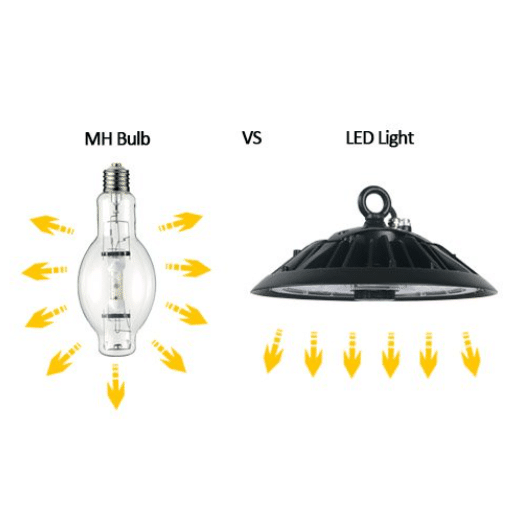
Metal halide lights are widely recognized for their high lumen output and are perfect for places that are in need of a very strong light. However, in the process of their performance, a lot of energy is lost as heat, which on the one hand makes efficient LEDs superior to them when it comes to efficiency. On the other hand, they are very good sources of intense light, however, getting the same result by LEDs is much more economical and long-lasting. Hence, it is important to understand that performance and energy efficiency are not mutually exclusive concepts, and a balance has to be maintained between them.
Overview of LED High Bay Lights
What are LED High Bay Lights?
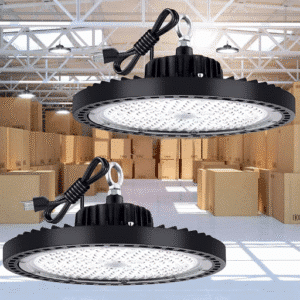
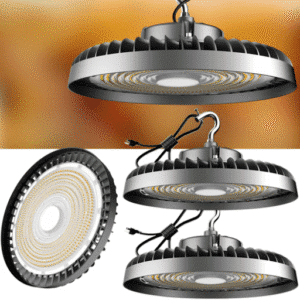
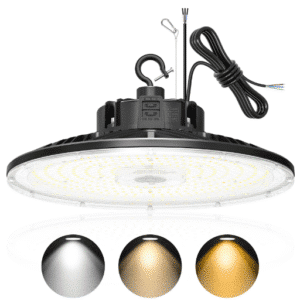
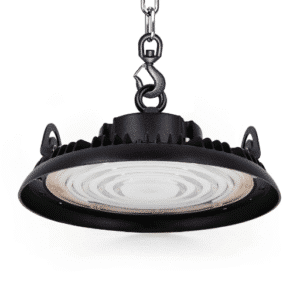
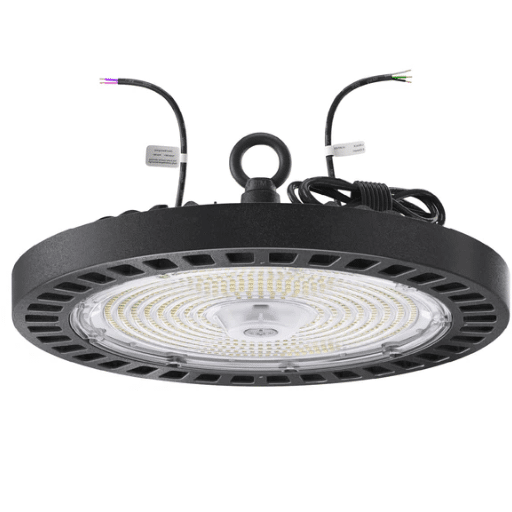
LED High Bay Lights are a specific kind of lighting fixture that are made to be employed in constructions or premises having high ceilings, most often between 15 and 50 feet high. They are very common in industrial and commercial settings such as warehouses, factories, gymnasiums, and large retail shops. The lights give off strong, concentrated light that meets the need of huge areas immediately. By using LED technology, high bay lights consume much less energy than traditional lighting solutions like metal halide or fluorescent fixtures, hence they offer a longer life and reduced maintenance costs too. Again, LED high bay lights can be purchased in by far the most variety of designs, for example, round (UFO) and linear options, thereby giving adaptability to various desires in terms of layout and appearance. Many of the LED high bay lights are now incorporating smart lighting systems and features like dimmability, motion sensors, and integration with IoT systems, thereby being a very versatile and energy-efficient choice for high-ceiling applications as well.
Advantages of Using LED Lights
LED lights have become widely utilized for their numerous benefits thus making them the preferred choice for many applications. They are more energy-efficient than the conventional light sources so that the user has to pay lower electricity bills which, at the same time, also means less impact on the environment. Along with their extended lifespan and the consequent reduced need for replacements, maintenance costs and workload can be minimized to a large extent. In addition to it, the safety and productivity can be increased with the minimum amount of heat and high-quality light provided by LEDs. Besides, high bay LEDs, LED lights with their unique design can be installed in different areas and situations. The light itself is not only smart-ing but also other qualities like dim, movement-wise and IoT responses.
Lumen Performance of LEDs
LEDs are known for their energy-efficient lumen output and they also confer high luminance which is further enhanced by Bunsen pairing as well. They give more light per watt, meaning that less power is needed to be consumable through the resultant illumination. It is because of this reason they are the most fitting for the ruins where a constant major light source is needed such as factories, retail, and even public spaces. Moreover, LEDs have a steady lumen production as well as a very low degradation rate which can be taken to mean that these lighting technologies are indeed reliable in the long run and their performance is also unmatchable throughout the period.
Metal Halide vs LED: A Cost Comparison
Initial Investment: Metal Halide vs LED
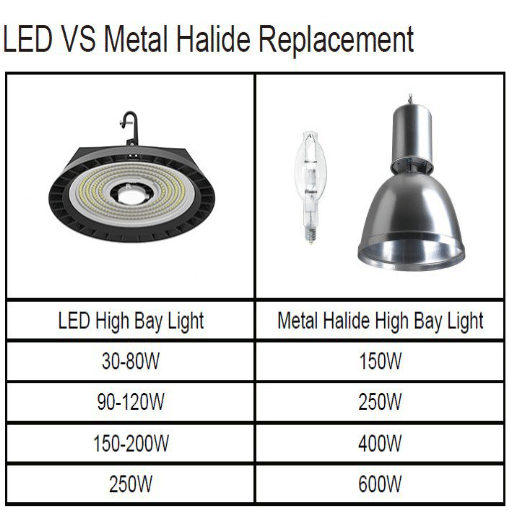
One should bear in mind when it comes to the starting cost of Metal Halide and LED lights LEDs are, as a rule, offered at a higher dollar amount. It is attributed to the more sophisticated technology and components that are part of the LED light fixtures. Nonetheless, the initial price of Metal Halide installations may come across as cheaper, but it is not the reality when further unexpected expenses such as almost yearly changing of lights and ballasts, as well as, in some cases, higher installation costs, are taken into the picture. Even though LED lights entail a higher price tag initially, however, the payback periods and the efficient usage of electricity throughout their long periods of life are the main factors behind the total saving in electricity costs in the long run, which makes LED light to be more economical in terms of cost compared to other light sources of the same type.
Operating Costs and Energy Efficiency
In terms of operating costs and energy efficiency, LEDs are way better than metal halide systems and the difference is huge. LED systems are much lower in energy consumption than metal halide systems which saves a lot of money on electricity bills and they are also lesser in heat generation which results in cooling costs reduction particularly in controlled climate environments. Moreover, the net saving due to the longer life of the LEDs is far greater than the replacement and maintenance cost, which are quite frequent when dealing with metal halide systems. Initially, metal halides sound like the cheaper option, but their higher energy usage as well as the need for ongoing maintenance makes them less economical and less efficient in comparison to LEDs as time goes by.
Lifespan and Maintenance Costs
LEDs are recognized for their extraordinary durability, and they are very flexible in terms of lifetime, even up to 50,000 hours and sometimes even more as a rule of thumb, whereas the much shorter lifetime of metal halide systems, which after 6,000 to 15,000 hours typically need to be replaced, you know. Such liberalism and reliability in lighting that belong to LEDs save not only on time but also on the operation and supply chain costs. Additionally, the grounds on which LEDs decay interface gracefully with each other and the performance drops less than that of the lifespans of various parts of the lighting at the same time. In this way, the falling of maintenance requests and the add up of the life of the system work together to create a very consistent, cost-effective and highly reliable solution through LEDs in the long run.
| Feature | Metal Halide | LED High Bay |
|---|---|---|
| Lifespan | 6,000 – 15,000 hours | 50,000+ hours |
| Initial Cost | Lower | Higher |
| Energy Efficiency | Lower (High heat loss) | Higher (Minimal heat loss) |
| Maintenance Costs | Higher (Frequent replacement) | Lower (Rare replacement) |
| Warm-up Time | Several minutes | Instant |
| Color Rendering (CRI) | 60 – 90 | 80 – 95+ |
Lumen Depreciation in Metal Halide and LEDs
Understanding Lumen Depreciation
Depreciation of lumen refers to the light source’s brightness decreasing gradually over time. Metal halide lamps show a significant decline in their brightness, their lumen falling to about 50-70% of the initial lumens before the end of life. On the contrary, LEDs undergo lumen depreciation very slowly and they show a better performance for a very long time due to maintaining a higher percentage of their initial lumens. The LEDs’ slower depreciation rate has the effect of better long-term performance and steady illumination which makes them the better choice for the applications that need quality light for a long time.
Comparative Analysis of Lumen Retention
The fact that LEDs depreciate their lumens at a slower rate should be pointed out as the main reason for lumen retention in LEDs which is much higher than traditional lighting technologies. The lumen retention is measured as the percentage of light output being maintained out of the total initial lumens which are used in lighting. LEDs are the best and most efficient for lighting as the brightness is maintained at a higher level for a longer period of time in contrast to incandescent and fluorescent lamps that not only lose a lot in terms of brightness but also fail to retain so many lumen out of the total. Other factors such as consistent lighting and low maintenance needs are also affected positively by using LED luminaires, thus making LED lighting the preferred lighting option in a lot of situations where lighting quality and energy efficiency must remain unchanged. Hence, LEDs continue to be the best choice when it comes to luminance and reliability over time.
How it affects the expenses over time?
LEDs become an incredibly cost-effective choice when you look at the long-term lighting costs. According to brand-new research, LEDs, consume far less energy when compared to classical lighting on the whole, so there is a big reduction in electricity bills. Also, their greatly expanded life reduces the need for changing them and, in turn, the labor and material costs are really minimal. Recent reports show that it may need an extra bit of investment in the beginning for LED lighting, but the long-term saving of the overall cost will still be bigger than that of the first cost. Furthermore, numerous governments and organizations give away their incentives for the adoption of energy-saving measures like LEDs, so bringing the cost further down. The presence of a feature that makes LEDs a practical investment for both residential and commercial applications is the fact that one gets to combine reduced operational costs besides the presence of incentives.
Switching from Metal Halide to LED

Reasons to Switch
Shifting to LED lighting from metal halide comes with a plethora of benefits that could clearly justify the decision. It is the energy efficiency of LEDs that is unparalleled. They use much less electricity and that too giving the same, or even better, quality of light. Besides, LEDs last much longer which means no more constant bulb change and hence lower maintenance costs. Unlike metal halides, LEDs achieve their maximum light output instantly and hence the warm-up time is eliminated. Moreover, they produce less heat, resulting in safer and cooler conditions in enclosed areas. Moreover, they are less harmful to the environment because they are free of toxic chemicals like mercury, which is common in metal halides. All in all, these are the reasons that make LED upgrading a good and green lighting solution.
Challenges in Transitioning
Switching to LED lighting, though it offers many benefits, can still be hard as there are a number of challenges. One of the main challenges is the high cost of the initial LED installations, especially in the case of big projects. Even though the payback period is going to be long, the expensive LED fixtures and retrofit solutions represent a huge financial burden. Also, many times, compatibility issues become especially problematic in the context of old systems where existing fixtures or infrastructure may not fully support LED technology, hence requiring even more money spent on upgrades.
One more issue in the transition process, and that is the complexity and the time taken in it. Indeed, many managers are afraid that their workflow or operations can be affected during the installation or immediately after it. search engine statistics show that terms such as “is LED conversion worth it” and “LED installation challenges” is persistently in the top searches and show lack of faith and of the need for ROI. LED benefits are increasingly familiar to the general public; but still incorrect information or lack of knowledge about their technical attributes, consumer practices, and life-cycle cost efficiency are the main obstacles. However, a composite approach of no surprise pricing, extended technical support, and the articulation of LED long-term benefits can swift the LEDs uptake.
Comparing Performance Before and After Switching
Traditional lighting systems, before the switch to LEDs often had a much higher power consumption with time, while the delivered performance was far lower and falling rapidly. These systems needed to be replaced often, and this was the main reason that maintenance costs and interruptions were increased. The result of the shift to LEDs was that the electricity that was eaten by the units went to about zero percent, with some users even claiming that they managed to reduce their electricity bills by 75%. Also, the LEDs have a lot longer lifespan which means that now we do not have to worry about frequent replacements and maintenance. Apart from the economic aspects, better and steadier lighting that comes with LEDs provided a feeling of brightness and uniformity that we all know well and made it easier for people to perform indoor activities and be comfortable as well. The situation is a clear demonstration of the advantages of the adoption of LED technology.
Key Takeaways
- LEDs offer up to 75% reduction in electricity bills
- LED lifespan is 3-8 times longer than metal halide
- Instant light output with LEDs vs. several minutes warm-up for metal halide
- Lower maintenance costs due to extended LED lifespan
- Environmental benefits with no toxic mercury in LEDs
References
-
Electrical Energy Equipment: Lighting LIGHTING
This paper provides a detailed comparative analysis of lighting technologies, including metal halide and LED, focusing on energy costs and efficiency. -
Energy savings forecast of solid-state lighting in general illumination applications
This study forecasts the penetration of LED lighting in various applications, comparing it with traditional technologies like metal halide. -
Strategies for the future of lighting
This research discusses the cost and efficiency of LEDs compared to other lighting technologies, including metal halide, with a focus on lifetime costs.