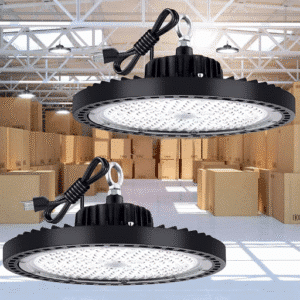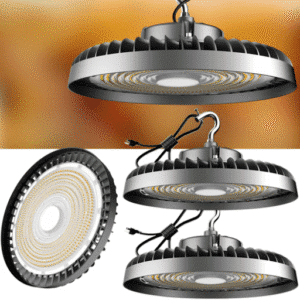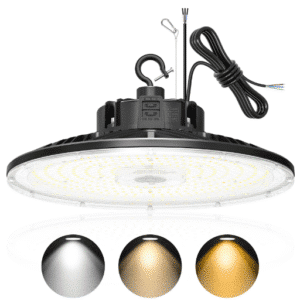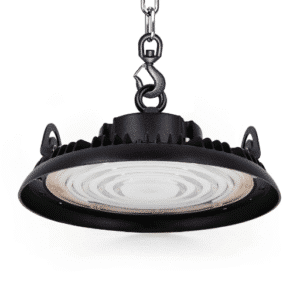

The extreme environment lighting solutions do not offer proper protection against high temperatures because some fixtures fail to meet this requirement. Industries that operate in extremely hot environments require UFO high bay lights which have a high temperature rating to function at temperatures above 150°F. The operation of industrial facilities — which include manufacturing plants, foundries, and steel mills — must address the ongoing problem of delivering dependable power and effective illumination under those conditions. This article investigates advanced technology that enables these durable lighting systems to function as the best solution for industrial and commercial spaces that require high-performance lighting. The specialized fixtures demonstrate their capacity to maintain safety standards while boosting productivity and conserving energy in all types of hazardous conditions.
📋 Table of Contents
Understanding High Bay Lights

What are High Bay Lights?
High bay lights serve as high-output lighting solutions which provide illumination for areas that have ceilings reaching 15 feet to 50 feet and higher. The lights find their primary use in industrial and commercial spaces — which include warehouses, factories, gymnasiums, and hangars — to deliver consistent lighting which meets operational requirements. High bay lights use cutting-edge optical technology together with energy-saving LED systems to produce bright lights that last for extended periods while using little electricity to provide safe illumination in vast outdoor environments.
15–50ft
Ceiling Height Range
50,000hrs
LED Service Life
150°F+
Operating Temp. Rating
Applications of High Bay Lighting
High bay lighting is essential for spaces which need strong light that spreads evenly throughout their entire area. Here are the primary environments where it delivers the most value:
🏭
Manufacturing Plants & Assembly Lines
Delivers precise illumination needed for accurate work and safe operations.
📦
Warehouses & Distribution Centers
Delivers necessary light levels which enable staff to complete storage and logistics duties.
🏟️
Sports Arenas & Gymnasiums
Provides constant light that prevents glare during sporting events.
✈️
Aircraft Hangars & Large Retail
Energy-efficient solutions delivering strong light distribution across high-ceiling spaces.
Key Features of LED High Bay Fixtures
LED high bay fixtures provide multiple advanced functions which enable them to deliver maximum performance throughout wide indoor areas.
- ✔
Energy Efficiency: Uses far less electricity than conventional lighting systems yet produces brighter light output.
- ✔
High Lumen Output: Enables users to see clearly while offering multiple color temperature options for various environments.
- ✔
Extended Service Life: More than 50,000 hours of service life which enables users to decrease expenses for maintenance and operational interruptions.
- ✔
Smart Controls: Dimming functions, motion detection capabilities, and smart system controls that enhance operational efficiency.
Benefits of Heat Resistant Lighting

Importance of Heat Resistance in High Temperatures
Heat-resistant lighting functions as the essential safety component which provides operational safety and system reliability and energy efficiency for high-temperature work environments. The design of these lighting systems uses materials which possess high durability and utilize thermal management systems to handle extreme environmental conditions which occur in industrial spaces and manufacturing facilities and outdoor areas that experience direct sunlight. The performance of heat-resistant lighting equipment allows it to operate during high-temperature conditions which protects equipment from failure and decreases fire risks while increasing the operational life of lighting fixtures. The equipment operates at essential performance levels because it protects environments from overheating which would cause damage to regular lighting systems — thus providing continuous light and security for demanding use cases.
🔥 Heat Resistance Benefits Checklist
- ☑ Protects equipment from heat-induced failure
- ☑ Decreases fire risks in high-temperature environments
- ☑ Increases operational life of lighting fixtures
- ☑ Maintains steady lumen output under thermal stress
- ☑ Provides continuous light and security in demanding conditions
- ☑ Reduces energy consumption through lower thermal waste
How Heat Resistant LEDs Improve Efficiency
Heat-resistant LEDs improve efficiency through their advanced thermal management technologies which reduce energy waste that occurs at elevated temperatures. The LEDs incorporate materials and components — which include heat sinks and thermally conductive substrates — to create an effective system for heat dissipation which keeps their parts at correct working conditions. The system achieves two benefits through reduced heating: lower energy consumption and steady light output and extended operational time. The combination of durability and energy efficiency makes heat-resistant LEDs ideal for use in industrial settings and high-temperature environments and applications that need long-lasting dependable performance.
💡 Efficiency Tip
Advanced heat dissipation systems — including die-cast aluminum heat sinks and thermally conductive substrates — are the single most important components that keep LED chips running at peak performance in high-ambient environments. Always verify these elements are present before purchasing a high-temperature rated fixture.
Common Applications of Heat Resistant LED High Bays
Heat-resistant LED high bays serve as essential lighting solutions for industrial spaces which experience extreme heat and challenging work conditions. Key deployment environments include:
- 1
Steel mills and foundries — operating at extreme process temperatures - 2
Glass manufacturing facilities — subject to radiant and convective heat - 3
Chemical plants and power generation facilities — requiring steady performance under thermal load - 4
Commercial warehouses and industrial facilities — needing reliable long-term illumination
Types of High Bay Fixtures

Round High Bay vs. Linear High Bay
Round high bay fixtures — which people commonly call UFO high bays — deliver focused light outputs that create even lighting patterns, making them suitable for installation in locations that have elevated ceilings found in warehouses and sports facilities. Their circular design allows for seamless and efficient illumination in large, open areas. Linear high bay fixtures, which have their long rectangular design, better fulfill their purpose through applications that need to provide straight light for production lines, retail stores, and storage aisles. The decision between two options depends on three factors: the required lighting needs, the room design, and the height of the ceiling.
| Feature | 🔵 Round (UFO) High Bay | 🟦 Linear High Bay |
|---|---|---|
| Light Distribution | 360° uniform, circular spread | Directional, linear beam pattern |
| Best For | Open warehouses, gyms, hangars | Assembly lines, retail aisles, parking structures |
| Installation | Hook or chain mount | Pendant, surface, or V-mount |
| Profile | Compact, low-profile disc | Long rectangular form factor |
| Ideal Ceiling Height | 20 ft – 45 ft | 15 ft – 40 ft |
Comparing 200W and 220W High Bay Lights
The two high bay light types differ from each other because of their distinct power requirements and their respective light output capabilities. A 220W high bay light typically provides a slightly higher luminous flux (measured in lumens) compared to a 200W fixture, making it more suitable for areas requiring brighter illumination. The increased wattage results in higher electrical usage, which leads to increased operational expenses that will continue throughout the entire duration of usage. The efficacy of both options will match each other when the LEDs and components reach their highest quality standards. The selection between two options requires assessment of the specific lighting needs — involving measurement of installation height, determination of needed brightness, and evaluation of energy efficiency targets.
| Specification | 200W High Bay | 220W High Bay |
|---|---|---|
| Typical Lumen Output | 24,000 – 26,000 lm | 26,000 – 28,000 lm |
| Energy Cost | Lower | Slightly Higher |
| Best Application | Standard warehouses | Extreme-brightness areas |
| Efficacy (matched components) | Equivalent | Equivalent |
Choosing the Right Fixture for Your Warehouse
The primary requirement for selecting the best warehouse fixture involves achieving energy efficiency while maintaining fixture durability and providing suitable light output. LED lighting stands as the best solution because it delivers extended operational life combined with minimal upkeep expenses and exceptional light output.
⚙️ Factors to Consider When Selecting a Warehouse Fixture
- Warehouse size and ceiling height — determines required lumen output and mounting height.
- Beam angle requirements — wider angles for open spaces, narrow for task-focused zones.
- Color Rendering Index (CRI) — high CRI enables users to see better, which improves safety.
- Energy efficiency targets — compare lumen-per-watt ratios across shortlisted models.
- High-temperature rating compliance — confirm the fixture meets the ambient temperatures of your facility.
Product Specifications and Lighting Solutions

Key Specifications for High Temperature Rated Fixtures
The system operates in environments that experience extreme heat because its fixtures have high-temperature ratings which enable them to function up to 149°F (65°C) and beyond. The specific requirements demand that products use strong housing materials — including die-cast aluminum and stainless steel — to create protection against heat damage, along with specialized systems which operate to control internal temperatures and high-quality LED chips which can withstand heat and maintain their performance during extended use.
| Specification Category | Requirement / Standard |
|---|---|
| Operating Temperature | Up to 149°F (65°C) and beyond |
| Housing Material | Die-cast aluminum or stainless steel |
| IP Rating | IP65 or higher (dust and moisture protection) |
| Thermal Management | Heat sinks, thermally conductive substrates, external drivers |
| Sealing | Strong gaskets protecting internal components |
| LED Chip Grade | High-quality chips rated for extended high-heat operation |
Understanding NSF and Hazardous Location Ratings
The two rating systems — NSF and hazardous location ratings — both establish essential safety requirements which govern performance standards, but they have separate applications in different operational environments.
🏷️ NSF Ratings
Establish sanitation requirements for equipment in food processing, beverage production, and pharmaceutical processing facilities. The NSF certification requires products to be built with protective features that prevent contamination while enabling simple cleaning and withstanding strong cleaning products.
⚠️ Hazardous Location Ratings
Determine which equipment can operate in regions that may experience explosive conditions because of dangerous gases, vapors, and combustible dust. These ratings guarantee operations which do not cause ignition of dangerous materials in the surrounding area.
LED High Bay Lighting for Steel Plants and Aluminum Smelters
LED high bay lighting serves as the ideal lighting system for steel plants and aluminum smelters because it provides long-lasting performance with low energy consumption while enduring the tough working conditions of industrial environments. These facilities require durable lighting equipment because they have to deal with extreme temperatures, dust, and vibrations — a combination that eliminates most conventional fixture options from consideration.
🏗️ Industrial Application Summary — Steel & Aluminum Facilities
- ▸ Withstands radiant heat from molten metal processes
- ▸ Resistant to dust infiltration and corrosive airborne particles
- ▸ Absorbs mechanical shock and vibration from heavy machinery
- ▸ Delivers consistent lumen output throughout continuous operation cycles
Innovative Features in LED High Bay Lighting
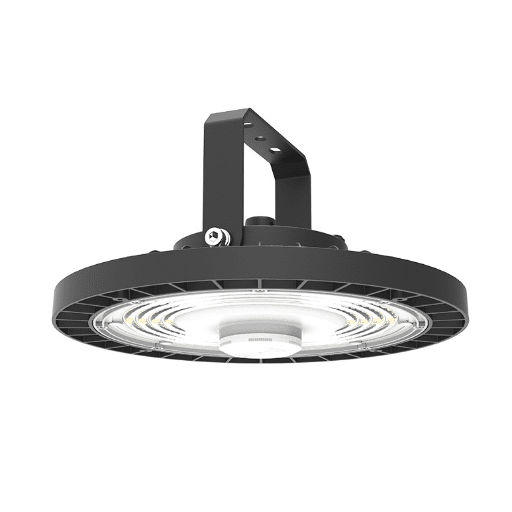
Smart Sensors for Energy Efficiency
The LED high bay lighting systems use smart sensors which apply motion detection and daylight harvesting and wireless connectivity technologies for their energy conservation operations. The sensors control light emission through their automatic adjustments which respond to both current environmental conditions and active human presence and natural daylight availability. The intelligent system achieves its objectives through energy waste reduction and LED lifespan extension and operational cost savings. The majority of advanced systems provide users with the capacity to connect their systems to IoT platforms which grant them the ability to monitor their energy usage from a distance while managing their energy consumption.
🏃
Motion Detection
Auto-dims when no occupancy is detected
☀️
Daylight Harvesting
Adjusts output based on available natural light
📶
Wireless Connectivity
Integrates with IoT platforms for remote monitoring
🔆
Dimming Control
Customizable brightness levels for different tasks
Enhancements in LED Round High Bay Designs
The current LED round high bay design advancements establish their focus on enhancing energy efficiency and product durability and operational performance under challenging industrial and commercial conditions. Key improvements include:
- ◆
Advanced heat dissipation systems — enabling continuous device functionality under high-temperature operational conditions.
- ◆
Dimmable features with smart controls — supporting wireless connections and IoT system integration for customizable energy consumption options.
- ◆
Upgraded optical lenses — enabling superior light distribution which creates less glare while producing more uniform illumination.
- ◆
Higher lumen outputs at lower wattage — achieving energy efficiency improvements that meet new sustainability standards.
Installation Best Practices
🔧 Step-by-Step Installation Guide
- Verify ambient temperature compliance — confirm the fixture’s rated operating range exceeds the maximum recorded temperature in your facility.
- Inspect housing material and coating — aluminum with corrosion-resistant finish is mandatory for environments with corrosive gas or moisture exposure.
- Confirm enclosure and IP ratings — IP65 minimum for dusty or wet environments; higher for washdown zones.
- Plan proper ventilation and spacing — adequate clearance around fixtures prevents heat buildup from exceeding design limits.
- Verify local building code compliance — hazardous location ratings (Class I/II) may be legally required in certain facilities.
- Schedule maintenance access points — design mounting layouts that allow routine inspection without requiring fixture removal.
Frequently Asked Questions (FAQ)
Q1: What is a high temperature high bay and where is it applied?
Specialized high bay LED lights operate in areas where the temperature exceeds standard limits — which is required for their use in ambient high temperature working environments. The devices operate in high temperature lighting environments which include indoor sports venues and warehouses and heavy manufacturing facilities and foundries and all other industrial and commercial indoor spaces which have high ceilings and need to withstand extreme heat and corrosive gas exposure.
Q2: How do LED high bay light fixtures handle high heat and maintain long-lasting performance?
The center body of both energy efficient LED high bay lights and high heat resistant lights consists of aluminum which creates a protective barrier that allows heat to escape efficiently from the fixture. The design of many LED light fixtures includes impact protection and a corrosion-resistant coating which safeguards them from severe environmental conditions and high temperature lighting requirements — which help maintain lumen output through time.
Q3: What product types are available — round, linear, selectable CCT, or special models like Hyperlite?
Manufacturers offer a range of high bay LED lights including LED linear high bay light, linear high bay LED, round LED high bay, and LED round high bay PL models. Some fixtures are selectable with CCT or selectable 5000K/4000K/3000K options which allow users to adjust the color temperature according to their indoor lighting requirements. Hyperlite and other commercial LED companies offer products which are designed for environments that need both high ceiling illumination and multiple temperature lighting solutions.
Q4: How do I choose the right lumen, CCT, and features for my warehouse or indoor sports venue?
The selection should be done according to the operational area that will experience high temperatures and the visual requirements of specific tasks. The selection of energy-efficient LED high bay lights depends on two factors: proper lumen output for warehouse lighting and indoor sports areas — which require bright illumination at approximately 5000K for enhanced visibility. The product needs to offer CCT selection for operational flexibility and impact protection features for user safety, while its body should consist of aluminum materials which have a protective coating against corrosion when the environment contains corrosive gases or moisture. The project needs to determine the proper mounting height for high ceiling spaces while using fixtures which fulfill high temperature lighting standards to achieve dependable system operation.
Q5: Are high-temperature high-bay fixtures energy-efficient and cost-effective despite tougher conditions?
The answer is affirmative. The design of energy-saving LED high bay lights enables them to reduce energy expenses through their efficient LED chips and thermal systems which maintain operational efficiency even in extremely hot conditions. The solution shows higher upfront expenses when compared to standard shop lights — but businesses should choose this option because it reduces energy expenses while delivering extended operational life and decreased need for maintenance in environments that operate at high temperatures.
Q6: What installation and maintenance considerations are important for high ambient and corrosive environments?
High temperature lighting needs to be installed according to its specifications which require fixtures to operate in high ambient conditions, while the selected units need to use aluminum bodies that have corrosion-resistant coatings or finishes to handle corrosive gas environments. The system needs to be tested for enclosure ratings and impact protection capabilities while assessing its maintenance access points which allow for standard upkeep procedures. The establishment of proper ventilation and spacing together with compliance to local building regulations will guarantee safe functioning at locations where the equipment might reach the maximum limit of high-temperature lighting system temperatures.
References
-
-
High Bay Research Building – University of Chicago Facilities
- Link to source
- This page provides details about the construction and features of a high bay research building.
-
High Bay Structural Lab – University of Cincinnati
- Link to source
- Information about the High Bay Structural Laboratory, including its capabilities and research focus.
-
Analysis of High Bay Hangar Facilities for Detector Sensitivity and Placement – NIST (National Institute of Standards and Technology)
- Link to source
- A study on fire detectors and sprinklers in high bay aircraft hangars.
-
📝 Conclusion
The Right High-Temperature Fixture Makes All the Difference
High temperature rated UFO high bay lights represent far more than a lighting upgrade — they are a foundational safety and productivity investment for any facility that regularly operates above 150°F. From steel mills and foundries to glass manufacturing plants and chemical facilities, the combination of robust aluminum housing, IP65+ protection, advanced thermal management, and smart sensor integration delivers the sustained performance that conventional fixtures simply cannot match.
When selecting a high-temperature rated high bay fixture, prioritize verified operating temperature ranges, housing material quality, energy efficacy, and smart control compatibility. The initial investment pays dividends through reduced energy costs, minimized maintenance, and the peace of mind that comes from knowing your lighting system was built specifically for the extreme conditions your facility demands.