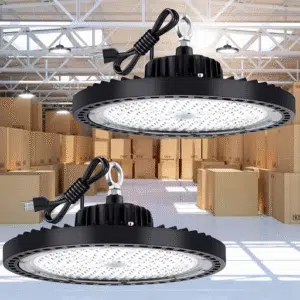

UFO High Bay Lights are widely accepted in industrial and commercial applications due to their energy-efficient, durable, and excellent quality characteristics. Nevertheless, these lighting fixtures are not capable of completely eliminating the threats of technology and every so often there are issues associated with them. Troubleshooting these issues whether it’s flickering lights, sudden reduction of brightness, or lights failing to turn on at all may become irritating and consuming. This post, however, is to help you out. We shall discuss in this guide the commonest problems with the UFO High Bay Lights and provide you with some simple step-by-step solutions to fix your lighting system. The troubleshooting list is not only for facility managers or electricians but even home improvement hands-on people will definitely get the confidence and know-how to take on the issues. Keep reading and we will not take long to illuminate your UFO High Bay problems!
Understanding High Bay Lighting
What is a High Bay Light?
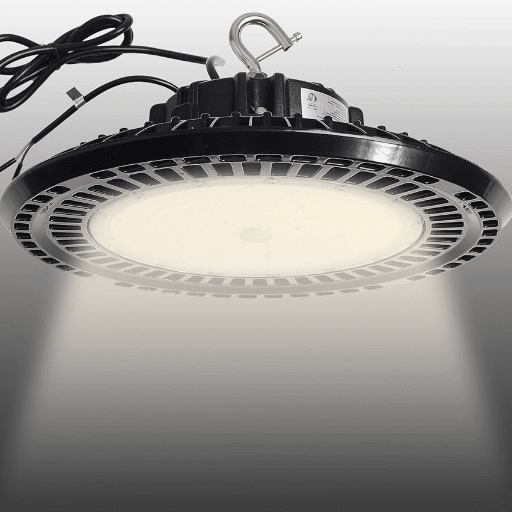
A High Bay Light is a fixture that is specifically designed for lighting up high spaces like the ones with ceilings that are usually 20 to 40 feet or more. These lights are usually installed in large and open places like warehouses, factories, gymnasiums, and shops where the lights need to be very powerful so that it is possible to light up the whole area from the ceiling. High Bay Lights have become synonymous with efficiency, longevity, and proper light distribution. They are, therefore, the best choice for industrial and commercial usage.
Types of High Bay Lights
There are different kinds of High Bay Lights to choose from and each of them is suited for a specific type of need or setting. The most popular ones are:
LED High Bay Lights
LED high bay lights are the ones that occupy the top position among the choices because to their energy efficiency and the fact that they last longer than others. These lights consume much less electricity than the traditional lighting methods leading to a decrease in the amount of money spent on electricity. Besides, they radiate little heat and also produce bright lights of good quality which is a plus for warehouses, factories, and commercial spaces.
Fluorescent High Bay Lights
Fluorescent high bay lights that use T5 and T8 fixtures are seen as the affordable option and their energy efficiency is relatively good. They are a good choice when space is being considered economically as they are not very expensive. But lights may have a shorter life span than a day or two and have to be replaced more often.
HID High Bay Lights
High-Intensity Discharge (HID) lights are a type of artificial light which includes Metal Halide, High-Pressure Sodium, and Mercury Vapor lamps. This light has been in the past and is still being used. Though it is powerful lighting but comes with bats as it consumes more power and has a long starting time. Gradually replacing LEDs are HID lights because of their inefficiency and short duration.
Induction High Bay Lights
Induction lights are a less common but durable option. They operate without filaments or electrodes which give them a long service life. These lights are mostly used in setups where maintenance opportunities are limited, but they are not as energy-efficient as LEDs.
💡 Key Insight: By knowing the different kinds of high bay lights, the public and the manufacturing industry can choose wisely according to their particular lighting requirements while simultaneously profiting from the efficiency and cost-effectiveness.
Applications of High Bay Lighting
High bay lighting has proved to be an adaptable solution for providing uniform bright light from a height across numerous settings, and that is how it gets used in different industries and commercial areas. The most common application areas include warehouses, production plants, and big retail shops, where a clear view is vital for both the safety and activity to be done. They are also used in sports arenas, auditoriums, and aircraft hangars because of their extensive beam widths and their power to efficiently cover large spaces.
New statistics show that high bay lighting is increasingly being adopted in food processing and warehousing which is largely due to the need for high standards of cleaning regulated by legislation and the requirement of very good visibility in such places. Furthermore, high bay lighting is gaining approval as a lighting solution in modern-day urban environments such as railway stations and airports because their capacity to contribute to energy efficiency coincides with sustainability objectives. The ability to adapt to specific scenarios is what makes high bay lighting an indispensable factor in the industrial and commercial infrastructure on the whole.
Common Problems with High Bay Lights

⚠️ Flickering or Dimming
Flickering or dimming of high bay lights is usually due to electrical problems like poor wiring connections, voltage fluctuations, and non-compatible dimmer switches. Besides, a defective LED driver or the quality of the lamp itself might be the reason for the erratic performance. Proper installation, compatible parts and dealing with electrical problems can sometimes fix these. If the problem does not go away, it may be necessary to call a professional electrician or replace the defective lamp.
⚠️ Complete Failure to Turn On
In case your LED light is completely not working, there are some possible reasons which have to be checked out. The most common problems are bad wiring, a burnt-out fuse, or an LED driver that is not working. The recent data indicates that a considerable number of users have mentioned that loose connections in the electrical circuit or an incorrectly installed light fixture are very common problems. Besides, power supply problems like voltage fluctuations or a tripped circuit breaker might keep the LED from working. Checking the connections, making sure that the power source is working, and trying the fixture with a bulb that is known to work can all help find out the cause of the problem. If these steps do not solve the problem, it is better to get an electrician to repair it or to replace the defective components to restore the proper functioning.
⚠️ Uneven Lighting
Uneven lighting can have various causes, and properly dealing with it requires knowledge of the root reasons. One of the main reasons for inconsistent lighting in the area is incorrect positioning or using bulbs of different wattages within the same area. Amongst other reasons are dirty or opaque lenses, which can cut the light output, or old LED lights losing their brightness gradually. To fix this, check that light fixtures are equally spaced and use bulbs of the same type and wattage. Regularly clean the fixtures and check for damages to improve consistency. If the issue continues to occur, you might want to consult a lighting expert who will come up with solutions to uniform illumination.
Troubleshooting High Bay LED Lights

🔧 Checking Power Supply
In the investigation of high bay LED light issues, one of the first things to do is to check the power supply. First, check the circuit breaker or the fuse related to the lighting system if it is not tripped or damaged. Look if the voltage supplied to the light fixture is the same as the manufacturer’s recommendations because LED lights usually work with certain voltage ranges only. Moreover, if the power connections and the wiring are not in good condition, that can also be a reason for poor function—check for wear, loose connection or corrosion. A recent trend analysis from search data points out that reasons like sudden power surges and unstable voltage are among the primary ones that lead to LED light failure. To prevent such situations from happening again and ruining the LEDs, you can use surge protectors or an uninterruptible power supply (UPS). However, if the power supply is stable and working fine, but the lights still don’t work, it may be necessary to look deeper into the driver or control mechanisms to determine the root of the problem.
🔧 Checking Wiring Connections
It is very important to check wiring connections properly when you make sure that every connection is tight and there is no damage or corrosion. The current trends in the search engine of show that one of the most frequently asked questions is whether poor wiring is the main reason for LED light failure. The answer can be found in the wiring’s condition – loose, frayed or even wrongly connected wires stop the electrical current from passing which is needed for the LED light to work properly. Performing regular inspections on the connections and making sure that the terminals are tightly fastened can avoid such disruptions. A multimeter can help in checking the continuity and making sure that the electrical flow is running smoothly so that you can avoid risks and keep your LED lighting system running for a longer time.
🔧 Evaluating the LED Driver
When evaluating the LED driver, the first task is to confirm that its output voltage and current are within the limits specified for the connected LEDs. Use a multimeter first to determine the output voltage while the driver is still on, making sure it’s in line with the voltage rating of the LEDs. Check the current output as well to be sure it corresponds with the LED’s requirements since a mismatch can lead to flicker or power drop. If the output is not as expected from the driver, look for damage, overheating, and bad connections. Fixing the driver that is not working properly can clear up a lot of issues and bring the LED lighting system back to its full capacity.
Preventive Measures for High Bay LED Lights

Best Practices for Installation
✅ The longevity and efficient performance of high bay LED lights combined with the above-mentioned best practices and proper maintenance, help the lights to meet the modern energy-saving standards.
Choosing Quality Components
The selection of high bay LED lights must begin with high-quality component selection in terms of the durability, efficiency, and performance of the lights. First check whether the products come with certificates of recognized industry standards such as UL or DLC. These certificates imply compliance with safety and energy efficiency requirements. The LEDs used should be of top quality as the chipset significantly influences the light output, color uniformity, and life span. Besides, it is better to have luminaires with good heat sinks that manage to dissipate heat quickly as they are the ones that will prolong the life of the fixture.
📊 Current Trends in LED Technology
Search data indicates a growing trend among users who are in search of LED lights that are equipped with state-of-the-art smart controls, including dimming features, occupancy sensors, and a connection with smart home systems. In the product selection process, it would be a good idea to offer such features as they would not only provide users with flexibility but also save on electricity.
Furthermore, always take the manufacturer’s warranty and after-sales service into account as these would greatly determine the level of trust you have in the product. By weighing performance, energy efficiency, and innovative features, you ensure that you choose components that not only meet the current standards but also the expectations of the consumers.
Preventive Maintenance for Industrial High Bay Lights

Regular Inspections
The regular check-ups that are performed on the industrial high bay light fixtures are very important for the longevity and best light quality of these fixtures. The professionals performing these checks will be able to see if any problems like dust, loose connections, or wear and tear developing need their attention.
📈 Key Statistic: Up to 25% more life can be added to high bay lights if they are properly maintained as this will also lead to reduction in overall expenses and less interruptions.
Besides that, it is also good to keep an eye on the environmental factors like humidity and temperatures to avoid the lights being burnt out too early. By establishing a regular inspection schedule, it becomes easy to have in place the lighting system that is industrially efficient, safe, and reliable.
Cleaning and Dusting
⚠️ Impact of Dust
The luminosity of these lights can be decreased by 30% if a lot of dust and grime are on them, which would lead to higher energy costs for the same brightness.
🗓️ Cleaning Schedule
It is said that by cleaning every 3 to 6 months, depending on the environment, the light output is kept at maximum and the life of the fixtures is lengthened.
Cleaning aids such as microfiber cloths and non-abrasive cleaning solutions are to be used so that no harm is done to the delicate parts and at the same time the lights stay clean and in good condition.
Updating to New Technologies
The upgrading of light fixtures to those of new lighting technologies such as LED and smart lighting systems can result in a huge gain in energy efficiency and overall performance. One of the advantages of LEDs for instance is that they give off more light but consume less power compared to the old incandescent or fluorescent bulbs. Moreover, adding smart lighting tech gives a chance to use the lighting system remotely, in an automated way, and create customized settings.
📈 Consumer Interest Growth
The latest data indicates an above 45% increase in the past two years in consumer interest surrounding the term “smart lighting systems,” which reflects a big move towards the optimization of energy usage and upgrading of the lighting solutions.
Thus, conversion to these technologies results not only in saving of money, but also in reducing the carbon footprints, thereby, supporting the sustainability goals. Consequently, keeping apprised and presenting funds for innovations at the same time guarantees both the economic profit and the environmental consciousness.