
The industrial and commercial sectors need correct lighting because it provides essential support for safety operations and productivity work and their need to follow regulations. The high bay lighting system which warehouses and manufacturing facilities and large indoor spaces use requires users to follow strict performance requirements for its proper operation. Two of the most influential regulatory bodies guiding these standards are OSHA (Occupational Safety and Health Administration) and the IES (Illuminating Engineering Society). The article will examine the fundamental rules and compliance standards established by these organizations which play a critical role in ensuring workplace safety and operational efficiency. Facility managers and lighting professionals and business owners need to understand the guidelines because it helps them prevent penalties while increasing worker productivity and maintaining a safe workplace. Stay tuned to our presentation which will transform the complicated field of high bay lighting regulations into practical business solutions.
Understanding High Bay Lighting

What are High Bay Lights?
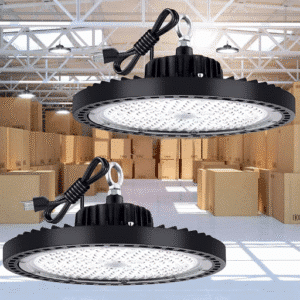
High bay lights serve as lighting fixtures which engineers designed to function in environments where ceilings reach heights of 20 to 40 feet. The lights produce strong uniform light distribution throughout extensive spaces which makes them suitable for use in warehouses and factories and gymnasiums and industrial and commercial establishments. Their design makes it possible to deliver effective lighting solutions which maintain high efficiency while producing minimal glare through their operation at extended distances from overhead light sources.
Types of High Bay Light Fixtures
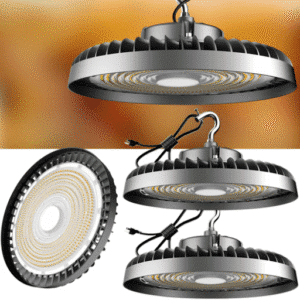
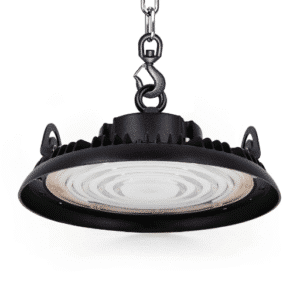
High bay light fixtures come in several types, each suited to specific applications and lighting needs. The three main types of lights which exist in this category include:
- LED high bay lights which provide energy savings and long operational life with minimal upkeep
- Metal halide high bay lights which produce intense white illumination but require greater power to operate
- Fluorescent high bay lights which deliver effective energy savings at an entry-level price
- Induction high bay lights which provide reliable performance through their solid design and constant lighting capacity
Among these options, LED high bay lights prove to be the most efficient solution because they deliver outstanding results in various environments.
Applications of High Bay Lighting
High bay lighting is widely utilized in environments with ceilings typically ranging from 20 to 40 feet high where powerful and uniform illumination is essential. The most common locations for these lighting systems include warehouses and manufacturing facilities and gymnasiums and retail stores which require sufficient illumination for safety and work efficiency and precise task completion. High bay lighting serves as a common solution for large commercial areas and airplane hangars and transportation terminals because it provides efficient lighting coverage across vast spaces. LED technology advancements now enable high bay lights to work at higher energy efficiency levels and better product durability while requiring less frequent upkeep work.
OSHA Lighting Requirements for High Bays

Overview of OSHA Regulations
⚠️ Key OSHA Requirements
The OSHA lighting regulations establish requirements through standard 1910.37 which mandate workspaces that use high bay lighting systems to maintain adequate light levels for safe operations and effective visual functions. OSHA requires industrial areas to have at least 5 foot-candle (54 lux) lighting except when specific tasks need greater illumination. The right lighting system must eliminate all forms of visual disturbance which includes glare and shadow obstruction and dim areas that create safety risks. All emergency exit routes together with their connected paths need continuous lighting which must meet emergency lighting system reliability and resilience standards. The standards mandate that employers must create work facilities which provide both safety and proper illumination for their employees.
Compliance with OSHA Standards
The OSHA regulations require that all workplaces maintain sufficient lighting conditions which protect worker safety while enabling business operations to function effectively. The OSHA standard 1926.56 establishes essential minimum lighting requirements which general construction sites must follow. The emergency lighting systems need regular testing to confirm their power outage functionality while all exit routes need continuous lighting to support safe evacuation. The organization achieves two benefits through its implementation of OSHA guidelines because it avoids potential safety mistakes while decreasing the chance of accidents which result from insufficient lighting.
Impact of Non-Compliance
❌ Consequences of Non-Compliance
The failure to meet established lighting and safety standards leads to various outcomes which include:
- Legal consequences and financial obligations
- Citations, fines, and possibility of business shutdowns
- Employee productivity reduction and production error increase
- Increased workplace injuries from trips and falls
- Operational inefficiencies and health problems for workers
High Bay Light Fixture Specifications

Choosing the Right Fixture
💡 Key Factors to Consider
The process of selecting a suitable high bay lighting fixture requires assessment of four essential factors which include:
- Lumen output – Ensures sufficient brightness for the space
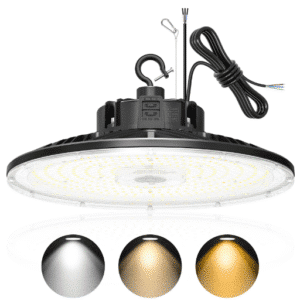
- Color temperature – Typically 4000K to 5000K for industrial settings
- Energy efficiency – LED lights offer superior performance
- Mounting height – Determines beam angle and distribution needs
Modern LED high bay lights consume less electricity to produce brighter light output which makes them more energy efficient than traditional metal halide and fluorescent lighting systems. The fixture must provide sufficient lumens to create an even light distribution throughout the entire area when installed in spaces that have overhead ceilings. The selection of a color temperature between 4000K and 5000K produces a bright natural white illumination which suits industrial and commercial environments. The selection of dimmable fixtures which use sturdy aluminum housings creates equipment that can function in challenging conditions while providing extended operational lifespan. The verification of electrical system compatibility requires testing against existing systems while product certifications which include DLC and UL listings assure both safety and performance compliance.
Energy Efficiency and Wattage Considerations
The assessment of energy efficiency requires evaluation of wattage specifications which should lead to the selection of LED lighting products because they use less energy than both incandescent and fluorescent lighting solutions. LEDs convert a higher percentage of electricity into light, which results in lower energy loss through heat production. Luminaires with high lumens-per-watt (lm/W) ratings provide optimal performance because they demonstrate superior energy efficiency. The use of wattage adjustable fixtures enables users to control lighting intensity according to their specific needs while decreasing power consumption. The selection of Energy Star certified products guarantees both operational efficiency and decreased expenses.
High Bay LED vs. Fluorescent Lighting
| Feature | LED High Bay | Fluorescent |
|---|---|---|
| Energy Efficiency | Superior – converts more energy to light | Lower – produces more heat |
| Lifespan | 50,000+ hours | Shorter lifespan |
| Maintenance | Minimal – fewer replacements needed | Higher – frequent replacements |
| Environmental Impact | Safer – no hazardous materials | Contains mercury |
| Operating Costs | Lower electricity expenses | Higher due to heat and inefficiency |
The most effective option for long-term efficiency and safety and cost efficiency lies in High Bay LED lighting.
High Bay Lighting Layout and Spacing

Optimal Spacing for Illumination
High bay lighting reaches its best performance when installed at specific distances which depend on how high fixtures are installed and which light output they produce, delivering complete light coverage while avoiding excessive brightness and areas without light.
| Mounting Height | Lumen Output | Recommended Spacing |
|---|---|---|
| 15-20 feet | 10,000-15,000 lumens | 12-15 feet apart |
| 15-20 feet | Standard output | 15-18 feet apart |
| 20-30 feet | 20,000-30,000 lumens | 15-20 feet apart (brighter) / 20-30 feet (balanced) |
The design process demands different adjustments which apply to warehouse and gym and industrial settings because of their need to measure ceiling reflectivity and aisle width.
Designing an Effective Lighting Layout
📋 Layout Design Checklist
- Evaluate space purposes and requirements
- Select appropriate fixture types
- Determine necessary lumen output levels
- Assess light distribution patterns
- Measure required illumination levels (task and ambient)
- Perform photometric calculations for optimal placement
- Choose LED fixtures with high efficacy ratings
- Select appropriate color temperature (4000K-5000K)
- Consider room dimensions and surface reflectance
- Use lighting design software for testing and validation
The photometric calculations help determine the best fixture placement and spacing which will eliminate glare and shadows while delivering uniform light throughout the area. The most efficient energy solution combines LED fixtures which show high efficacy ratings with suitable color temperatures which range from 4000K to 5000K for work environments. The design phase needs to consider room dimensions and surface reflectance and potential obstructions while using lighting design software to create and test the lighting layout.
Adjusting for Ceiling Height
The lighting design for ceilings requires designers to determine two factors: fixture mounting heights and beam angle specifications which will create the best possible lighting results. High ceilings which exceed 12 feet in height require fixture selection of narrow beam angle lights to direct light straight down while minimizing light dispersion. Lower ceiling heights require wider beam angles to create better light distribution throughout the area. The fixtures need to produce specific lumen output, which must match the height of the ceiling, to deliver enough light that reaches the working surface. Photometric analysis tools help determine the precise placement and performance of fixtures which need to be adjusted according to ceiling height.
Future Trends in High Bay Lighting

Advancements in LED Technology
🚀 Emerging LED Technologies
- Advanced LED chips with higher efficiency
- Innovative thermal control solutions
- IoT-based smart control systems
- Tunable LEDs with adjustable color temperatures
- Micro-LED technology for enhanced performance
- Quantum dot technology for precise light control
The current research on LED technology development aims to achieve better energy performance and higher light output and longer product lifetime while decreasing manufacturing expenses. The industry undergoes transformation through the introduction of advanced LED chips which provide higher efficiency and new thermal control solutions and IoT-based smart control systems. The inventors of tunable LEDs developed a product which enables users to change color temperatures between different lighting modes. The introduction of micro-LED technology and quantum dot technology enables LED systems to produce more energy-efficient light output with precise control which makes LEDs the top choice for commercial and industrial lighting applications.
Sustainability and Energy Efficiency Trends
The current research works on developing sustainable energy solutions which combine solar and wind renewable energy technologies with energy-efficient systems such as LED lights and smart building designs. The energy management systems which use IoT and AI technologies require real-time monitoring to decrease power consumption for both governmental and industrial organizations. The circular economy model development efforts aim to create systems which use recyclable materials while decreasing the amount of electronic waste produced. Countries and organizations adopt these practices to achieve net-zero emissions targets while maintaining their energy conservation efforts.
Regulatory Changes and Their Impacts
📊 Key Regulatory Developments
The recent regulatory updates mandate organizations to follow stricter energy efficiency requirements while embracing renewable energy solutions to help combat climate change. Governments worldwide create emissions reduction requirements through legislation which includes:
- Carbon pricing mechanisms
- Mandatory greenhouse gas emission tracking
- Clean energy project incentives
- Net-zero emissions targets
The new regulations compel industries to adopt sustainable practices through regulatory compliance requirements which generate additional operational costs for businesses. The new regulations provide businesses with chances to finance environmentally friendly technologies while achieving better operational results and obtaining an edge over competitors in the evolving energy sector.
References
- UC San Diego High Bay Physics Aerodrome Facility
This document outlines safety and operational procedures for high bay facilities. - Tank T-08, High Bay – Environmental Health and Safety
A detailed guide on inspection and safety protocols for high bay tanks. - Replace High Bay Fixtures and Emergency Lights USPFO
This document includes compliance with EPA, OSHA, and other federal regulations for high bay lighting.
Frequently Asked Questions (FAQ)
Ready to Upgrade Your High Bay Lighting?
Ensure compliance with OSHA and IES standards while maximizing energy efficiency and safety in your facility.