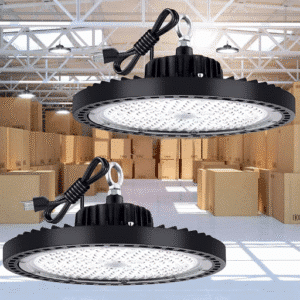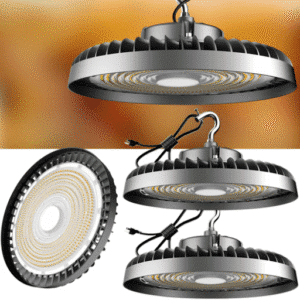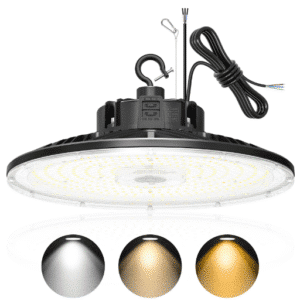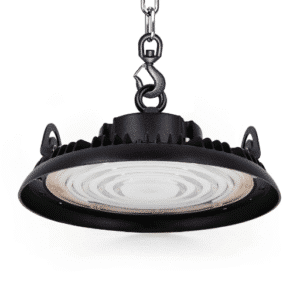

When lighting up large areas, such as warehouses, gyms, or other industrial areas, selecting the appropriate beam angle for your UFO high bay lights is essential for the best illumination. Each of the three angles, 60°, 90°, and 120°, is designed for specific uses and locations. However, how do you figure out which beam angle is just right for your application? This blog post is going to explain the most important differences between these beam angles, so you can make a decision that will give you the most efficiency and brightness. Electric lighting projects or renovations, the knowledge about these beam angles will be the guarantee for the right lighting. So, let’s go over and discover the unique features of each angle!
Understanding High Bay Lighting

What is High Bay Lighting?
High bay lighting is a light fixture requiring high ceiling areas, mainly facilities, warehouses, and other vertical spaces where the ceiling height ranges from 20 to 40 feet. The bright and even illumination provided in the areas helps the lights to be safe and consumed less energy. These lights can be varied in terms of brightness and power that makes them a suitable solution for different lighting applications.
Applications of High Bay Lights
High bay lights are a perfect match for numerous applications, especially in situations where high-quality, steady, and intense illumination is a must. Illumination in factories is one of the applications, and such areas as production lines are often visited by the high bay lights since visibility is one of the factors that could lead to safety as well as efficiency. There are others who can also use the lighted-up area such as warehouses that require good light for their storage and the retrieval procedures to be efficient. High bay lights are also mounted in arenas thus illuminating them evenly for sports and activities. In addition, high bay lighting is common in large retail spaces and supermarkets to attract customers’ attention to the products and create a welcoming shopping atmosphere through illuminating the area. The modern high bay lighting is now energy-efficient and packed with interesting features such as motion detection and variable light output, thereby becoming pretty much the choice of the modern consumer across different industries.
Differences Between High Bay and Low Bay Lighting
The main difference between high bay lighting and low bay lighting is that the former refers to the high ceiling areas with technology suited for their heights while low bay lights comprise the areas of low ceiling heights, where the lighting is of a softer nature and more dispersed. High bay lights are intended for ceilings that are typically 20-foot high or taller and provide dense and concentrated illumination to large places like warehouses, gymnasiums, and factories. The situation is different with the low bay lights that are recommended for ceilings lower than 20 feet as they provide a wider distribution of light suitable for smaller places such as retail stores or garages. Each lighting type has its optics and design based on the ceiling height, therefore, resulting in efficient and uniform light without any unintentional glare or shadowing.
Beam Angles in High Bay Lights

Importance of Beam Angles
Beam angles substantially affect the distribution of light throughout a room. They make it possible for the light to be directed to the desired places, ensuring that there is no extra light or illumination going to waste. For high bay lights, it is necessary to choose the right beam angle to get evenly lit space, reduce glare, and avoid dark areas. Narrow beam angles are best for lighting the particular spot or high ceilings, while broad beam angles are excellent for uniformly lighting larger areas by supplying light over a larger space. Selecting the correct beam angle is a lighting efficiency booster and a source of a cozy and stimulating place.
Exploring 60° Beam Angle
The 60° beam angle is a flexible choice which is often in great demand on the market due to its balanced light distribution and pretty high concentration of illumination. As per a very recent analysis search data, the beam angle in question is often asked about in connection with medium-sized spaces like retail, warehouse, and office areas. The 60° beam angle makes it possible not only to delineate the lit area very well but also to allow a good view of the surroundings by preventing in the first place light dying out too much. This angle is the Labor day of the lighting industry as it combines efficiency with aesthetics – it grants visibility and at the same time saves power in moderately lit spaces. On top of that, the increase in usage of the 60° angle showcases its flexibility and the move across industries guarantees it being not only a practical but also a very enticing lighting solution.
Exploring 90° Beam Angle
The 90° beam angle is a wide-angle light that covers a big area by illuminating it evenly which makes it a good choice for larger living rooms, open plan offices, and retail spaces. there is a trend of increasing queries about lighting solutions for 90° beam angle bulbs which signals growing interest in the provision of flexible lighting arrangements. This beam angle radiates widespread light along with its softness at the same time thus eliminating the risk of creating an intimidatingly brightly lit area. Its flexibility also is what makes it a necessary evil for both domestic and commercial lighting; especially where soft lighting, minimum shadows are the best.
Exploring 120° Beam Angle
A 120-degree beam angle throws an even wider light than a 90-degree beam angle, making it suitable for situations where broad and uniform lighting is a must. This angle is particularly good in large areas like open spaces, shops, or outdoor places as it makes shadows almost non-existent and reduces wall-to-wall lighting consistency. Although it might not be as brilliant as the narrower angles, its extensive coverage with minimal lights dying out makes it the choice of many when it comes to creating ambient lighting in various settings.
Choosing the Right High Bay Light Fixture

Factors to Consider When Choosing
Numerous factors come into play when it comes to a high bay light fixture choice. The first step is to assess the height and size of the area where the fixture will be installed, hence checking whether or not the light is enough and of the right intensity. The lumen output along with the color temperature, must be in tandem with the area’s requirements—be it factory workplaces or retail places. The energy efficiency issue is an important one too, because going for LED lights for high bays can lower the electricity bills notably through longer lifespans still. Besides, consider the fixture’s strength and IP rating if the installation area is going to be dust, moisture, or extreme conditions prone. The last thing is that if the fixture is compatible with dimmable switches or smart controls it can improve its function and give more access to the settings of the light.
Ceiling Height Considerations
It will not only be an issue determining the height of the ceiling that high bay lights would be used for, but also selecting the right high bay lights that can produce the best light in all aspects (distribution and intensity) for the given. Generally, low-wattage fixtures would be enough for ceilings that are from 12ft-20ft tall while covering a ceiling of 20ft-40ft to 40 help of high-wattage fixtures or by using narrow beam angles so that proper illumination is done. This way the light will reach the working plane and will not be the cause of glare or lighting irregularities. Also, the height at which the light is mounted should be determined by the beam angle of the light fixture as this will bring about the highest efficiency and uniform light distribution.
Best Lighting Fixtures for Various Applications
The right lighting fixtures choice mostly varies with application and environment. Office areas benefit a lot from LED panel lights and recessed lighting that come with the advantages of energy efficiency, equal light distribution, and glare reduction thus making the working environment comfortable. High bay fixtures for the bright areas, easy and safe processing of goods, and big space with high ceilings are perfect for the warehouse or factory settings. Retail racks are frequently adorned with track lighting and accent lighting, which both showcase and invite customers into the store. In residential areas, a combination of pendant lights, wall sconces, or chandeliers contributes to achieving personal aesthetic styles, that is, both functionality and style. Weatherproof LED floodlights or bollard lights that provide durability and reliability regardless of the weather conditions are the ones that serve the outdoor areas like parking lots or pathways. By matching the type of fixture to the specific application, perfect lighting that meets both functional and aesthetic needs can be achieved.
LED High Bay Lighting Options

Benefits of LED High Bay Lights
The advantages of LED high bay lights are many and varied, which is why they are the best option for lighting large indoor areas such as warehouses, factories, and sports halls. They are very energy-efficient and thus, their electricity consumption is so low compared to that of ordinary lighting systems that the energy costs are reduced considerably. Their long-lasting nature also leads to the maintenance being less frequent, thus the downtime and replacement costs are also less. Furthermore, LED high bay lights give off light that is very bright plus has very even distribution, which makes the visibility and safety better. The lights have instant-on capability and no warm-up period, which makes them very dependable for the applications that need this kind of lighting. Their robustness and capability of functioning in extreme temperatures further make them the choice of lighting for industrial and commercial areas that require such.
Comparison of UFO LED high bay lights
The UFO LED high bay lights outperform the traditional lighting systems in every aspect and thus are chosen for energy efficiency, durability, and superior performance. The bright lighting that they produce and the energy that they consume are both at a level where the operating costs are greatly reduced in the long run. They have a longer life span as well and require little attention unlike the case with traditional lighting which can result in the area being out of power often due to maintenance or changing of the bulbs. The UFOs deliver a compact and circular beam that thoroughly covers the floor with light which makes them suitable for the industry and along with commercial applications. On top of that, their ability to successfully do the job in any environment and temperature makes them a good candidate for many lighting needs.
LED High Bay Lights Buying: Tips and Recommendations
The factors such as lumen output, wattage, and color temperature must be carefully considered while purchasing led high bay lights in order to ensure the best performance of lighting in the specified space. Measure the height from the ground to the ceiling and the area then determine the required intensity and angle of the light accordingly. Prioritize energy-saving and long-lasting lights to help with the realization of the maximum savings and the most reliable performance in the long run. Purchase lights that are well-built and have reputable certifications to guarantee safety and adherence to the standards of the industry. Also, think about lamps that have the capability of being dimmed and equipped with motion sensors, as they can improve the functionality of the lights and further cut down power consumption.
References
-
-
-
Senior Thesis Final Report
This report discusses high bay fluorescents and their lighting panelboard analysis. It provides insights into lighting angles and their applications.
Read more here -
Demonstration Assessment of LED Commercial Garage Lights
This study evaluates LED lighting in commercial garages, including beam angles and their impact on illuminance.
Read more here -
Lighting and Power Upgrade Recommendations for US National Park Service Caribbean Units
This document includes considerations for beam angles and field angles in lighting design.
Read more here
-
-
Frequently Asked Questions (FAQ)
How does led light beam angle affect high bay lighting performance?
The angle of the led light beam affects the overall quality and distribution of light in a high-ceiling space. On one hand, narrow beam angles produce high lumen output in a tiny spot which fits perfectly for the warehouse aisles where the ceilings are quite tall. On the other hand, wide beam angles spread light over a larger area, making them ideal for general workspaces. The selection of the right bay and the right ceiling height for the right beam angle reduce the glare and shadows created, thus, offering a better light quality and safety. Moreover, the selection of the beam angle should also take into account the mounting height such as (20-45 feet) and the type of high bay light fixture to reach the desired lux levels. Using proper lens options or reflectors could either be useful to further scatter light or lessen glare, according to your application. Unused terms: fluorescent lights, round high bay, natural light.
What should you think about when choosing the right bay and beam angle for a warehouse?
Choosing the beam angle requires one to consider the height of the ceiling, the activities done underneath, and the light distribution wanted; the distinction between high and low bay is important since high bay typically means 20 feet high ceilings or more. Whenever there are narrow aisles and pallet racking, it is advisable to concentrate the light with a narrow beam angle while open production floors are better off with wider beam angles. In addition, consider the fixture type—ufo high bay vs. linear high bay and the mounting height to make sure that the light is spread appropriately and therefore, shadows are less. One also has to take into consideration energy efficiency and fixture lumen output that will determine the number of fixtures required while maintaining the same quality of light. Consulting with an led lighting manufacturer might be necessary for photometric studies and layout optimization. Unused terms: residential property lighting needs, low bay fixtures, and lenses to spread light.
Can a led lighting manufacturer give advice on beam angles for high bay vs low bay installations?
Certainly, a dependable led lighting manufacturer can steer you to make a good choice about the beam angle of the lighting projects based on the ceiling height and the light distribution that is intended. It is very common for the manufacturers to provide photometric files (IES files) which show how various beam angles perform at particular mounting heights and this way you can select the most suitable high bay light. Besides, they can suggest accessories that go compatible with such as lenses to distribute light or diffusers to lessen glare and improve uniformity. If you are doing a retrofitting project where fluorescent lights or conventional high bay fixtures are being replaced, then, manufacturers might recommend beam angles that would replicate the coverage of the previous one while benefiting from higher lumen output of LEDs. Recommendations, however, must always be confirmed through on-site measurements or simulation so that the lighting objectives are achieved. Unused terms: commercial lighting, add led bulbs, high lumen output.
How beam angles in high bay vs low bay result in different fixture selection?
The differences in requirements between high bay and low bay lighting result from the ceiling heights mainly: high bays have narrow beams but they are placed at greater heights while low bays have wider beams for ceiling lights that are 12-20 feet high to provide even light coverage. The beam angle also has an impact on the number of fixtures that will be required – generally, fewer fixtures are needed for low ceilings when the beam is wider but this may lead to a reduction in vertical illuminance at the height. For high ceilings, when led high bay lighting fixtures with appropriate beam angles are selected, concentrated light would reach the working surfaces without causing excessive spill nor glare. You need to consider the space configuration (aisles, racking, open floors) and the tasks done when deciding on the fixture type between round high bay, linear bay or adjustable optics. The right beam angles can lead to better energy efficiency and visual comfort. Unused terms: bay lights use, low bay led, high bay warehouse lighting.
Do the angles and lenses affect the way led bay lights distribute light and reduce glare?
Absolutely. Beam angle alongside the application of the lenses or optics are the factors that will directly influence the spreading of the led bay light and significantly reduce the glare if specified correctly. Widening the lenses for spreading light will lead to a broader beam that covers a larger area while focus given by reflectors or narrow optics will limit the spill and thus improve the intensity at the distant point. In the case of high-ceiling installations, combining a narrower beam angle with high lumen output leads to the provision of adequate light without creating discomfort due to glare in the workstation. Lately, lens accessories or adjustable optics have become even more common among manufacturers which help in customizing the distribution to meet either industrial or commercial lighting needs. The selection of the right combination is key in achieving the right balance between light quality, uniformity