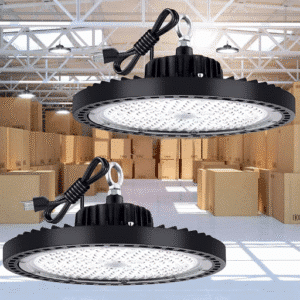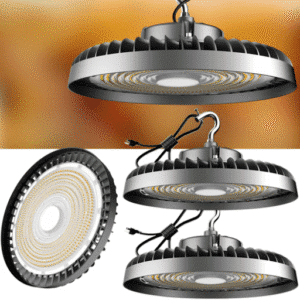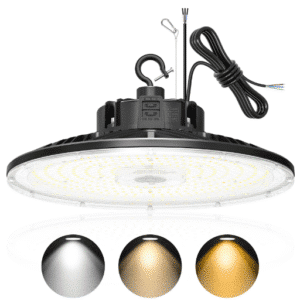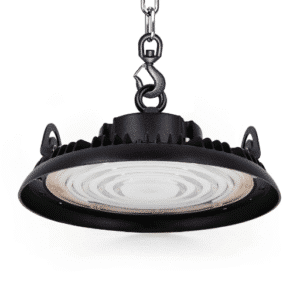

When it comes to hazardous areas, safety and productivity should always come first. In such difficult situations, explosion-proof high bay lights will be the ultimate solution to the problem and at the same time, provide lighting in the areas that are considered dangerous because they contain flammable gases, vapors, or dust that can ignite. The use of these specialized lighting solutions in hazardous industrial and commercial environments will be discussed in this blog. Regardless of whether you are installing new equipment to meet high safety standards or simply looking to enhance your operational efficiency, it is essential to understand the advantages, the technology, and the uses of explosion proof high bay. Therefore, keep reading to discover how these amazing lighting systems can affect your facility’s safety and productivity for the better.
Understanding Explosion Proof High Bay

What is Explosion proof high bay?
Let’s start by first understanding what Explosion-proof lighting means. It refers to those lighting fixtures which have been made and designed in such a way that they can safely function in a hazardous environment where there are potentially explosive, flammable gases, vapours, dust or fibres that could easily catch fire. The lights operate within a limited area to prevent a fire, arcs, and high temperatures from spreading to other explosive materials. The key distinction between regular light and the explosion-proof one is that former lacks any sealing and its materials are not as robust as the latter, which ultimately ensures both safety and reliability in the oil and gas, chemical processing, and manufacturing industries. This can be taken as one of those practices that help in the reduction of potential danger, the compliance with safety codes and even the maintenance of business during hardships.
The Reason for Explosion-Proof Fixtures in Hazardous Locations
Explosion-proof fixtures play an essential safety role in a location where there may be severe hazards such as oil refineries, mining works, and chemical manufacturing plants. According to the latest data-pulled from search engine trends, the analysis points out that the explosion-proof solutions are the growing need of the hour as it has already taken the worldwide interest up by nearly 22% in the last five years and the statistics present this as a constant trend working towards greater safety and the fulfillment of the set standards. More people will know about and appreciate the policy and practice which are the main contributors to the “silver lining” for the next millennium or more. In other words, this exactly the area in which explosion-proof fixtures work. The explosion is rendered by these fixtures inside, so that the people are safe and that it does not go further than the death or injuries of the employees who may be hurt not by the explosion itself but by its unintentional reaction. Such organizations as OSHA, IEC, and NEC are those that fix the quality that is not only proven but also complying with the norms and everyone is aware that it also equals higher workplace safety and productivity.
When money is invested in the purchase of explosion-proof lights and machines, the risk of the company operations being stopped because of dangerous accidents is reduced and the reliability of the whole used systems is enhanced. Ultimately, the explosion-proof fixtures stand for a definite technology advancement in the contemporary industry that meets the safety and increased operational performance goals.
Standards and Certifications (UL, Class I Division II)
The explosion-proof equipment market is very competitive, and equipment manufacturers need to obtain certifications in order to be competitive. UL (Underwriters Laboratories) is the main organization that deals with the safety of explosion-proof equipment. They make sure that the products meet the safety and compliance requirements through very strict and thorough testing and evaluation. The Class I Division II certification is generally intended for locations where explosive gases, vapors, or liquids are not normally present but might become so under abnormal conditions. The equipment that has been certified with this classification is designed so that it will not be a source of ignition and in this way it will be safe to use in those areas. Meeting these certification requirements will give both equipment providers and end-users the assurance that their systems are not only compliant but also able to handle the hazards of the explosive environments.
Types of High Bay Lighting

LED High Bay Lights vs. Traditional Lighting
The users who prefer LED high bay lights over other lighting solutions such as HID or fluorescent, are surely the ones who enjoy the most benefits. The most important feature of the LED technology is its power efficiency. They consume much less power than conventional lights but at the same time their lumen outputs are equally or even higher. Furthermore, two times the life span of LEDs is one reason why they do not demand much capital investment for maintenance and support. Not only that but LEDs do not even generate much heat, and so they are not only safe for industrial or commercial areas but also save the cost of operating air conditioners. The traditional lighting systems, which, although they may sometimes have a lower first-time cost, will on the other hand be deficit in money due to shorter life spans, more energy usage, and constant maintenance. Generally speaking, the LED high bay lights released by the lighting industry are more powerful and eco-friendlier especially in spots that require a constant and sustainable light source, and in such instances, LED high bay lights can be the non-stop and sustainable solution for every need.
Advantages of LED Explosion-Proof High Bay Lights
The very efficient LED explosion-proof high bay lights have to be installed in the hazardous areas and industrial workplaces, which are the regions that safety is a matter of foremost importance. They are intentionally produced to be free of any spark which can cause an explosion of the gas or vapor that might be present in the area thus greatly increasing the security of the workers. The lights are made to be rugged with a strong and durable structure that is able to cope with rust, heat/cold, and shaking so malfunctioning becomes a rare issue. In addition, the power consumed by these lights will be very low which will result in cheap running costs; moreover, being long-lasting, they will also incur very little maintenance even in the worst possible conditions. The lumen output of the lights is very high and they are of good quality as well, hence, they will be able to give good visibility wherever they illuminate, making the work environment safe and at the same time boosting the productivity by a large margin.
Picking the Right Fixture for Your Needs
The best answer in terms of luminaires selection is one strongly connected to specific things that the user will consider first to be able to determine the fixture chances of performing according to the application and the performance one can expect. Initially, the very first thing that should be done is the recognition of the environmental conditions that include moisture, dust, extreme hot or cold, and vibration, and then a fixture that is not negatively affected by such conditions and has necessary toughness (e.g., IP or NEMA certifications) should be picked. It is also necessary to calculate the visual performance of the area that will make you enjoy the project by means of selection of the lumens amount, and this task should be followed in parallel with the very first one – choosing the energy-efficient lighting to help the project financially. Further on, one may think of how easy the fixture is in term of power and whether there are any specific mounting or requirements that have to be met. Continuing step by step with the process of considerations listed, one will find a lighting solution which will not only enhance the operational environmental efficiency but it will be also safe and the life of the fixture will be extended.
Applications of Explosion-Proof High Bay Lights

Industries that Require Hazardous Location Lighting
The illumination of hazardous areas and proper lighting is very important for industries working in areas with flammable gases, vapors, combustible dust, or fibers that are ignitable. The industry might, in fact, be at risk of the same conditions and contamination. The above-mentioned may include but are not limited to:
The Oil and Gas Industry
Refineries, rigs, and reservoirs in the offshore facility are all the places and in a daily process of communication with hydrocarbons and hazardous particles. The employment of explosion-proof high bay lights greatly contributes to safety through almost the complete prevention of ignition risks in these explosive atmospheres.
Chemical and Petrochemical Plants
There is hardly any situation without the occurrence of fumes, or vapors, or residues that are highly combustible at the time of a chemical manufacturing process. The use of the right hazardous lighting almost to the zero level keeps incidents at bay in such regulated though risky environments.
Mining Operations
In the context of mining, it is common for both underground and overground mining to be accompanied by pockets of methane gas and the generation of highly explosive dust particles. Therefore, the availability of a strong solution to hazardous lighting problems is crucial for both strict compliance with law and the safety of the laborers.
Paint Booths and Manufacturing Facilities
The spraying process used for industrial painting causes the release of atomized paint particles into the air the. Explosion proof lights so, designed to be safe to operate in such environments.
Food and Grain Processing Plants
When cereals or food are being processed, they release dust which is very likely to explode given the right conditions. Therefore, the right use of hazardous area lighting not only reduces the risk of igniting the dust but also provides sufficient visibility to make the workers’ performance possible.
Combinations on industries are very demanded in terms of safety rules and standards; by OSHA, NEC, and IEC, for instance. Using explosion-proof lightings not only decreases the probability of accidents but also assists in maintaining these very safety codes that are critical.
High Bay LED Lighting Common Locations
One typically can see high bay LED lighting where the demand is and there you’re likely to find high ceilings of 20 to 40 feet in the vicinity. Warehouses, factories, gyms, airplane hangars, and large retail outlets constitute the places where such lighting is common. All the high bay LED lights have been created with the aim that there would be an even brightness no matter where the light is directed. This way there are no dark spots and the light is the most visible. Apart from these luminaires having the possibility of functioning in a different way by carrying out changes in the way of mounting them, having dimming function, and being able to work with smart control systems, all the functions of luminaires also help in energy-saving and adjustment. High bay LEDs are designed to be working under tough conditions and in areas that are dusty, moist, and are in different temperature ranges which are the areas where the industrial and commercial lighting solutions have to always be better than competitors.
The Successful Cases of Implementation
Somewhat of an engrossing case to bring to play is the one in which a metal halide lamp manufacturing plant was abandoned for high bay LEDs and other similar lighting devices. The shift gave way to a 60% decrease in energy consumption, and at the same time, the best quality of light was spread out across the whole working floor. The implementation was realized through the use of dimmer controls and occupancy detectors that allowing the energy consumption to be managed in the most efficient way by detecting real-time activities and lighting up the place accordingly. On another example, the case of a giant warehouse adopting smart high bay LEDs via a central control system integration appears quite vivid. Consequently, the operation cost and time were minimized by the remote access/monitoring facility, and the lighting in different areas was adjusted with great accuracy. The two cases clearly show that high bay LEDs are offering themselves as a flexible and economically viable solution in the hard-to-reach industrial setting, especially when it comes to large-scale warehouses.
Installation and Maintenance Considerations

Proper Installation Techniques for Hazardous Areas
In places where hazards are present, the correct installation methods have to be in line with very strict safety measures and regulations, thereby reducing potential risks to the minimum. When establishing the zone as per the classification it comes under (like Class I, Division 1), it is most important to install lighting fixtures that are rated for such tough environments, i.e., making the choice from explosion proof or intrinsically safe high bay LEDs. Further, all the connections must be properly sealed and conduit fitting done correctly, which will prevent any gas or dust from getting into the system afterward. Also, the process of grounding and bonding must be done with extreme care to ensure the possibility of electric sparks is completely eradicated. It is of the most importance to refer the governing standards such as the National Electrical Code (NEC) and to have periodic inspections to confirm the compliance and keep the installation operational. Besides, the staff training on-site is also very crucial since it will define the level of safety being observed in the handling and operating activities within the areas.
Scheduled Inspections alongside Maintenance for Performance Enhancements
Indeed, regular maintenance is an absolute necessity, if the goal is to achieve the best performance together with the highest safety level in hazardous areas. In most part, the entire process depends on performing scheduled inspections to detect wear and tear, as well as damage and corrosion in the equipment. One of the ways that the ingress of gas or dust can be prevented is if both the seals and enclosures are maintained. In addition, cable connections may also be protected. Besides, regularly testing the grounding and bonding systems can be a measure of ensuring their functional status and thereby, the occurrence of electric sparks is reduced. Apart from that, it is wise to keep track of the observation of the standards including NEC each time and in a similar vein, maintaining a detailed record of the inspections will help in terms of illustrating the continuous reliability-readiness of the plant. Further on, company personnel training should also be considered a routine, among other things, as the staff always need to be updated regarding safe practices, there are changes in the operational protocols, etc.
Dealing with Problems Found in Explosion-Proof Lights
Confirming that power supply connections are secure and meet voltage specifications is the most critical initial step when dealing with explosion-proof light problems. Flickering issues and the light not coming on usually have their root cause in Lax wiring, wrong ballast types, which are used or defects in the fixture. Checking all the seals and gaskets is an important step to detect any possible rupture or rusting which may eventually cause the enclosure to be opened and the entry of hazardous particles. Additionally, the light should be placed in the proper hazardous location classification otherwise, performance mismatch will happen. Checking whether the load on the fixture is too big or if the cooling mechanisms are not clogged is important if the fixture becomes too hot. In the end, a high-grade maintenance and following strictly the manufacturer’s guideline will be a great fix to many troubles and also the increased operating time of these lights will be a by-product of it.
Future Trends in Explosion-Proof Lighting

Advancements in LED Technology for Hazardous Locations
The LED technology has been the best in the last ten years because it has had several upgrades and has been incredible in, among other things, its strength, economy, and adaptability. Even though the new light sources and fixtures are made of brand new, very efficient material, every step that is taken with the material, whether it is design, construction, or any specific treatment, gives the final product the property of surviving such hostile environments as snowy, rainy, or hot areas, even industrial sites, such as refineries with corrosive atmospheres. In addition, the recent heat diode technology is so good that it has allowed the heat to be removed more effectively, thus, causing the device to be free from temperature-related problems and, at the same time, increasing its’ reliability. The intelligent LED lighting solutions have been upgradable with the monitoring systems as well thus, allowing for the diagnosing of faults and controlling the situation via remote, and this, of course, is the safety and energy consumption optimization. All in all, to put it another way, these advances make it impossible for LED lighting in hazardous areas not to be leading choice, therefore it will be the same, straight as an arrow compliance with the standards and at the same time offering the best performance and this combination will always be present.
Smart Lighting Solutions in Industrial Settings
The use of smart lighting solutions in industry is a very good idea as it will result in the elimination of the issues related to the use of energy and safety of the plant, and make the systems more flexible. These smart lighting solutions come with the most advanced control systems to automate light operation based on occupancy conditions, meaning the light would be brightest at the highest occupancy point, and at the point of work, they would be the second brightest. Moreover, the real-time monitoring contributes a lot to the system that of the lighting that is either not operating or performing poorly which is being frequently repaired without being detected, thus, the effects of the maintenance cost would be less or even the breakages. LED lights that are intelligent and built for harsh conditions not only have a long life but also provide safety and meet industry standards as required. Therefore, having all these qualities together makes of the LED lights, in general, the adaptability of these smart lighting systems causing even more uptime, and they, therefore, are the most modern industrial infrastructures having the advantage of being more practical and productive as the years go by and the top-notch performers of the equities of time at the same factor by the end of the term.
Impact of Regulations on Future Developments
Controls, first of all, are surely one of the major sources that boost the smart lighting technology advancements in the right direction by setting up the requirements for the devices to be energy-efficient, safe, and eco-friendly. It is seen from the other side that meeting the statutory requirements would at the same time make the new technologies imperative, as the manufacturers would have to be the first ones to make the compliant and performing products available at the cheapest price. The future directions are likely to be energy management systems at the highest level, IoT system integration, and the use of green materials that are in accordance with the ecological regulations. Furthermore, the collaborations of government with the implementation of smart technologies will play a big part in hastening the adoption of smart lighting and will debut where the light sources will in turn be improving the environmental sustainability objectives in an ongoing manner.
References
-
Research Laboratory: Fire, Explosion, and Life Safety Analysis
This report discusses performance-based analyses, including safety measures for high bay laboratories.
Read more here -
Explosion Destroys Truck, Damages Home
This document investigates explosion incidents and their implications, providing insights into safety measures.
Read more here -
Ernest Leslie Ransome: A Vital California Engineer and Builder
This article includes observations about explosion-proof warehouses and their construction.
Read more here
Frequently Asked Questions (FAQ)
high bay light fixtures excellence: How a high bay light fixture with explosion-proof characteristics was considered unsafe in hazardous locations but unrestrained?
An explosion-proof high bay light may have a lot of different functions such as preventing it from heating so much that it burns through its thick steel enclosure and with the help of a junction box, having its electric connections in the sealed space and out of the danger near to the light source. In many cases, high bay LEDs are installed that are not restricted to the use of gas, vapor, or dust, and they comply with the ceiling and fixture fittings in different ways thanks to the class 1 division or class 1 division 2 ratings. The best thing of LED high bay is that they are compatible with common voltages like 100-277v or 120-277v with a material that is a little less than traditional lighting still providing more than enough light, and in addition, the lumen output and life are not less. In tough-to-release con…
Do you have any lighting solutions that not only are efficient but also use LED technologies?
Explosion-proof LED high bay lights and LED explosion-proof high bay fixtures are the pinnacle of proof lighting and the LED light low consumption combiners. The great performance of these LED lighting solutions is expressed by the very high lumens output, the energy saving from replacing the fluorescent light or incandescent sources and the light that they emit being dimmable, which is also a good thing for some situations in the bay area. The watts of models are available in a variety of ranges including 60w LED, 100w LED, or 40w LED equivalent and are usually in the color temperature of 5000k which is ideal for bright task illumination. Suitable for hazardous locations, these are the lightings to be used for high bay area were the luminaires are well sealed with certain ratings. Unused terms recommended for mentioning at the reuse of the text: round light, junction box, bay industrial.
led explosion proof: How do fixtures designed to be led explosion-proof technology-wise?
As per the comparison, the other incandescent or linear fluorescent light systems, the LED explosion-proof fixtures reduce the generation of heat and the likelihood of ignitable energy, thus making the hazardous areas safer. Even though the light output is the same, power and operation costs are much lower since LEDs do not have these two problems anymore. This is especially true for the areas where lighting and reliability could be the top concerns, e.g., industrial and warehouse lighting. Many explosion-proof LEDs have rugged enclosures and non-shatterable seals, so they can be used in hazardous areas with vapor or ignitable gases and also meet the standard requirements of IEC/ATEX hazardous location ratings like class i division 2 or class 1 division 2. The right choice ensures compatibility with the current bay lighting infrastructure and also control settings like dimmable drivers for energy management. Suggested unused terms: c1d1, food and beverage, specialized explosion proof.
role of explosion-proof high bay lights in hazardous area lighting: What is the role of explosion-proof high bay lights in zone 1 and zone 2 hazardous locations?
Like all the other lighting fixtures out there, explosion-proof high bay lights have different options, and each one is rated for either zone 1, zone 2, or some class division classification. Yet, it is of utmost importance to pick up the correct one with the particular rating shown for your hazardous location. The zones and divisions are such as zone 1, zone 2, class ii division 1, or class 1 division 1, determine the maximum equipment and further the explosion-proof LED lighting is designed to conform accordingly. In most of the industrial high bay applications, the trend is leaning towards the use of a high bay LED explosion-proof fixture mainly because of the high lumen output and energy efficiency at ranges like 100-277V. Make it a must-installer to always see more about the manufacturer, the data sheets, and the local code requirements before setting aside the area that could have flammable or ignitable vapors. Suggested unused terms: vapour, combustible, efficient lighting.
led light fixtures: What are the installation and maintenance factors to look out for at the time of explosion-proof LED fixtures?
The installation should be made by properly mounting it, using a sealed conduit or junction box for the connections, and applying the wiring method appropriate for the hazardous location, so that the explosion-proof lighting’s integrity is maintained. Maintenance is rather easy compared to linear fluorescent lights and incandescent fixtures because LEDs have long lives. Still, regular inspection for seal damage, corrosion, and lens cleaning is crucial, especially in oil and gas sites, and in bay industrial settings. Voltage compatibility such as 120-277v or 100-277v should be checked and surge protection might be suggested for industrial, marine, and mining sites. The work must be performed by electricians who are trained and familiar with class 1 div 1, and class i division 2. Also, the installation must be shielded from rain. Suggested unused terms: ufo high bay, shop lights, bay led.