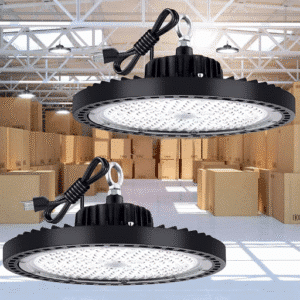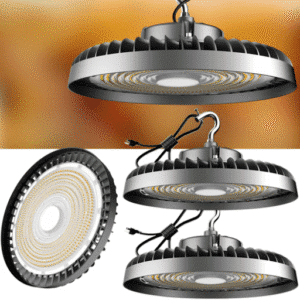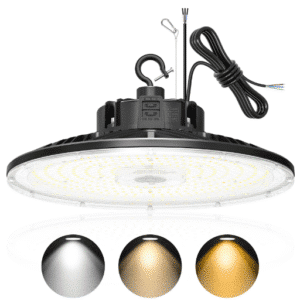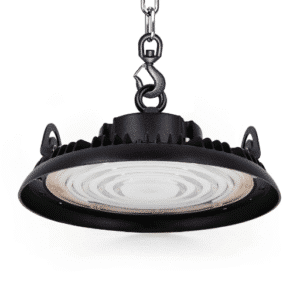

The design of high bay lights has been developed to solve specific problems which result in their ability to provide efficient lighting solutions for extensive areas while using less energy. The guide functions as an all-inclusive reference which demonstrates the vital role of high bay lights in distribution centers. The article provides business owners and facility managers and lighting professionals with information about different high bay lighting solutions, their advantages, and essential factors to consider when selecting them.
The document provides essential information which helps you to make better decisions about energy efficiency, installation methods, and workplace safety improvements, and operational efficiency enhancements. Read on to explore how the right lighting system can revolutionize operations in your distribution center.
Understanding High Bay Lighting

What is High Bay Lighting?
The term high bay lighting describes a fixture type which provides light for areas that have ceilings between 20 and 40 feet high. Industrial and commercial spaces including warehouses and factories and gymnasiums use these fixtures because they deliver intense light that reaches broad areas.
High bay lights achieve energy-efficient and enduring and consistent light distribution through their use of LED and high-intensity discharge HID lamp technology in difficult operational conditions. The design protects people from glare while delivering maximum visibility and safety which works across different usage situations.
Benefits of High Bay Lights in Warehouses
High bay lights provide multiple advantages to warehouses because they deliver uniform and effective lighting throughout large areas which have elevated ceilings. The implementation of LED technology enables them to achieve energy savings which result in decreased operating expenses together with diminished environmental impact when compared to conventional lighting solutions.
- ✓
The lights deliver high brightness together with even light distribution which creates minimal shadows to boost workplace safety while helping workers see better. - ✓
The long lifespan and low maintenance requirements of high bay lights make them the perfect lighting solution for demanding industrial environments. - ✓
The design of the product provides simple installation with full compatibility to smart lighting systems which enables users to control their lights through dimming and motion detection functions.
Types of High Bay Lights
High bay lights exist in multiple types which manufacturers created to match specific usage requirements and environmental conditions. The most common types include:
Note: The most modern industrial environments prefer LED high bay lights because they provide advanced smart control features together with substantial energy efficiency advantages.
Choosing the Right Lighting Solution for Distribution Centers

Factors to Consider When Selecting Warehouse Lights
The selection of warehouse lighting solutions requires assessment of multiple technical aspects and operational requirements to achieve maximum system efficiency and energy savings while meeting all relevant industry regulations. Key points of assessment include the following:
Illumination Requirements
Assess the required lighting levels (measured in lumens) based on the tasks performed in the space. Precision areas need more luminous intensity than packing and inspection areas which need less light than bulk storage spaces require.
Energy Efficiency
The lighting system energy usage needs assessment through measurement of its lumen output per watt capacity (lm/W). LED lighting solutions establish themselves as the most efficient option because they decrease both electricity expenses and ecological harm.
Lifespan and Maintenance
The longevity of lighting fixtures impacts operational costs. The organization needs to select LED or induction lighting systems which provide extended lamp lifespan because these systems will decrease maintenance frequency while continuing to operate effectively during extensive industrial work.
Color Temperature and CRI
The warehouse needs an appropriate color temperature which requires measurement in Kelvin. A color rendering index (CRI) above 80 ensures proper visibility and accurate color representation, which is critical for ensuring safety and productivity.
Durability and Environmental Conditions
The assessment includes all environmental conditions which affect the warehouse through its humidity levels and dust accumulation and temperature extremes. The organization needs to select fixtures which have the proper IP ratings and strong construction materials to handle these specific environmental challenges.
Smart Controls and Automation
The integration of smart controls which include motion sensors and daylight harvesting systems together with programmable timers provides modern warehouses with major benefits through its capacity to optimize energy usage while enhancing operational flexibility.
Key Takeaway: Businesses can identify the best lighting solution through their assessment of these factors which will improve operational performance while reducing expenses and meeting workplace safety requirements.
Comparison of LED Lighting Fixtures
LED lighting fixtures can be compared based on factors such as luminous efficacy, color rendering index (CRI), lifespan, and energy consumption.
Best Practices for Lighting Layout in Warehouses
The design of warehouse lighting systems requires the establishment of three primary objectives which must achieve an even distribution of light throughout the space while ensuring efficient energy use and maintaining secure conditions.
✓ Lighting Layout Checklist
- 1
LED fixtures are recommended due to their superior energy efficiency and longevity. - 2
The organization needs to establish a uniform lighting level which will reach 30-50 foot-candles for general storage areas and 75 foot-candles for detailed task areas which include packaging and inspection work. - 3
Fixtures need to be positioned along shelving aisles in parallel fashion which will help eliminate shadows while increasing light distribution. - 4
High bay lights serve as the best lighting option for locations which have ceilings that exceed 20 feet in height, while motion detectors and dimmable lights work together to support energy efficiency. - 5
The design process needs to follow OSHA regulations and local building codes to establish a secure work environment which provides proper lighting throughout the facility.
LED High Bay Lights: Efficiency and Performance

Advantages of LED High Bay Lighting
LED high bay lighting systems provide multiple important benefits which include better energy efficiency because they produce more light per consumed watt than standard metal halide and fluorescent lighting systems.
Extended Longevity
The lights exhibit a longevity that typically surpasses 50,000 hours, which results in decreased need for maintenance and replacement costs within areas that have high ceilings.
Superior Visibility
The light-emitting diodes deliver precise color reproduction together with steady light output which enables better visibility and safer conditions in storage facilities and manufacturing plants and athletic training spaces.
Instant Operation
The system provides instant light because it requires no warm-up period while users can save energy through the system’s dimming feature and smart sensor compatibility.
Reduced Heat Output
The design of LED high bay lights produces less thermal energy, which enhances comfort levels in large spaces and decreases expenses for air conditioning.
Energy Savings with LED Lights
📊 Key Energy Statistics
The technology achieves its efficiency through the design which enables it to transform electricity into visible light with minimal heat energy being lost. The development of LED technology from market-ready products to products with adaptive dimming capabilities and sensor functions enables energy-efficient residential and commercial systems that decrease overall energy use.
Long-Term Durability of LED Fixtures
The solid-state design of LED fixtures establishes their exceptional durability through its absence of delicate parts which include glass and filaments. The design enables LEDs to resist vibrations and temperature changes and environmental hazards better than standard lighting systems.
LED products which meet high quality standards achieve operational lifetimes between 50000 hours and 100000 hours which results in decreased maintenance needs and lower costs for product replacements. The creation of modern thermal control systems produces continuous operational performance and establishes dependable LED systems which function successfully across various applications.
Implementing High Bay LED Lighting in Your Warehouse

Installation Process for High Bay Lights
The installation process for high bay LED lights requires multiple essential steps, which need to be followed to achieve both full efficiency and safe operation.
🔧 Step-by-Step Installation Guide
Step 1: Safety First
The first step requires you to shut down all power sources that supply electricity to the work area because this protects against electrical risks.
Step 2: Assemble the Fixture
The lighting fixture must be built according to the manufacturer’s specifications, which require users to complete all assembly steps while maintaining secure attachment of their components.
Step 3: Select Mounting Locations
The installer must select mounting locations from either the ceiling or support structure, which should match the specific application requirements that require fixtures to be installed at heights between 15 to 40 feet.
Step 4: Install Mounting Hardware
The installer must use suitable mounting hardware to install the fixture through either hooks or chains or brackets.
Step 5: Connect Wiring
The installer must connect the wiring system through the provided wiring diagram, which requires them to check all connections for proper insulation and secure fastening.
Step 6: Test and Adjust
Power restoration allows the installer to test light functionality and correct light placement through small adjustments until they reach the desired brightness level.
Maintenance Tips for High Bay Lighting Systems
High bay lighting systems require their regular maintenance work, which protects their peak performance ability and extends their operational lifespan.
💡 Essential Maintenance Tips
- ▸
The first step requires you to establish a schedule for regular inspections because these inspections will confirm whether dust and debris and residue build-up exists on the fixtures and lenses. The presence of these elements results in diminished light output and operational efficiency. - ▸
The process requires electrical technicians to examine all wiring and electrical connections for their actual condition because any faults can create dangerous situations or cause system breakdowns. - ▸
The team must quickly replace all broken bulbs and drivers and components while checking that fixtures remain properly attached to their intended positions. - ▸
The use of LED lamps provides two main advantages, which include extended lamp life and decreased energy needs, and these benefits lead to reduced need for maintenance activities and lower maintenance expenses. - ▸
Maintenance procedures should always be executed according to the instructions established by the product manufacturer.
Common Challenges and Solutions
The maintenance of lighting systems encounters its most frequent problem when LED lamps unexpectedly start to flicker or dim, which occurs because of irregular electrical supply or through overheating that results from inadequate heat dissipation or when dimmer switches fail to operate correctly with the system.
Future Trends in Industrial Lighting for Distribution Centers

Emerging Technologies in Warehouse Lighting
The latest warehouse lighting systems now achieve higher efficiency through their automated systems while their flexible design allows them to adapt to different operational needs.
IoT Technology
The smart lighting system which uses IoT technology enables users to track their energy usage through real-time occupancy and daylight monitoring.
Tunable White LEDs
LED lighting technology maintains its market dominance through new products which include tunable white LEDs that enable users to choose their preferred brightness and color temperature.
Wireless Control Systems
Wireless control systems have achieved new developments which provide users with both remote operation capabilities and system expansion possibilities.
Industry Insight: The implementation of these advanced solutions helps distribution centers achieve better operational performance while meeting their environmental sustainability requirements.
Smart Lighting Solutions for Efficiency
Smart lighting solutions use advanced technologies which include motion sensors daylight harvesting and IoT-enabled controls to achieve better energy efficiency while decreasing operational expenses.
🔆 Smart Lighting Features
Motion Sensors
Ensure lighting is only used when spaces are occupied
Daylight Harvesting
Adjust artificial light levels based on available natural light
Predictive Analytics
Track energy consumption and schedule maintenance through IoT
The new technologies bring operational improvements which help organizations meet their sustainability targets by reducing waste while decreasing their greenhouse gas emissions.
Impact of Sustainable Practices in Industrial Lighting
Sustainable practices in industrial lighting present three main advantages which include decreased energy usage and lower operational expenses and decreased environmental damage.
🌱 Sustainability Benefits
Energy Reduction
LED lighting and intelligent control systems enable energy reduction of 75 percent through their superior energy efficiency while their extended lifespan requires less maintenance than traditional equipment.
Compliance & Reputation
The energy efficiency standards that these practices meet establish international standards which help industries maintain compliance while building their business reputation.
Climate Impact
Companies who adopt renewable energy sources and energy management systems create lower greenhouse gas emissions which helps them achieve their climate change mitigation targets.
Cost Savings
Lower operational expenses through reduced energy consumption and decreased maintenance requirements.
📚 References
Purchasing Energy-Efficient Commercial and Industrial LED Luminaires
Published by the U.S. Department of Energy, this resource discusses energy-efficient lighting options, including high bay luminaires.
Upgrading High Bay and Low Bay Lighting to LED
A fact sheet from the North Carolina Department of Environmental Quality, detailing the benefits and applications of high bay lighting in various facilities.
❓ Frequently Asked Questions (FAQ)
What advantages does distribution center lighting obtain through its transition to LED warehouse lighting system?
Industrial LED and commercial LED warehouse lighting systems produce greater light output which results in decreased maintenance expenses and enhanced operational efficiency and workplace security throughout warehouse and distribution operations. New lighting systems which include LED UFO high bay lights and linear high bay lights and LED strip systems deliver superior lighting performance because they produce more light and distribute it better than existing 6 lamp T8 and HID lighting systems. The system allows users to select between different color temperature settings while using intelligent lighting controls to create optimal lighting conditions which decrease energy consumption and extend the lifespan of lighting fixtures throughout industrial spaces.
What factors should I consider when selecting between UFO high bay lights and linear high bay lights for my distribution center?
The selection process evaluates three factors which include the building shape and the arrangement of storage systems and the required lighting requirements. UFO high bay lights (which include LED UFO high bay lights and UFO high bay lights) provide installation options that work well in areas with high ceilings and open floor designs. Linear high bay and LED linear high bay systems together with 4 foot LED strip fixtures provide an ideal solution for locations that need consistent illumination across their entire length. The warehouse operation requires evaluation of beam angle and lumen output together with the number of fixtures needed to achieve designated lux levels.
What functions do CCT and selectable color options serve in warehouse illumination systems?
The measurement of correlated color temperature (CCT) and the option to choose between different CCT levels enable you to customize how light appears while also affecting visual acuity. The typical option of 5000K delivers precise daylight simulation which works perfectly for packing order picking and inspection tasks. The fixtures allow users to select from multiple CCT options and make on-site changes without the need for wiring work which results in a professional lighting design that meets the various requirements of different industrial tasks and shifts.
The presence of lighting controls together with intelligent lighting systems holds substantial value for distribution centers.
The combination of lighting controls together with smart lighting controls which include occupancy sensors and daylight dimming and zoning together with scheduling capabilities results in a substantial decrease in energy use while lowering maintenance requirements and enhancing security. The integration of controls with commercial LED warehouse lighting systems provides task-based dimming capabilities which minimize excess light output during times of decreased activity and helps organizations meet efficiency requirements. A lighting system which includes controls provides optimal light distribution and system performance through its control system.
What factors should I consider when selecting warehouse lighting products based on their environmental impact and durability?
Select industrial LED lighting and commercial lighting products that receive certification for the specific environment where they will be used. IP65-rated fixtures protect against dust and moisture to ensure safe operation for outdoor lighting and industrial environments through their hazardous material installation. The use of durable materials together with high-lumen high-efficiency drivers leads to decreased need for replacements which results in reduced maintenance expenses for warehouses and distribution centers that face dust and temperature variations and cleaning activities.
How can I establish the necessary quantity of fixtures and their beam angles together with the professional lighting layout design requirements?
Professional lighting designers determine warehouse lighting requirements through their assessment of lux needs together with the necessary lumen output of each fixture and the beam angle and mounting height and aisle width. The user should either utilize lighting design software or consult a lighting designer to create models of various lighting fixtures which include linear high bay and UFO and LED strip lights along with their mounting solutions. The system determines the required number of lights and their layout which results in even light distribution that meets safety requirements while supporting efficient warehouse operations.
Ready to Upgrade Your Distribution Center Lighting?
High bay LED lights offer unparalleled efficiency, durability, and performance for modern distribution centers. By carefully considering the factors outlined in this guide, you can make informed decisions that will enhance productivity, reduce costs, and create a safer working environment for years to come.