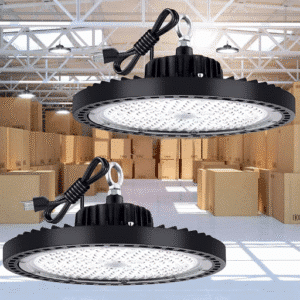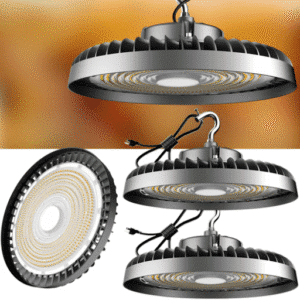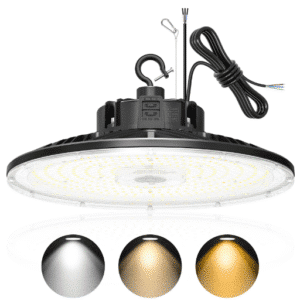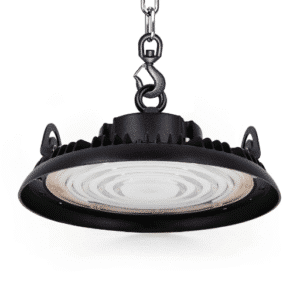

Precision manufacturing lighting requires CRI 90+ for inspection stations, UGR under 19 for glare control, and 1,000 to 2,000 lux at quality control work surfaces. Unlike standard industrial lighting designed for general visibility, precision environments demand fixtures that reveal hairline cracks, color shifts, and surface defects that low-CRI, high-glare warehouse lights simply hide.
Jennifer is a quality manager at a medical device plant in Minnesota. In February 2024, her facility shipped 2,000 units of a critical seal component before discovering a subtle color variation that indicated a material defect. The root cause was not the inspection protocol. It was the lighting. The assembly floor used standard warehouse high bays with a CRI of 78. Under those fixtures, the off-spec seals looked identical to the good ones. The defect only became visible when a customer inspected the parts under daylight. The recall cost $340,000. The fix was lighting.
That is the reality of precision manufacturing. Standard industrial lighting is built for brightness. Precision manufacturing lighting is built for accuracy. This guide covers every metric, every standard, and every real-world specification decision you need to make when lighting environments where defects are measured in microns and color shifts can cost millions.
For the broader strategic framework on industrial lighting, see our complete guide to (factory lighting solutions).
Key Takeaways
- Precision manufacturing inspection stations require CRI 90 or higher and 1,000 to 2,000 lux to detect defects that standard CRI 80 fixtures hide.
- UGR under 19 is recommended for precision visual tasks; UGR under 22 is acceptable for general assembly areas.
- Color matching and material verification require CRI 95+ at 5000K or 6500K to match daylight evaluation standards.
- Flicker-free drivers are essential for machine vision compatibility and prevent the stroboscopic effect that makes rotating parts appear stationary.
- Clean room lighting requirements vary by ISO 14644 class, from 1,000 to 1,500 lux with CRI 90+ for Class 1-3 semiconductor environments.
Why Precision Manufacturing Demands Different Lighting

Visual Acuity Requirements
Standard factory lighting answers a simple question: can workers see what they are doing? Precision manufacturing lighting answers a harder one: can workers see what is wrong? A warehouse operator needs to identify a pallet, read a label, and navigate an aisle. A precision assembler needs to detect a hairline crack in a ceramic substrate, spot a color shift in a molded seal, and identify a surface scratch on a machined component.
The difference is not just brightness. It is color accuracy, glare control, shadow reduction, and flicker elimination. A fixture that delivers 10,000 lumens with a CRI of 72 might light up a room, but it will hide the subtle yellowing that indicates thermal degradation in a plastic part. That is the difference between bright enough and precise enough.
Quality Control Dependence
Inspection stations are the last line of defense between your facility and a customer return. Every defect that passes inspection becomes a field failure, a warranty claim, or a recall. And lighting is the tool inspectors use to catch those defects. Poor lighting does not just reduce detection rates. It creates false confidence. A dimly lit station with high glare and low CRI makes inspectors feel like they checked everything thoroughly, while subtle defects slip through unnoticed.
Studies in visual inspection environments show that CRI 90+ lighting improves defect detection rates by 15 to 25 percent compared to CRI 80. That is not a marginal gain. In a facility shipping 50,000 units per month, a 20 percent improvement in detection means 10,000 fewer defective parts reaching customers.
Operator Fatigue and Accuracy
Precision visual tasks are exhausting. An inspector scanning parts for eight hours under high-glare fixtures with the wrong color temperature experiences eye strain, reduced visual endurance, and declining accuracy after the first few hours. Glare forces the eye to constantly readjust, causing fatigue. Color temperatures above 5700K increase alertness but can cause visual fatigue over long shifts. Flicker, even at frequencies too fast to consciously perceive, contributes to headaches and reduced concentration.
For the baseline compliance requirements that underpin any manufacturing project, see our guide to (OSHA factory lighting requirements).
Key Lighting Metrics for Precision Work
Color Rendering Index (CRI)
CRI, or Color Rendering Index, measures how accurately a light source renders colors compared to natural daylight. A CRI of 100 is perfect daylight. A CRI of 70 distorts colors noticeably. For precision manufacturing, CRI is not a nice-to-have. It is a quality control tool.
CRI 80 is the minimum for general industrial lighting. It is acceptable for movement and basic assembly where color is not critical. CRI 90 is the standard for inspection, quality control, and any task where color variation indicates a defect. At CRI 90, the difference between a good seal and a degraded seal becomes visible. CRI 95+ is required for color matching, material verification, and any task where parts must be evaluated against daylight standards. Color matching under CRI 95+ lighting reduces material rejection rates by up to 30 percent because evaluators can confidently distinguish acceptable variation from actual defects.
| Task Type | Minimum CRI | Recommended CRI |
|---|---|---|
| General precision assembly | 80 | 85+ |
| Visual inspection and QC | 90 | 92+ |
| Fine detail work (soldering, micro-assembly) | 90 | 95+ |
| Color matching and material verification | 95 | 95+ |
| Machine vision environments | 90 | 90+ |
Color Temperature (CCT)
Color temperature, measured in Kelvin, determines whether light appears warm, neutral, or cool. For precision manufacturing, the wrong color temperature can mask defects or create eye strain.
4000K (neutral white) is the standard for general precision assembly. It provides natural, comfortable illumination that supports long shifts without fatigue. 5000K (daylight white) is the standard for inspection and quality control stations. It delivers crisp, high-contrast light that makes surface defects and color variations easier to detect. 6500K (cool daylight) is used for critical color evaluation and matching to daylight standards. Some industries, including automotive paint matching and textile verification, require D65 simulator conditions at 6500K to ensure consistency with customer evaluation environments.
Unified Glare Rating (UGR)
UGR, or Unified Glare Rating, measures the subjective discomfort caused by glare from a lighting installation. Lower numbers mean less glare. The scale runs from 10 (no glare) to 30 (unbearable glare). For precision work, glare is not just uncomfortable. It is a quality risk.
UGR under 16 is ideal for fine detail work and extended inspection tasks. UGR under 19 is recommended for precision visual tasks including quality control and assembly. UGR under 22 is acceptable for general manufacturing where precision is required but visual tasks are intermittent. Standard warehouse fixtures often produce UGR ratings of 25 or higher, which is fine for forklift operation but unacceptable for an inspector examining surface finish.
Fixture design directly affects UGR. Diffused lenses spread light over a wider area, reducing the intensity of any single bright spot. Prismatic lenses redirect light downward, minimizing the glare that reaches the eye at normal viewing angles. Recessed or semi-recessed mounting reduces direct glare from the fixture surface.
Flicker and Stroboscopic Effect
Flicker is rapid variation in light output. Cheap LED drivers produce flicker at frequencies that are invisible to the human eye but still cause physiological effects. Flicker above 10 percent modulation depth can cause eye strain, headaches, and reduced visual performance over a shift.
The stroboscopic effect is more dangerous. When a rotating part, a conveyor belt, or a vibrating machine is illuminated by a flickering light source, the flicker can create the illusion that the part is stationary or moving at a different speed. An inspector might miss a wobble in a rotating shaft because the flicker frequency happens to match the rotation speed, making the part appear perfectly still.
Machine vision systems are even more sensitive to flicker. Automated inspection cameras depend on consistent, stable illumination. A facility light that flickers at 120 Hz can interfere with a vision system strobe operating at a similar frequency, creating inconsistent images and false rejects.
For guidance on adding smart controls to precision environments, see our guide to (smart factory lighting).
Lighting Requirements by Precision Task

General Precision Assembly
According to the IES Lighting Handbook, general precision assembly, such as mechanical subassembly and component installation, requires 500 to 750 lux at the work surface. CRI 80 or higher is sufficient. UGR should be under 22. Shadow reduction matters here because an assembler working under a single overhead source will cast a shadow directly onto the workpiece. Diffused high bays with wide beam angles reduce shadow intensity by distributing light from multiple angles.
Visual Inspection and Quality Control
According to IES RP-7, inspection stations need 1,000 to 2,000 lux, depending on the size and nature of defects being detected. CRI 90+ is mandatory. UGR under 19 is recommended. Supplementary task lighting at inspection stations is often necessary because even the best overhead layout cannot guarantee consistent illumination at every possible viewing angle. Adjustable task lights with articulating arms let inspectors direct light at the exact angle that reveals surface defects.
Color consistency across inspection areas is critical. If one station uses 4000K and another uses 5000K, the same part might pass at one station and fail at another. Standardize color temperature across all inspection stations in the same process.
Fine Detail Work
According to the IES Lighting Handbook, micro-assembly, hand soldering, and rework stations require 1,500 to 3,000 lux. CRI 90+ and UGR under 16 are recommended. These tasks combine magnification with illumination. A technician using a 10x magnifier needs bright, glare-free light that does not create reflections on the lens. Localized task lighting combined with general overhead illumination provides the best balance. The general lighting provides ambient visibility, and the task light delivers the intensity and directionality needed for the specific operation.
Color Matching and Material Verification
Color matching requires CRI 95+, 1,000+ lux, and a standardized color temperature of 5000K or 6500K. The reason is consistency. A customer evaluating a sample under daylight will see the part differently than an inspector evaluating it under 4000K shop lighting. For industries where color is a specification, including automotive, textiles, and consumer electronics, matching the evaluation light source is a contractual requirement.
Some specifications require D65 simulator conditions, which means the light source must match the spectral distribution of natural daylight at 6500K. Not every high-CRI fixture achieves D65 simulation. Verify the spectral power distribution data from the manufacturer if your process requires D65 evaluation.
Machine Vision and Automated Inspection
Machine vision environments require two layers of lighting. General facility lighting provides 500 to 1,000 lux for operator movement and manual loading. The vision system itself uses dedicated strobes or constant illumination at specific wavelengths and intensities.
The facility lighting must not interfere with the vision system. That means flicker-free drivers, consistent color temperature, and no strobing that conflicts with the camera shutter timing. Coordinate the facility lighting specification with the vision system integrator before installation.
For layout and spacing guidance across all task types, see our (factory lighting layout design methodology).
Clean Room Lighting Requirements
ISO 14644 Clean Room Classes
Clean rooms are classified by ISO 14644-1 based on the maximum number of particles per cubic meter. The classification determines lighting requirements because cleaner environments demand fixtures that do not shed particles, disrupt laminar airflow, or create shadows that hide contamination.
Class 1 through 3 clean rooms are used for semiconductor fabrication, pharmaceutical aseptic processing, and nanotechnology research. These are the most demanding environments. Class 4 through 6 serve medical device manufacturing, optics assembly, and food processing. Class 7 through 9 cover less critical precision assembly, electronics packaging, and general controlled environments.
Clean Room Lighting by ISO Class
| ISO Class | Application | Illuminance | CRI | Special Requirements |
|---|---|---|---|---|
| 1-3 | Semiconductor | 1,000-1,500 lux | 90+ | No particulate shedding, sealed housings, recessed mounting |
| 4-5 | Medical devices | 750-1,000 lux | 90+ | Washable surfaces, minimal air turbulence |
| 6-7 | Electronics | 500-750 lux | 85+ | Easy-clean housings, smooth surfaces |
| 8-9 | General assembly | 300-500 lux | 80+ | Standard sealed fixtures |
Fixture Requirements for Clean Rooms
Clean room fixtures must be sealed. Any gap, seam, or opening where the fixture meets the ceiling can become a particle source or a dead zone where contamination accumulates. Smooth surfaces are mandatory because textured or porous materials trap particles and resist cleaning. Recessed or surface-mounted fixtures are preferred over pendant-mounted fixtures because pendants disrupt laminar airflow and create turbulence that can carry particles into critical zones.
Compatibility with HEPA filtration systems matters in Class 1-5 environments. The fixture housing must not interfere with filter placement or airflow patterns. Some facilities use fixture housings that double as HEPA filter frames, integrating the lighting and filtration systems into a single ceiling module.
Glare Control and Shadow Reduction

UGR Reduction Strategies
Reducing glare starts with fixture selection. Diffused lenses spread light over a larger surface area, reducing the brightness of any single point. Prismatic lenses redirect light through micro-optical structures that push illumination downward while minimizing the light that enters the eye at horizontal angles. Micro-louvers are small baffles built into the fixture face that block direct sight lines to the LED source.
Mounting angle and spacing also affect UGR. Fixtures mounted directly above workstations create more glare than fixtures offset to the side. Spacing fixtures closer together at lower intensity reduces the brightness contrast between the fixture and the surrounding ceiling, which lowers perceived glare.
Ahmed is a manufacturing engineer at an aerospace components facility in Arizona. His inspection floor had 24 direct-beam LED high bays that produced a UGR of 26. Inspectors complained of eye strain by mid-morning, and defect detection rates dropped measurably in the afternoon. Ahmed replaced the fixtures with diffused high bays using prismatic lenses, achieving a UGR of 17. Operator eye strain complaints dropped 60 percent. And afternoon defect detection rates improved to match morning levels. The fix was not more light. It was better-controlled light.
Shadow-Free Lighting Techniques
Shadows are the enemy of precision inspection. A single overhead light source creates a hard shadow directly behind any object on the work surface. That shadow can hide defects on the back side of a component or create the illusion of a defect where none exists.
Multi-source lighting from different angles is the standard solution. Two or more fixtures illuminating the same work area from different directions create overlapping light that fills in shadows. Diffused high bays spread light over a wider area than direct high bays, which naturally reduces shadow intensity. Supplementary fill lighting at inspection stations provides a second or third light source that eliminates the remaining shadows from the general overhead system.
Reflected Glare Control
Reflected glare occurs when light bounces off a shiny work surface directly into the inspector’s eyes. Metal parts, polished plastics, and glass components are the worst offenders. Matte work surfaces reduce reflected glare by scattering light instead of reflecting it directly. If the work surface cannot be changed, fixture placement becomes the primary control. Position fixtures so the angle of incidence does not create a direct reflection into the inspector’s normal viewing position. Polarized lighting, used in some specialized inspection environments, filters out reflected light while allowing diffusely scattered light to reach the eye.
Fixture Selection for Precision Manufacturing
High CRI LED High Bays
High CRI LED high bays are the foundation of precision assembly floors. Specify CRI 90 or higher, 5000K color temperature, and diffused lenses for UGR under 19. Avoid low-CRI fixtures, CRI under 80, in any precision area. A CRI 70 high bay costs less upfront, but the hidden cost is missed defects and false passes.
For general manufacturing lighting guidance, see our guide to (best lighting for manufacturing plant environments).
Linear LED with Prismatic Lenses
Linear LED fixtures with prismatic lenses are ideal for assembly lines and inspection stations. The prismatic structure redirects light downward while controlling glare, producing UGR ratings under 19. Linear fixtures also provide more uniform distribution along the length of an assembly line than round UFO fixtures, which create hot spots directly below and fade at the edges.
Adjustable Task Lights
Adjustable task lights provide the localized intensity and directionality that overhead systems cannot deliver. Look for articulating arms, dimmable output, and color-temperature-selectable sources. The best task lights integrate with the general overhead system rather than fighting it. A task light at 3000K competing with overhead at 5000K creates color confusion that undermines inspection accuracy.
Machine Vision Compatible Fixtures
Facilities with automated inspection need flicker-free drivers rated for less than 5 percent flicker. Consistent color temperature is equally important because vision system algorithms are often calibrated for a specific illumination spectrum. Coordinate the facility lighting wavelength profile with the vision system integrator. Some vision systems use near-infrared or ultraviolet illumination that standard white LEDs can interfere with.
For detailed fixture selection guidance, see our guide to (high bay lighting for factory applications).
Common Precision Lighting Mistakes

Using Standard Warehouse Lighting
The most common mistake in precision manufacturing is specifying warehouse-grade fixtures for assembly and inspection areas. A CRI 70 fixture with a UGR of 25 and a color temperature of 4000K might be fine for a distribution center. In a precision environment, it hides color defects, creates eye strain, and produces inconsistent inspection results. The cost difference between a standard fixture and a precision-grade fixture is typically 20 to 40 percent. The cost of one missed defect reaching a customer is often 100 times that difference.
Ignoring Task-Specific Requirements
Using the same lighting for assembly and inspection is another common error. Assembly needs general illumination. Inspection needs targeted, high-intensity, high-CRI light. A station that assembles a component and then inspects it needs both general overhead lighting and supplementary task lighting. Relying on the general system alone means inspectors are working with insufficient intensity and no directional control.
Overlooking Flicker
Flicker is invisible but consequential. Cheap LED drivers save a few dollars per fixture but produce modulation depths of 20 to 50 percent. That flicker causes headaches, reduces visual performance, and interferes with machine vision systems. Specify drivers with less than 5 percent flicker for precision environments. The cost premium is minimal. The performance difference is measurable.
Lisa is a production supervisor at an electronics assembly plant in Texas. Her facility had installed low-cost LED high bays with unbranded drivers. Machine vision false reject rates were running 8 percent, well above the 2 percent target. After investigating the vision system hardware and finding no faults, her integrator measured the facility lighting flicker at 35 percent modulation. Lisa replaced the fixtures with flicker-free LED high bays using quality drivers. False reject rates dropped to 1.5 percent. The vision system had been working correctly all along. The lighting was the variable.
Frequently Asked Questions
What CRI do I need for precision manufacturing?
CRI 80 is the minimum for general precision assembly. CRI 90 or higher is required for inspection, quality control, and any task where color variation indicates a defect. CRI 95 or higher is needed for color matching and material verification against daylight standards.
How do I reduce glare on my assembly floor?
Specify fixtures with UGR under 19 for precision areas and UGR under 22 for general assembly. Use diffused lenses, prismatic optics, or micro-louvers. Mount fixtures to avoid direct sight lines, and space them evenly to reduce brightness contrast. Matte work surfaces also reduce reflected glare.
What color temperature is best for inspection stations?
5000K is the standard for inspection and quality control in most precision manufacturing environments. It provides crisp, high-contrast light that reveals surface defects. 6500K is used for color matching tasks that must align with daylight evaluation standards. 4000K is acceptable for general assembly but not for inspection.
Can machine vision systems work with standard LED lighting?
Standard LED lighting can interfere with machine vision systems if the drivers produce flicker or if the color temperature is inconsistent. Specify flicker-free drivers with less than 5 percent modulation and coordinate the facility lighting spectrum with the vision system integrator before installation.
What is UGR and why does it matter?
UGR, Unified Glare Rating, measures the discomfort caused by glare from a lighting installation. Lower numbers mean less glare. UGR under 19 is recommended for precision visual tasks. High UGR causes eye strain, reduces inspection accuracy over shifts, and increases operator fatigue.
How much light do I need for fine detail assembly work?
Fine detail work, including micro-assembly and hand soldering, requires 1,500 to 3,000 lux at the work surface. This typically requires a combination of general overhead lighting at 500 to 750 lux and supplementary adjustable task lighting that delivers the remaining intensity at the exact point of work.
Do clean rooms need special lighting fixtures?
Yes. Clean room fixtures must have sealed housings that do not shed particles, smooth surfaces for easy cleaning, and recessed or surface-mounted designs that do not disrupt laminar airflow. Requirements vary by ISO class, with Class 1-3 environments requiring the most specialized fixtures.
Conclusion
Precision manufacturing lighting is not an upgrade. It is a quality control system. The fixtures you specify determine what your inspectors can see, what your machine vision systems can detect, and what your customers will receive.
The specification framework is clear. Match CRI to the task: 80+ for assembly, 90+ for inspection, 95+ for color matching. Control glare with UGR under 19 for precision work. Use 5000K for inspection stations. Eliminate flicker with quality drivers. Add supplementary task lighting where overhead systems fall short. And in clean rooms, specify sealed, recessed fixtures that meet your ISO class requirements.
The cost of precision-grade lighting is modest compared to the cost of a missed defect. A single recall, a single field failure, or a single rejected batch from a customer audit will cost more than upgrading every fixture on the floor.
For the complete strategic framework on industrial lighting, from retrofit planning to layout design, see our (factory lighting solutions guide).
Ready to optimize lighting for your precision manufacturing facility? Probapro engineers can audit your tasks, recommend CRI and UGR-rated fixtures, and deliver a documented specification plan with lux targets and quality metrics. Request your free precision lighting assessment.