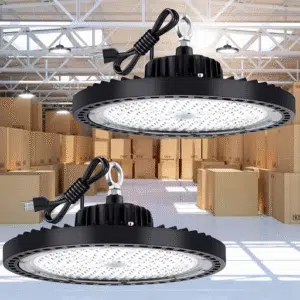
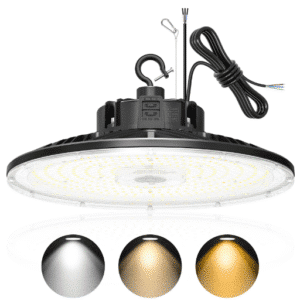
Industrial facilities and commercial spaces require lighting solutions which must achieve operational efficiency through effective light management that decreases power usage while enhancing security measures. Smart high bay lights with IoT controls function as a revolutionary lighting solution which enables businesses to illuminate their extensive spaces that include warehouses and manufacturing plants and major retail stores.
The advanced lighting systems use state-of-the-art LED technology together with Internet of Things (IoT) capabilities to deliver complete automation and tailor-made solutions and energy management functions. The article examines how businesses use smart high bay lights with IoT controls to improve their lighting systems which provide simultaneous intelligent operation and cost savings. This guide explains the essential elements which modern facilities need to operate their systems successfully whether you want to update your old equipment or learn about the latest technological advancements.
Introduction to Smart High Bay Lighting

What are Smart High Bay Lights?
People designed smart high bay lights as advanced lighting fixtures which people use in spaces that have ceilings reaching heights between 20 and 45 feet in locations such as warehouses and manufacturing facilities and gymnasiums. The lights use advanced intelligent systems which include motion sensors and dimming controls and IoT connectivity to operate automatically while allowing users to track their status in real time.
Key Insight:
Smart high bay lights create energy efficiency which leads to cost savings and better facility operations through their ability to deliver customized lighting options for various needs.
Benefits of LED High Bay Lights
LED high bay lights provide many benefits which include better energy efficiency and extended product lifespan and decreased upkeep expenses when compared to conventional lighting systems. The lights use much less electricity but still deliver consistent and high-quality lighting which works perfectly for extensive areas that feature elevated ceilings.
Primary Advantages:
- The lights produce very little heat
- They do not include any dangerous substances
- They qualify as environmentally safe products
- The advanced system allows users to select their preferred lighting options
- Cost efficiency through dimming functions and smart control systems
Importance of IoT Controls in Lighting
Lighting systems that use IoT controls achieve three main goals which include energy efficiency optimization and user convenience improvement and advanced automation capability development. Users who link their lighting systems with IoT technology can monitor their lights from any location while controlling light intensity through operating devices that work with their system to stop energy waste in areas which people do not occupy.
Three Core Capabilities:
- Energy efficiency optimization
- User convenience improvement
- Advanced automation capability development
The systems can gather information about how people use their resources which will help organizations create predictive maintenance plans and data-driven decisions. IoT-enabled lighting provides users with features that include adaptive scheduling and daylight harvesting and smart building technology integration, which establish a fully automatic system that decreases operational expenses.
Features of Smart High Bay Lights

Motion Sensor Technology
Smart high bay lights use motion sensor technology which employs advanced sensors to detect movement through passive infrared sensors and ultrasonic sensors and microwave sensors. The sensors enable lights to operate automatically by turning on or changing brightness when people enter the area which helps to save energy and prevent unnecessary electricity consumption.
The technology uses real-time motion detection to improve user experience and reduce operational expenses which makes it vital for industrial and commercial smart lighting systems.
Energy Efficiency and Cost Savings
Advanced technologies like LED lighting and motion sensors and automated dimming systems enable modern smart lighting systems to achieve energy efficiency and cost reductions.
Key Statistics
75%
Energy Savings
25x
Longer Lifespan
Compared to traditional incandescent bulbs
The system uses motion and daylight sensors to control lighting which prevents energy waste because lights activate only in occupied spaces with artificial light. The innovations help to decrease operational expenses while minimizing carbon emissions and supporting environmentally friendly methods in residential and commercial and industrial environments.
Integration with Smart Lighting Systems
Smart lighting systems use Internet of Things (IoT) and artificial intelligence (AI) and wireless technologies to enable users to control their systems and automate their operations while saving energy.
Three Control Methods:
① Smartphone Applications
Direct control via mobile apps
② Voice Commands
Integration with Alexa and Google Assistant
③ Automated Schedules
Custom programming based on preferences
Smart lights now have modern integration capabilities which enable them to change their brightness and color temperature and power on or off based on environmental conditions and human presence and the current time. The system provides benefits to users because it functions as an important energy-saving solution which helps to achieve modern energy-saving objectives.
Applications of Smart High Bay Lights

Warehouse Lighting Solutions
Smart high bay lights function as specialized lighting systems which deliver bright and consistent light patterns to support safe operations in large high-ceiling warehouse environments. The lights use advanced features which include motion sensors and dimming capabilities and programmable controls to meet their operating requirements, which results in reduced energy usage.
Warehouse Benefits:
- Real-time system monitoring capabilities
- Remote management through IoT technology
- Decreased maintenance requirements
- Reduced operational interruptions
- Enhanced energy efficiency
Commercial Bay Lighting Uses
Commercial bay lighting functions as the primary illumination system for warehouses and industrial facilities and gymnasiums and retail stores and other extensive areas which depend on high-level lighting. The lighting systems function to produce constant brightness throughout spaces which enables better visibility and protection in areas with extensive floor space.
| Application Type | Primary Function | Key Benefit |
|---|---|---|
| Warehouses | Safe operations support | Reduced energy usage |
| Industrial Facilities | Constant brightness delivery | Better visibility |
| Gymnasiums | High-level illumination | Enhanced safety |
| Retail Stores | Extensive floor coverage | Improved protection |
Modern commercial bay lighting uses energy-efficient LEDs to decrease running expenses and maintenance needs while delivering superior lighting performance and extended operational periods compared to older lighting technologies. The advancements become crucial for businesses which seek to achieve optimal lighting results while meeting their environmental sustainability requirements.
High Ceilings and Large Spaces
The process of lighting high ceilings and large spaces needs specific lighting solutions which match their particular architectural dimensions to achieve proper light output and energy-saving efficiency. The latest advancements in high bay lighting technology, such as high-lumen LED fixtures, are designed to address these needs by providing powerful, evenly distributed light output that minimizes shadows across expansive areas.
The LED systems come with dimming functions and intelligent controls which provide users with the ability to set specific light levels based on their needs or their current occupancy state, which leads to decreased energy usage. The combination of advanced optical systems and robust construction materials enables contemporary lighting solutions for extensive areas to maintain their operational efficiency while meeting modern environmental sustainability requirements.
Installing and Maintaining Smart High Bay Lights

Installation Considerations for LED Fixtures
LED high bay light installation requires assessment of both ceiling height and distance requirements to achieve perfect light distribution across the area. LED high bay lights demand specific voltage ranges so users must verify their power supply system matches these requirements.
⚠️ Critical Installation Checklist:
- Assessment Phase: Evaluate ceiling height and distance requirements
- Power Verification: Confirm voltage range compatibility
- Mounting Hardware: Use secure hooks, brackets, and chains
- Light Distribution: Prevent glare or shadow effects
- Wiring Compliance: Follow manufacturer’s guidelines
- Connection Sealing: Stop dust and moisture entry
- Smart Controls: Integrate during installation for efficiency
- Code Compliance: Follow local electrical regulations
Maintenance Tips for Long-lasting Performance
The maintenance of lighting fixtures requires periodic cleaning because dust and debris accumulation on surfaces will result in decreased operational efficiency through time. The regular inspection of wiring and connections should include checks for wear and corrosion and damage, which requires immediate replacement of any affected parts to maintain operational safety.
Essential Maintenance Practices:
- Regular Cleaning: Remove dust and debris accumulation periodically
- Wiring Inspection: Check for wear, corrosion, and damage
- Hardware Check: Identify and tighten loose mounting parts
- LED Monitoring: Address flickering or dimming promptly
- Component Replacement: Replace drivers and power supplies as needed
- Scheduled Inspections: Follow manufacturer’s maintenance instructions
Upgrading Existing Bay Lighting System
Bay lighting system upgrades require the replacement of current lighting systems with LED high bay lights which provide better light output and reduced energy usage and extended lifespan compared to HID and fluorescent lighting systems.
| Step | Action Required | Expected Outcome |
|---|---|---|
| 1 | Assess existing infrastructure | Identify compatible components |
| 2 | Select high-efficiency fixtures | Maximum lumens-per-watt output |
| 3 | Implement motion sensors and controls | Greatest energy savings |
| 4 | Ensure code compliance | Meet industry standards |
| 5 | Professional system design | Facility-specific requirements met |
The implementation of these upgrades will result in decreased operational expenses, which will simultaneously enhance the effectiveness of the illumination system.
Future Trends in High Bay Lighting

Advancements in Sensor Technology
The recent research work which studies sensor technology updates for high bay lighting systems studies two main goals which researchers want to achieve. The current sensors use their advanced technology which they developed to monitor both human movement and surrounding light conditions with precise accuracy.
The smart lighting systems now permit their users to use their light control systems which automatically adjust to the actual light conditions and user activities. Users can monitor and control the system through Bluetooth and IoT wireless connections which facilitate easy system maintenance while decreasing costs for operations. The new sensor technology development supports sustainability objectives by enabling factories and businesses to use energy resources more intelligently.
The Role of IoT in Future Lighting Solutions
The Internet of Things (IoT) plays a pivotal role in shaping future lighting solutions by enabling seamless interconnectivity and data-driven automation. The IoT system enables lighting systems to connect with smart sensors and cloud platforms and AI algorithms which help them control their energy usage according to user behavior while providing predictive maintenance.
IoT-Enabled Features
Automated Dimming
Environmental Adjustments
Centralized Control
The system uses automated dimming and environmental adjustments and centralized control to deliver better efficiency which results in decreased energy expenses and carbon emissions. The IoT-enabled lighting systems give users in residential and commercial spaces the ability to select lighting options which adapt to their particular requirements.
Sustainability and Smart Lighting Innovations
Smart lighting technologies have developed new systems which combine energy-efficient LED fixtures with IoT connections and advanced sensor technologies to promote sustainability. The systems use automated controls to decrease energy usage through their capacity to adjust lighting based on current occupancy and natural light conditions.
🌱 Sustainability Benefits:
- ✓
Solar-powered lighting solutions for renewable energy - ✓
Reduced dependence on non-renewable resources - ✓
Decreased energy waste through automation - ✓
Extended operational life of lighting products - ✓
Achievement of environmental goals - ✓
Decreased operational expenses
References
-
Pacific Northwest National Laboratory (PNNL): PNNL is a government-backed research institution focusing on advanced lighting technologies, including energy-efficient and smart lighting systems. Visit PNNL’s Advanced Lighting page.
-
California Energy Commission (CEC): This document discusses high-efficiency dynamic lighting systems, including smart lighting functionalities. Read the CEC report.
-
Discovery – Smart Lighting Companies: A comprehensive overview of smart lighting technologies and companies, hosted on an academic platform. Explore Discovery’s topic on smart lighting.
Frequently Asked Questions (FAQ)
❓ What are smart high bay lights and how do they differ from traditional fluorescent lights?
Smart high bay lights differ from conventional fluorescent lights because they are LED lights which provide illumination to high ceiling spaces found in commercial and industrial areas including warehouses and gyms and commercial high bay lighting spaces. Smart high bay led lights provide instant activation and extended operational time and reduced upkeep needs and remote management abilities through their smart ufo led high bay and led linear high bay products which deliver superior unit performance and dimming capability. The system provides an economical lighting solution which meets both energy efficiency standards and delivers better illumination results than existing fluorescent and bay lighting systems.
❓ What distinguishes ufo high bay lights from linear high bay lighting systems?
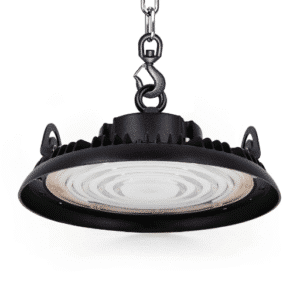
UFO high bay fixtures (also called ufo led high bay light, ufo high bay led, or led ufo high bay lights) are round, compact high bay ufo designs ideal for high ceilings and focused illumination. Warehouse high areas and shop light rows require linear high bay or led linear high bay and linear high bay fixtures because these fixtures provide extended light distribution throughout their extensive length. Choose led ufo high bay for concentrated downlight and led linear for continuous, even illumination—both are available in smart and non-smart versions and in commercial high bay led configurations.
❓ Can smart high bay lights integrate motion sensor technologies and what advantages does this integration bring?
Yes, many smart high bay led lights come as high bay lights with motion, motion sensor high, or light with motion sensor models. A high bay light with motion or shop lights with motion sensors can dramatically reduce energy use by dimming or turning off when areas are unoccupied, improving energy-efficient lighting in commercial and industrial spaces. In warehouses and low bay and high bay areas and shop lighting applications, motion-enabled fixtures help control lighting costs while meeting required illumination levels.
❓ Which watt options are offered, and what methods should I use to select between 150W, 200W and other LED wattage ratings?
Smart high bay led lights come in various wattages, including popular options like led high bay light 150w and lights 200w. The correct LED wattage selection requires assessment of room height and work requirements and calculation of required foot-candle quantities. 150W or similar often suits moderate-height ceilings and spaces that need high performance while 200W or higher may be used for very high ceilings or heavier-duty commercial environments. LED lights can provide equivalent or superior brightness to fluorescent fixtures because they need less wattage to deliver the same illumination level.
❓ Do smart ufo high bay products exist which provide specific plug types and compatibility with US plug standards?
Yes, many manufacturers offer smart ufo high bay led fixtures and led ufo high bay lights configured for different markets, including shop lights with US plug or specific wiring for commercial installations. Product listings that display “us plug” or regional compatibility should lead you to the correct items, while Lumary smart ufo high bay and lumary smart ufo led high models provide commercial high bay and high bay shop solutions that deliver brand-name functionality and straightforward installation.
❓ How do I plan placement of high bay fixtures for warehouses, gyms, and other commercial spaces?
High bay fixture positioning requires three factors which include ceiling height measurements in feet and room layout and the specific functional needs of the space. The design requires warehouses to use both ufo high bay and linear high bay lights for their lighting needs because these two types of lights offer different styles of illumination. The performance optimization process requires three lighting design principles which include spacing relative to mounting height and aiming for uniform foot-candles and using dimmable led high bay and motion sensor high options. The energy-efficient lighting system of the retrofit project will receive enhanced results through the replacement of existing fluorescent lights with high bay led fixtures or high bay led shop lights.
Conclusion
Smart high bay lights with IoT controls represent the future of industrial and commercial lighting, offering unparalleled energy efficiency, cost savings, and operational flexibility. By embracing these advanced technologies, facilities can achieve significant reductions in energy consumption while maintaining optimal lighting conditions for safety and productivity.