
The lighting of vast areas, such as warehouses, factories, and gymnasiums, involves the use of energy-efficient solutions to be on the safe side. The traditional lighting options, in most cases, are power fiends, leading to increased operational costs and negative impacts on the environment. The arrival of LED UFO high bay lights with the motion sensor feature has, therefore, meant that only good lighting is to be experienced in the facility but at a significantly lower power consumption. This article will delve into the workings of these high-tech lights, their potential savings in energy, and the factors that make them indispensable for any facility aiming to lower its costs and to become more eco-friendly. No matter if you are a business owner, facility manager, or an environmentally-friendly decision-maker, keep reading to find out how you can make your place brighter at reduced energy consumption.
Understanding High Bay Lighting

What are High Bay Lights?
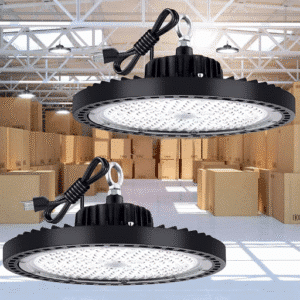
High bay lights are powerful luminaires built for spaces with high ceilings of 20-40 feet. These lights ensure proper visibility by providing strong light to very large areas like warehouses, factories, gymnasiums, or retail stores. Their even light distribution over a large area allows high bay lights, unlike traditional light sources, to operate using fewer fixtures. Implementing LED technology, modern high bay lights have power consumption like that of fluorescent or metal halide lamps but with the upper hand in energy efficiency, longer lives and less requirement of maintenance. This makes them the ultimate option for companies that want to fulfill their lighting needs and go green simultaneously.
Types of High Bay Fixtures
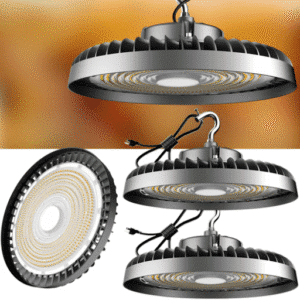
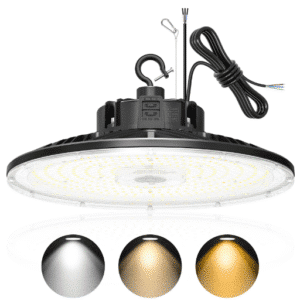
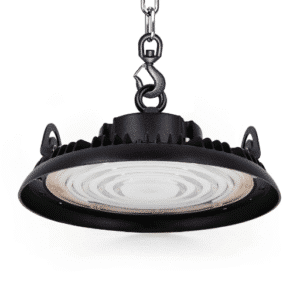
High bay fixtures come in different versions, each being a perfect fit at a particular need or in a certain surrounding. Linear high bays are the most popular type and are recommended for long and narrow places like warehouses and aisles because they have a rectangular light distribution. Round high bays, popularly referred to as UFO high bays, have a circular shape and are usually installed in open places such as gyms or factories for their evenly spread light output. Grid-mount high bays have the ability to be integrated into ceiling grids where they are commonly used in commercial spaces. The LED high bay light fixtures represent the highest energy-efficient category; they are brighter but consume less power and require no maintenance at all. The decision of choosing one fitting type over the other is influenced by ceiling height, the arrangement of the area, and the level of illumination required.
Applications of High Bay Lighting
Due to the fact that it can produce powerful and consuming light easy to use in big, open areas, high bay lighting is widely accepted in the market and among manufacturers alike. Warehouses, production plants, and gyms are the most common places where high bay lighting is employed; these areas require sturdy and lasting lighting solutions due to the high ceilings. Retailers and supermarkets high bay lights not only to make their products visible but also to creating and maintain a pleasant shopping atmosphere. Moreover lighting is critical in logistics hubs and convention centers, thus these places too are gaining the benefit from the use of high bay lights. LED high bay lighting has become the main contributor to the expansion of high bay light applications as the latter’s fixtures have excellent energy savings and low maintenance making them ideal for industrial and commercial areas.
The Role of Motion Sensors in High Bay Lighting

What is a Motion Sensor?
A motion sensor is a device that is meant to detect movement in an area that is defined. When a motion sensor is connected to high bay lighting, it can detect activity or changes in the environment and turn the lights on or adjust them accordingly. This feature goes hand in hand with the concept of energy efficiency as lights are allowed to function only when they are actually needed, avoiding unnecessary usage, hence cutting down on operational costs. Motion sensors find their applications in industries, commerce, and warehouses where energy conservation is accompanied with proper lighting.
Types of Motion Sensors for High Bay Lights
Passive Infrared (PIR) Sensors
PIR sensors are the ones that detect motion by scanning for infrared radiation that is given off by the objects in their vicinity. Whenever a heat source, like a human or animated equipment, crosses the detection area, the sensor comes into action thereby turning on the lights automatically. These sensors are super accurate and can be used in places where only a specific movement occurs like passageways or production lines.
Ultrasonic Sensors
Ultrasonic sensors do the detection of movements by sending out high-pitched sound waves and afterwards listening to the echoes they get back. They are capable of sensing movements even if there are obstructions, which makes them very suitable for places with intricate layouts or where detecting movement visually is difficult, like storage rooms occupied by tall racks.
Microwave Sensors
Microwave sensors work by sending out microwave signals and monitoring the return of those signals to detect any movement in the surrounding area. Such sensors have a wide coverage area and they are remarkably sensitive which renders them useful in large warehouses and factories where the speed of detection is of utmost importance.
Dual-Technology Sensors
The dual-technology sensors fuse two detection technologies, usually PIR and ultrasonic or microwave, thus guaranteeing reliable detection while minimizing the number of false starts. These sensors can be applied in situations where the movement patterns are mixed and confusing as they adapt well to such dynamic environments.
High-Frequency Sensors
High-frequency sensors rely on high-frequency electromagnetic radiation for detecting motion. They are very efficient in terms of energy and can go through various materials such as glass and thin wall, thus giving the option of installing them in different parts of the building based on the flexibility of the installation site.
Every category of motion sensor comes with its own strengths that are specifically designed to meet the requirements of the industrial and commercial sectors. The decision on which type of sensor to use is determined by factors such as the area to be covered by the sensor, the type of activities taking place, and the desire for energy efficiency.
Drawbacks of Using Motion Sensors
Among the multitude of benefits delivered by motion sensors, the upgrade of safety, productivity, and economic efficiency in industrial and commercial activities is the most pronounced. One of the major advantages is the reduction of energy consumption as the use of lights and machines is controlled by sensors leading to less energy waste in the non-occupied zones. At the same time, they heighten security by instantly alerting to movement in unauthorized areas, thus making it possible to respond quickly to the risks. Automation of operations is another contributing factor to this efficiency whereby the machines are in constant communication with each other in terms of functionality. Easy installation and suitability for different sectors raise the bar further and make them a dependable and scalable solution for meeting the needs of today’s businesses.
Energy Efficiency and Cost Savings

How Motion Sensors Reduce Energy Consumption
Motion sensors are among the most crucial devices that contribute to the reduction of energy use by making sure the energy is consumed only when it is needed. They are especially useful in lighting systems where they automatically turn lights on and off according to the motion detected in the area thus, significantly curbing the energy consumption that would have been otherwise unnecessary. For instance, in offices, schools or homes where motion-activated lighting is used, electricity bills are reduced since lights are not on in unoccupied areas. The reports indicate that the installation of motion sensor lights can result in as much as a 50% reduction in energy consumption, which is why they are considered a cost-effective solution. The application of motion sensors technology has made it more accurate and therefore, false activations have been drastically reduced while the maximum efficiency is still retained. This not only translates into huge amounts of energy saved but also, it helps prolong the life of bulbs and other electrical components thus, making it less expensive to replace and less harmful to the environment in terms of waste. All in all, motion sensors are one of the simplest yet very powerful means of obtaining energy efficiency in homes, factories, and office buildings.
Comparing Traditional vs. Sensor-Equipped High Bay Lights
Conventional high bay lights stay on all the time unless someone manually turns them off, which is a common case in low-traffic areas and thus, usually, it results in a lot of energy wastage. Alternatively, sensor-equipped high bay lights only activate when they sense motion or light in the area, thus very little energy is used for lighting. Traditional lights may cost less at first, but the sensor-equipped ones will eventually save more because of lower energy and maintenance costs. Moreover, the sustainability aspect of sensor-equipped lighting becomes more pronounced as less environmental impact is achieved through efficient energy use. Hence, they are not only smart but also cost-effective lighting solutions that can be used in different places and for various purposes.
Calculating Potential Savings
In determining how much you can save from using sensor-equipped lights, the first step is to evaluate and compare their energy consumption with that of traditional lights over the same period. Next, deduct operational hours that are no longer in use from the total because of the sensor’s capability of monitoring and turning lights off accordingly. After that, calculate the amount of decrease in energy bills that will be realized based on the current cost per kilowatt-hour in your area. It is important to note that even though the initial costs might be higher, the energy bills savings in the long run coupled with lower maintenance costs usually make up for the initial investment. Moreover, considering rebates and incentives for energy-efficient lighting would be a good strategy as it could even more increase your overall savings.
Installation and Maintenance of High Bay Lights with Sensors

Choosing the Right High Bay Fixture
Choosing the right high bay fixture requires consideration of several aspects like the dimensions and altitude of the area, the activities performed in the space, and the amount of light needed. Analyze the lumens of the fixture to make sure that the lighting is adequate and the color temperature is appropriate for the place—be it a warehouse, a gym, or a factory—if it’s a warehouse, gymnasium or manufacturing plant. Select LED fixtures, which are energy-efficient, that consume less power and have longer lives. Ensure compatibility with motion detectors and other advanced controls for increased savings and usability. Do not forget to choose fixtures from reputable manufacturers to get the advantage of durability and service.
Installation Tips for Motion Sensor High Bays
For motion sensor high bay installation, the first thing to do is to go through the manufacturer’s installation guidelines and to be careful to avoid mistakes and secure safety. Start with the fixture height and location checking; most motion-sensor high bays have a range of 15 to 50 feet, so, proper fixture location is very important for the right sensor coverage. Put the fixtures in place securely, and after that, make sure that they are in the right position according to the lighting layout for you to get the best lighting over the whole area.
The motion sensors should be installed at the same time, and their sensitivity and range adjusted based on the size and activity level of the room. Configure the time delay settings to a level that prevents excessive power use while at the same time ensuring good lighting response. After installation, conduct extensive testing of the sensors to ensure proper activation in response to movement and software or smart automation systems operation without any interruption.
Lastly, always check that the high bay lights are compatible with the space’s electrical wiring and power requirements. Smart systems should be regularly maintained and have their firmware updated to perform at their best. Good installation and setup not only increase the efficiency but also the lifespan of your lighting system.
Maintenance Considerations for Longevity
High bay lighting systems undoubtedly require regular maintenance to last longer and perform at their best. Cleaning the fixtures periodically is the first step of maintenance and this is to eliminate dust and debris that can lower light output. Examine the wiring and connections for any signs of wear or damage, and if you find anything, fix it quickly to avoid electrical problems. Regular firmware checks are also necessary for smart systems because these updates frequently contain improvements and fixes that boost performance. Furthermore, it is advisable to keep an eye on the motion sensors and controls to ensure they remain active and calibrated correctly. Thus, proper treatment and prompt actions not only make the lighting system more efficient but also prolong its life extremely.
Case Studies and Real-World Applications

Successful Implementations in Warehouses
Case Study: The use of smart lighting systems in warehouses has brought about great energy savings and efficient operation. For example, a very large distribution center exchanged old lighting for new LED fixtures, which were energy-efficient, and applied motion-activated controls that reduced the energy consumption by 60%. Furthermore, the facility’s operating hours were taken into account for the automated system of dimming and scheduling the light. Such a system reduced lighting in inactive zones almost down to nothing. At the same time, the measures taken not only decreased costs but also increased safety and comfort for the workers, since the lighting was then provided to be very reliable and to remain consistent.
Commercial Lighting Applications
The evolution of technologies in the field of commercial lighting applications has been a revolution. Virtually every aspect of the lighting needs of a business has become easy to meet through the availability of new and versatile lighting solutions that are also energy-efficient. Businesses have been asking this question many times, “How can commercial areas be the most energy-efficient while still keeping the high-quality lighting?” The most recent updates reveal that the combination of LED technology and smart control systems is the best practice. LED lights draw much less power than regular lights and at the same time, they last longer, thus, the maintenance cost is also reduced. When combined with data-driven systems such as occupancy sensors, daylight harvesting, and time-based automation, companies can adjust the lighting depending upon when and where it is needed the most. Not only this but the operations will also become more efficient, and the environment being targeted by the companies will be sustainable as they’ve aligned with modern environmental standards.
Feedback from Users of High Bay Occupancy Sensors
Users of high bay occupancy sensors have pointed out a few crucial advantages and everyday experiences. Some users have reported that energy savings have been impressive because the sensors do the automatic job of adjusting the lighting in relation to the occupancy and the activity levels. This move has also been beneficial for places like warehouses or factories, where lighting is usually needed to be kept on consistently; that is why in these areas the lighting has been made very efficient. Moreover, the users have acknowledged the simple nature of both establishment and integration with the already existing systems, which made the transition very smooth. A small number of users, however, mentioned that once in a while the fine-tuning might be required to ensure that the selected sensitivity settings and the coverage of the uniquely designed setups are optimal. Generally, high bay occupancy sensors are regarded as a good investment not only for the purpose of minimizing costs but also for the sake of taking part in the sustainability campaign.
References
-
University Research on Energy Costs
This document discusses the use of motion sensors in lighting systems for energy conservation.
Read more here -
Developing Flexible, Networked Lighting Control Systems
This paper explores energy savings of up to 73% achieved through occupancy sensors and lighting control systems.
Read more here -
California: State of Light
This research includes insights into lighting systems and energy efficiency, though it may have broader context.
Read more here
Frequently Asked Questions (FAQ)
What do PIR and microwave sensors provide that makes them more favorable in terms of application for high bay lights?
Occupancy sensors based on PIR are less energy consuming and among the less reliable methods in detecting movements based on emitting or receiving heat, often in conjunction with led high bay or ufo high bay so that the clarities of on/off or dimming control are maintained. Besides, microwave sensors can detect motions through certain materials which is a much-above-percentage scenario hence they may provide better coverage at very high mounting heights, but they might be harder to control as they can be more sensitive to non-human movement. Many applications in high-bay rely on a combination of or switchable dual-technology sensors to reconcile between false triggers and detection range. Looking at the application – inactive machine zones should have a preference for microwave or combined sensors while regular warehouse aisles are fine with PIR. Suggested unused terms: passive infrared technology, pir high-bay sensor with 3, high-bay occupancy.
What will be the outcome of occupancy sensing and dimmable LED high bay lights using 0-10V dimming?
0-10V dims impose a mixed administration signal between the sensor or control system and the driver of the dimmable led to glowing softly or40fully from one watt to another, depending on the presence of a user and on the application of daylight harvesting. If the sensor features have been combined with the occupancy motion sensor, then the lights can be made to fade to a preset level or be turned off by the sensor, thus saving energy and extending lamp life. Make sure the motion sensor high bay lights and led high bay driver are 0-10V compatible and also check if the installation supports control circuit wiring. Some sensors provide selectable settings like fade times, minimum light levels, and vacancy mode to comply with code requirements. Suggested unused terms: dimmable led, lighting solution, energy costs.
What exactly is a high bay motion sensor and in what way does it work?
A high bay motion sensor utilizes technology of either passive infrared or microwave sensing or a combination of both to detect and confirm the presence of people or movement in big, high areas and thereby activate the high bay lights. These sensors are both fixture-mounted and remote, and are frequently designed to select modes such as occupancy sensing, vacancy, or continuous dimming. The majority of them allow for 0-10V dimmable control and lighting control integration for commercial lighting systems aimed at minimizing energy cost through cutting light output without actually switching off the light completely. Lighting in warehouses, canopy light areas, and floors in factories that all have a common challenge of mounting heights and field of view being crucial, are among the usual applications. Suggested unused terms: Corvus II series, sensor turns, led motion sensor high bay.
Is it possible to use a motion sensor with a 150W LED high bay or UFO LED high bay?
Yes, the majority of led high bay lights, including 150W led fixtures and led high bay ufo designs, work well with the installation of motion sensors that are specifically designed for high mounts. When connecting, make sure the sensor is compatible with the wattage of the fixture and the type of dimming method employed (e.g., 0-10V or dimmable driver). Depending on the type, some sensors are fixture-mounted pir high-bay sensor kinds or come with interchangeable lenses to modulate the field of view for ufo light form factors. For large warehouses, high-bay occupancy sensors or microwave motion sensor for led can be used for high mount reliability. Suggested unused terms: titan vi series led high, vi series led high bay, corvus ii series.
What are the mounting heights and the field of view for light with motion sensor that I should consider?
Choose sensors for your mounting heights because high fixtures require sensors with wider detection areas and improved field of view to prevent missing occupancy. The sensor manufacturers usually give specifications for low bay vs. high-bay occupancy use and allow for options such as the sensor with three interchangeable lenses to customize coverage. For distinctive cases, one might consider sensors with a wider field of view, microwave, or dual-technology sensors to keep reliable detection for tall warehouses with led warehouse lights. Double-check the IP65 rating if the environment demands dust and moisture proofing. Suggested unused terms: fixture-mounted pir high-bay sensor, mounting heights, sensor for led linear high.