
Makers of high bay lights have come to the conclusion that differentiating between lumens and watts is one of the most important aspects in lighting. Traditionally, wattage was used as a measure of how bright a light was, but thanks to the development of LED technology, this is no longer the case. The brightness of a light source is now measured by its luminous flux or lumens rather than power consumption. This article will explain the differences between lumens and watts in detail and will provide practical advice on how to make the best decisions regarding lighting efficiency and performance in your high bay areas. Know-how in this area will guarantee that you strike the right balance between reduced energy consumption and high brightness, whatever the space being illuminated—warehouse, auditorium, or even factory floor.
What is a High Bay Light?

Definition and Uses
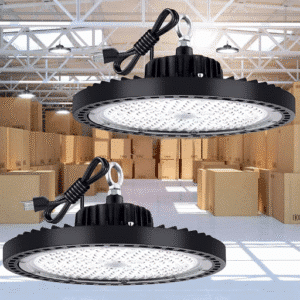
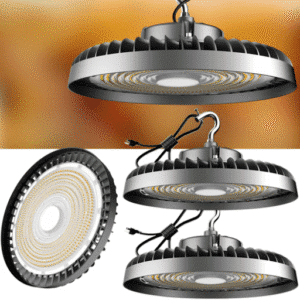
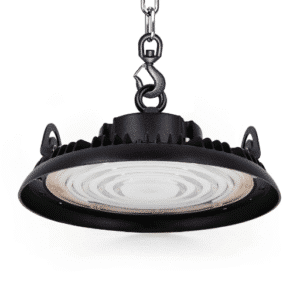
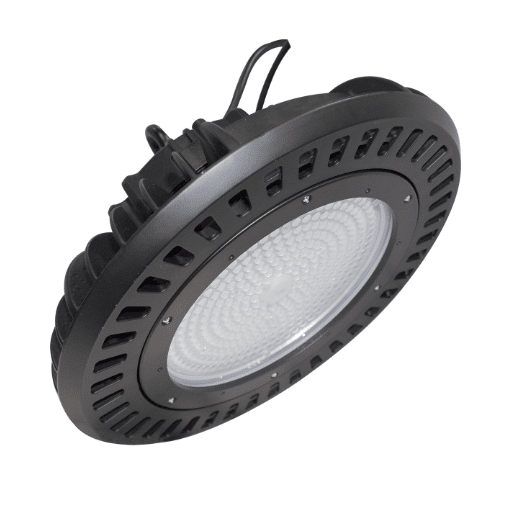
High bay lights are lighting fixtures intended for installation in places with high ceilings, which are usually at least 20 feet from the floor. They are capable of delivering bright and even light over a large area, thus making them suitable for a variety of places such as warehouses, factories, sports halls, and other industrial or commercial activities. The very nature of their design guarantees that a good amount of light reaches the ground level thus, ensuring visibility and safety in these large spaces.
Difference Between High Bay and Low Bay
The main distinction between high bay and low bay lights lies in their application and the ceiling height they can be effectively illuminated. High bay lighting is meant for ceilings that are usually 20 feet or more, while low bay lighting is for ceilings that are less than 20 feet. This means that high bay lights will provide very bright and concentrated light that would make it possible to see all corners of large open spaces like warehouses and factories clearly, while low bay lights will deliver light that is more spread-out and less intense, thus, they will be better suited for small places like retail shops or garages. These differences in illumination power and design allow us to customize the lighting solution to the unique requirements of the area.
Common Applications of High Bay Lights
High bay lights are extensively used in industries and commercial areas where the ceiling height is more than 20 feet. They are perfect for warehouses, production areas, sports halls, aircraft hangars, and large retail outlets because of their strong light which can ensure the whole area is well lit. The intense light produced is needed for activities that demand high accuracy and safety, thus they become an indispensable part of such surroundings where the focus is on throughput and productivity.
Understanding Lumens and Wattage
What are Lumens?
Lumens are the metric that quantifies the overall visible light from a source as well as its dispersion in all angles. To put it simply, lumens determine how bright a light bulb or a lighting fixture is. Whereas watts are about energy usage, lumens are all about light output. Lumens thus become the main metric for comparison. For instance, an ordinary incandescent bulb of 60 watts gives about 800 lumens, on the other hand, a LED bulb, which consumes much less power, can get the same brightness.
This search behavior highlights the significance of lumens in determining the right brightness level for different areas, and it also signals the existence of a general concern for energy efficiency and lighting performance. Knowledge of lumens while making a lighting selection empowers professionals and the general populace in not only managing but also capturing the triad of brightness, energy consumption, and the respective environment’s needs.
What is Wattage?
Wattage is the measure of electrical power, in watts (W), that a lighting product uses to generate light. It indicates the energy consumption rather than the bulb’s brightness-strength, determined by lumens. In the old days, higher wattage meant brighter light, however, with modern energy-efficient lighting such as LEDs, high brightness can be reached with significantly low wattage, spotlighting the need to consider lumens for brightness and wattage for energy consumption.
Lumen Output vs. Wattage Consumption
When looking at lumen output and wattage consumption, it is very necessary to grasp their connection. The light source’s brightness is expressed in lumens, while wattage reveals how much energy is used for that light. Thanks to LED lamps and other lighting technologies, we are able to achieve a high lumen output even with much less wattage than the old incandescent bulbs would require. That is to say, the lighting equipment which is energy-efficient gives the same or even higher brightness while consuming less power hence cutting the energy bill and lessening the negative impact on the environment. With this in mind, the energy-efficient lighting selection should be based on lumen output for the needed brightness and wattage for energy saving.
Choosing the Right High Bay Light

Factors to Consider: Ceiling Height and Fixture Type
Ceiling height is a determining factor when it comes to choosing the right high bay light. For ceiling heights from 15 to 20 feet, luminaires with a total output of 10,000 to 15,000 lumens are generally sufficient, but with ceiling heights over 20 feet, it is necessary to have at least 20,000 lumens in order to have a good light level. The fixture type is of equal importance and should be in harmony with the space’s purpose; for instance, linear high bay lights are appropriate for aisles and warehouses, whereas UFO-style fixtures are more adapted to open areas. A careful analysis of both the ceiling height and the intended use will guide you the way to a high bay light that illuminates efficiently and effectively.
Quick Reference Guide
| Ceiling Height | Recommended Lumens |
|---|---|
| 15-20 feet | 10,000 – 15,000 lumens |
| Over 20 feet | 20,000+ lumens |
Energy Efficiency and Performance
On the topic of energy efficiency and performance, it is very important to pick high bay lights with the latest LED technology since they have a very low energy consumption in comparison to conventional lighting and at the same time give very high light output. Always choose lights that have high lumen-per-watt rating because this guarantees that light output is at its peak while power consumption is at its lowest. Besides, LED high bay lights are known for their long life span which translates to lower maintenance and replacement costs in the long run. Dimming controls and motion sensors are some of the features that can be used to make light dimmer or brighter depending on usage, which can save energy. If these factors are considered, then, energy saving and excellent lighting performance will be the results.
Color Temperature and Color Rendering Index
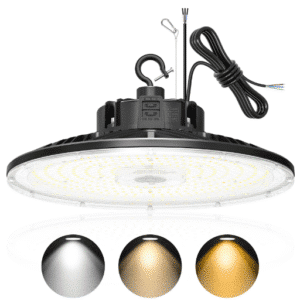
Color temperature corresponds to the quality of the light as either warm or cool; it is measured in Kelvin (K). For instance, incandescent light bulbs having lower color temperatures (such as 2700K) give off a warm light that is somewhat yellowish, while cooler bulbs will produce a bluish-white light at 5000K. The selection of color temperature is based on the type of area and its purpose; a good example is that warm colors are usually adopted in residential living spaces, while cool colors are used in the office where concentration and clarity are required. Conversely, the Color Rendering Index (CRI) is a scale that shows how well a source of light simulates colors compared to the sun. A CRI value of above 80 is usually regarded as good for applications that require color accuracy like retail, art galleries, or photography. Achieving the right combination of both color temperature and the CRI brings the lighting that is not only functional but also aesthetically pleasing.
Color Temperature Guide
| Temperature Range | Light Quality | Best Application |
|---|---|---|
| 2700K | Warm (Yellowish) | Residential living spaces |
| 5000K | Cool (Bluish-white) | Offices, industrial areas |
LED High Bay Lights vs. Traditional Lighting

Advantages of LED High Bay Lights
LED High Bay Lights bring with them a myriad of benefits compared to traditional light sources. The first and foremost advantage is the reduction of energy consumption and costs. They use about 80% less energy than the average incandescent bulb or fluorescent fixture adding to the reduction of electricity costs and energy consumption at the facility. In addition to that, the long lifetimes of LED High Bay Lights, which range between 30,000 and 50,000 hours, further justify their higher initial costs making them a really economical choice in the long term as well. Besides, LED High Bay Lights are cooler in operation resulting in safer and more comfortable working conditions in large areas plus less HVAC usage. There is also the plus of having good color rendering and being able to select the color temperature which makes the lights quality suitable for the mentioned environments of industrial, commercial and warehouse. Moreover, the lifetime and environmental friendliness of LEDs also reinforce their status as the best lighting choice.
Key LED Advantages at a Glance
| Feature | Benefit |
|---|---|
| Energy Consumption | 80% less than traditional bulbs |
| Lifespan | 30,000 – 50,000 hours |
| Operating Temperature | Cooler operation, reduced HVAC usage |
| Color Rendering | Superior quality with adjustable temperature |
Measuring Power Consumption
A clear distinction can be noticed when you set side by side the energy consumption of LED High Bay Lights and traditional lighting sources like metal halides or fluorescents. New publications state that the consumption of LED High Bay Lights amounts to 20% only of what the old-school lighting sources did. This is the result of their energy efficiency rating where LEDs turn a larger part of the incoming electricity into light while the rest gets wasted as heat. Furthermore, the LEDs that have a lifespan of up to 50,000 hours or more do not need frequent replacements reducing the energy costs even more associated with the electrical and transportation processes of the new bulbs. For the companies, this means a huge cut down to the electricity costs and a noticeable shrink in their carbon footprint, thus LEDs gain in efficiency over traditional lights.
Lifespan and Maintenance Issues
LEDs are famous for their life span, which may reach even up to 50,000 hours or more, depending on the application and the type of device. Such a long lifetime results in the considerable reduction in the frequency of lighting replacements, and thus also in the decrease of the related repair costs and effort, particularly in such large areas as commercial buildings or industrial facilities. Differently from conventional lighting systems, LED lights do not stop working abruptly but instead gradually dim over time, which makes it easier for the users to organize the replacement according to their schedule. Their resistance and low maintenance needs make them a perfect candidate for ensuring consistent operation by cutting downtime.
Conclusion: Making Informed Choices

Summarizing Key Points
As compared with traditional light sources, LED lighting becomes a pioneer in the areas of energy efficiency, lifespan, and overall cost-effectiveness. They provide enormous savings in power, they need less maintenance, and they last longer which makes them very appropriate for either home or office use. The sustainability advantages are further extended with the development of LED technology since it plays a part in protecting the environment.
It is very clear that LED adoption is going up and up everywhere in the world, as consumers and businesses soon to be aware of its long-term value. The question that often comes up is whether or not the investment to switch to LEDs will be repaid. The response is a very positive one, taking into account their high cost savings over time, low environmental impact and their ability to meet different lighting requirements. Research and trends have shown that LEDs are the best bet for a solution that matches the modern energy-saving approach and the environmental priority of the day.
Final Recommendations for High Bay Lighting
In the case of high bay lighting, I very much advocate the switch to LEDs. From my point of view, the initial investment is more than justified. Over time, LEDs will cut energy costs by a large amount but they will also have a longer lifespan and will require less maintenance. The situation is the same, if not better, for the environment, so they are perfect for all kinds of industrial and commercial applications. If you are looking for efficiency, sustainability, and cost-effectiveness, then LEDs are your best option.
References
-
Implementing Temporary LED Construction Lighting
This document discusses LED lighting, including lumens and wattage, in compliance with OSHA standards.
Read the document -
Electrical Energy Equipment: Lighting
This academic paper covers lighting efficiency, including lumens per watt, and general lighting principles.
Access the paper -
Bucks County Justice Center Lighting Report
This thesis report includes detailed analysis of lumens and wattage in lighting systems for a justice center.
View the report
Frequently Asked Questions (FAQ)
Are LEDs more cost-effective than high-pressure sodium lamps for street lighting and high bay?
Yes, LED light sources usually give higher lumens per watt and better light quality than high-pressure sodium lamps, resulting in less energy used and often higher visibility for street lighting and industrial operations. Although the purchase price of LED fixtures may be higher, the savings on energy, fewer replacement bulbs, and maintenance will usually counterbalance the initial investment making them more economical in the long run. The comparison of wattage vs lumens is in favor of LEDs as they are able to convert a larger part of the wattage of light into visible lumens. Besides, the right CCT and beam angle selection can optimize light intensity, thereby reducing light wastage, hence improving overall performance. Unused terms suggested: low energy consumption, converted into light, replacement bulbs.
What is the difference between wattage and lumens for high bay LED light?
The wattage difference between the two lights is that the one with the higher wattage measures more power and the other one with lower wattage measures less power via light conversion into the visible spectrum or simply lumens. You need to look through the lumens per watt of high bay LED lights and high-performance fixtures to know how efficient they are and the amount of light they give. A higher wattage does not automatically imply more lumens and a brighter light; older high-pressure sodium lamps had high wattage but lower lumens and poor quality of light. For street lighting or in industrial and commercial spaces, the right amount of lumens must be selected to ensure good visibility and the quality of light needed. Unused terms suggested: replacement bulbs, upfront cost, wider beam angle.
How many lumens do I need for industrial and commercial spaces?
To help you arrive at the required brightness, first, outline the required brightness of the workspace, then check the lumens of the lamp and the ratings of lumens per watt. High bay LED light fixtures that are extremely efficient consume less energy but output higher lumens compared to incandescent fixtures, hence, they are not only energy-saving but also lighting. A thousand lumens per fixture might be called for in a general warehouse, while the specific number of lumens will be determined by the height of the ceiling, the tasks to be done, and the angle of the beam. White light and good CCT assist with visual sharpness and can lessen eye fatigue whereas light intensity and wider beam angle affect coverage. Unused terms suggested: many lumens, cost effectiveness, replacement bulbs.
Does higher wattage always mean the brightest light possible?
Wattage versus lumens demonstrates that wattage is indicative of the amount of power used but not the light output. The conversion of lumens per watt differs depending on the technology and light source such as LED bulbs and high bay LED fixtures. LEDs emit more visible light for the same wattage than older high-pressure sodium lamps; thus, the latter consumes less energy and yields fewer lumens. Instead of just relying on wattage, the lumens and lumens per watt should be the criteria for choosing high performance and cost effectiveness. Also, take CCT and light quality into account since two fixtures with the same lumens may differ in color rendering and thus the perceived brightness may be affected. Unused terms suggested: wattage vs, fewer lumens, pick the right.
How do I compare lumens of the lamp when shopping for led light bulbs?
When lamp lumens are compared, the product labels must be checked for lumens and lumens per watt to comprehensively understand how effectively each LED lamp transforms electricity into visible light. Many lumens indicates the light is bright; however, light quality, CCT, and beam angle should also be accounted for in order to make sure the light supports the task. In the case of replacing high wattage fixtures or high-pressure sodium lamps, it is advisable to go for LED options that provide higher lumens with lower energy consumption and lower upfront costs over time. You should also factor in the number of lumens required per square foot for your area and whether the lumens per watt correspond with energy-saving lighting objectives. Unused terms suggested: 100 watts, energy-saving lighting, high visibility.