
Considering the illumination of large-volume spaces with high ceilings, such as warehouses, manufacturing plants, or sports facilities, the choice of the right lighting solution is extra crucial. The standard solution with 100-watt T-shaped fluorescents hanging 40 feet up may fail to provide satisfactory illumination in the expansive area and account for big utility bills. The focus, therefore, falls on high bay lights made to work with tall ceilings. While bringing improved optical performance, durability, and energy efficiency, these high bay lighting systems are now our brand-leading outdoor lighting product. Herein, we will discuss these fixtures’ best options for ceiling heights larger than 40 feet against regards to some main features that make these fixtures the best in the business for any strenuous position. While you are upgrading the existing system or starting from scratch-making out a knowledgeable choice that optimizes for performance and different costs-you will be informed by this article.
Understanding High Bay Lighting
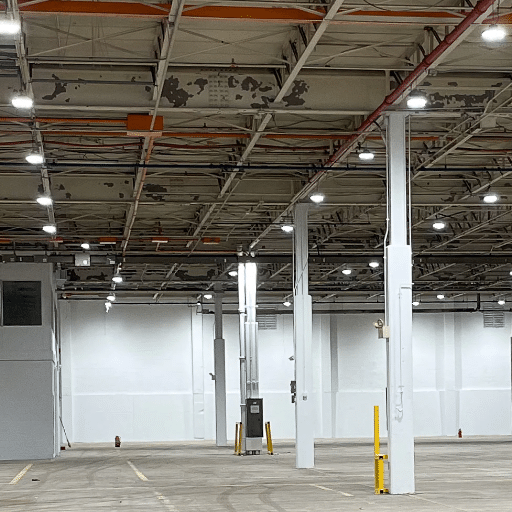
What is High Bay Lighting?
For indeed High-Bay lighting has been designed, although meant for spaces with tall ceilings, spaces which are 20- to 40 feet or beyond. These fittings provide ample visibility in broad and open spaces such as factories, warehouses, basketball courts, and aircraft hangars thus avoiding objective errors. Thus in their being positioned so high, High-Bay lights are engineered to produce maximum efficiency and luminance, seldom employing advanced technologies such as LED, imparting a most light to the maximum surrounding without the consumption of high power.
High Bay LED Benefits
High bay LED lights come with a number of advantages, sending them out to be the first choice for enlightening great volumes of spaces in high-altitude situations. First and foremost is the very high energy cost saving that they bring; that is, they have very low energy demand compared to different old-style lighting options, such as metal halide or fluorescent fixtures. This culminates in low energy charges and diminished carbon footprints. Consequently, the bright effect that LED can offer and its continuous glow will ensure adequate illumination in very large volumes while declining with respect to attempts of keeping up with flickers and dimming through the aging process. Anything over a direct superior lifespan will thus reduce maintenance activities and its costs. High bay LED lights are able to keep indoors safer by producing just the slightest heat and eliminating the need to call for cooling equipment for premises. Durability becomes one weapon next to an array of advanced features that may include dimming and sensors, all working together to make the lights a well-desired and cost-effective solution fit for an array of industrial and warehouse-type settings.
Commercial and Industrial Applications
Uses of high-bay LEDs in various commercial and industrial settings are extensive due to the efficacy and versatility of these lights. Common applications for high bay LED lights are mounting in warehouses, industrial plants, gyms, and retail areas where high ceilings necessitate some strong and even type of lighting. These lights are also energy-efficient and long-lasting, hence they could lessen operational costs within massive facilities. Moreover, providing a dimmable option, motion sensors, and minimal heat output would make them underserviced in temperature-sensitive areas such as cold storage facilities or areas that require minimum energy usage. The high bay LED lights are designed in such a way as to give proper and efficient performance over a wide range of end-use environments.
Types of High Bay Lights

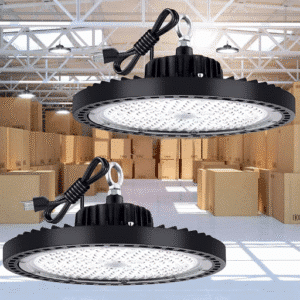
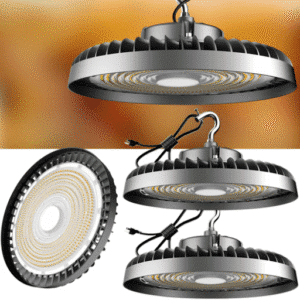
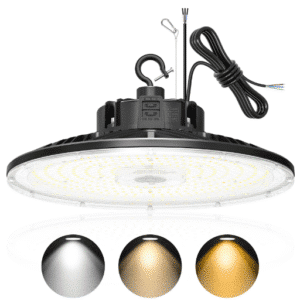
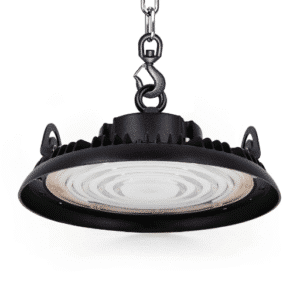
UFO High Bay Lights
UFO high bay lights are circular in shape and very compact, giving them attractive UFO-like designs. Circular-shaped fixtures are drafted from the heat dissipation and having uniform light distribution. Used in industrial and commercial attractions, such lights are marked by high-lumen output and rugged construction. Entirely built with sturdy materials, aluminum alloys are especially useful under tough conditions such as highly varying temperatures, heavy dust, and highly humid environments. Their perfect synchrony with dimming control of smart sensors helps them reduce even more energy and thus make them a suitable cost-effective solution for warehouses, factories, and big business locales. High-performance lighting applications have been designed.
Linear High Bay Lights
Standing for applications where powerful and uniform lighting is necessary across a large area, linear high bay lights have been purposely engineered to deliver efficient and reliable illumination for industrial and commercial purposes. Advanced LED technology, integrated into the systems, maximizes energy savings and minimizes heat output. An exceptionally robust construction makes it perfect for smooth operation under onerous operating conditions, including areas subjected to dirt, moisture, and temperature fluctuations. Also, connectivity to sophisticated dimming systems to advanced smart controls makes energy management more efficient and adjustable. Linear high bay lights constitute the greatest cost-effective solution for promoting productivity and efficiency in numerous mammoth-scale facilities courtesy of easy installation, long service life, and minor maintenance requirements.
Comparison of Different Fixture Types
While comparing lighting fixtures, linear high bays, traditional fluorescents, and LED panel lights serve applications in their own unique ways.
| Fixture Type | Key Features | Best Applications |
|---|---|---|
| Linear High Bays | High output, minimal glare, LED technology, dimming controls, energy efficient, long lifespan | Warehouses, gymnasiums, manufacturing buildings with high ceilings |
| Traditional Fluorescent Fixtures | Large energy consumption, short life span, mercury content, high maintenance costs | Budget-conscious small projects or temporary installations |
| LED Panel Lights | Ultrathin, excellent color rendering, energy efficient, long lifespan, low ceiling optimized | Offices, schools, healthcare institutions with standard ceiling heights |
Linear High Bays
Modern linear high bay fixtures are designed for high output in large indoor spaces, often with high ceilings. For example, these can be found in warehouses, gymnasiums, and manufacturing buildings. Linear high bays deliver optimal lighting by minimizing glare and promoting proper energy usage while extending their life span by construction and manufacture with various LEDs. They also allow dimming controls and advanced options for lighting controls to enable efficient use of energy and adjusting of lighting to whatever is called for.
Traditional Fluorescent Fixtures
While the world had predominantly benefitted from their use up until the preceding years owing to their large energy consumption, short life span, and their large content of mercury and other pollutants, the traditional fluorescent fixtures have now become unpopular for these same attributes. The most heart-cracking effect of this lamp is that it does consume less power and is widely believed to be long-lasting, but because of maintenance costs and associated energy saving control systems, their cost benefit becomes tarnished; hence, why it is seldom used.
Nonetheless, they could suit the budget of small projects or temporary installations.
LED Panel Lights
Not commonly used in many working environments to illuminate classically lit garages or houses of operation which enhance visibility and for glaring into a room, to accomplish lighting distribution recommended for spaces already illuminated at very low levels for general use like offices, schools, and healthcare institutions. Being ultrathin for exceptional drop-ceiling fixture appeal, perfect for office desks, are designed to present the very best features of top-tier energy efficiency, excellent color rendering capabilities, and an awe-inspiring product life span but do not exhibit a total level of versatility that can handle high-ceilinged applications. In other words, these panel lights can be easily replaced by linear high-bay lights.
Data-Based Insights:
Despite the relatively early in power trend in the LED industry, according to the recent data and search trends, it is LED technology that has remained the most glorious because of its efficacy and adaptiveness. High bay LEDs shine in applications requiring high levels of robust and high-output lighting while panel LEDs would be everyone’s choice for places where low-powered LED is preferred for decoration purposes even in low-ceiling environments. From this transition, the use of LEDs in place of fluorescents, sustainability is by some means furthered at a global scale, with their combined impacts on energy use and carbon emissions.
Choosing the Right LED High Bay Light

Factors to Consider for 40-Foot Ceilings
Several important considerations need to be cared for in selecting LED high bay lighting fixtures for high ceiling heights like at 40 feet to receive standard performance and efficiency. The whole thing hinges upon sufficient lumen output split to go in 30,000 to 40,000 lumens, or higher to ensure very practical illumination. Beam angle is a very important concern too; so, a narrow beam angle of around 60 degrees would direct all the light straight down in the tall space with minimal dispersion to the horizontal direction. At first glance, a color temperature K-value will need to be appropriate for the purposes-but, in all, temperatures about 4000K to 5000K could be selected because the light source will get employed for industrial or commercial jobs, enhancing visibility. Energy-saving and compatibility with dimming controls or smart systems ensure savings in operational cost during the unit’s life. Intermittently ruggedness becomes important. Features that are heat dissipators, those that come with high IP rating for dust intrusion and moisture intrusion, with certification from DLC to UL standards: this means that the fixture is able to reliably soldier on as it plays in harsh conditions.
Key Considerations Summary:
- Lumen output: 30,000 to 40,000 lumens or higher
- Beam angle: Approximately 60 degrees for focused downward lighting
- Color temperature: 4000K to 5000K for industrial/commercial applications
- Energy efficiency and smart system compatibility
- High IP rating for dust and moisture protection
- DLC and UL standard certifications
Lumen Output and Efficiency
The lumen output and efficiency of luminaries are important factors for determining whether or not they are functioning up to their true brightness level and would consume less energy. The greater the lumen output of a luminaire, the brighter will it illuminatively be, and efficiency is expressed by lumens per watt efficiency (lm/W), denoting how effectively an ample amount of lumens have been converted into visible light. The best efficiency is obtained by selecting LED fixtures that have high lm/W efficiency. It is recommended to use these, as the LED fixtures keep on reducing the amount of power required to generate light. Similarly, one must consider really judiciously the lumen output that is necessary: over cleverly illuminating will undoubtedly lead to glare and energy wastage, while too little lighting hampers the functions and safety. Approaching the balance between the energy and lumen outputs through assessing the exact needs of the application assures chalking out a good compromise that will provide for both outputs and energy efficiency.
Installation Requirements and Considerations
When LED luminaires are on the agenda for installation, it cannot escape review the expectations of the application, at its electrical apparatus. Chances are, most certainly, that the lights will not work on the existing path-light voltage and control systems. The lighting controls, in addition, need be linked up with the current systems that include dimming. The optimal inclusion and spacing of those fixtures render a more even light and strip away shadows or dark spots. Also important is compliance with local building codes and standards which would take account of safety and perhaps the operation of one’s installed elements. Also, mounting and thermal management are a must to sustain peak performance and life. Finally, one must take into consideration ease of maintenance for minimal disruption occurring during the lifespan of the installation.
Top Recommendations for 40-Foot High Bay Lighting
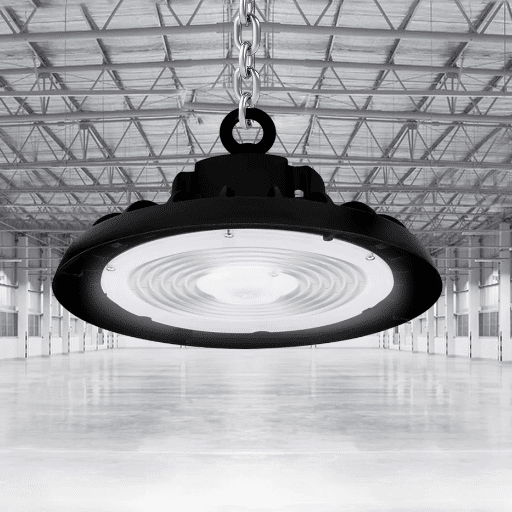
Best UFO LED High Bay Lights
When choosing the best UFO LED high bay lights, consider the rated luminosity, efficiency, and the beam angle in order for the highest illumination required for 40-foot height of the ceiling. High-lumin models that deliver lighting of nearly 30,000-40,000 lumens are best for this kind of height where brightness is exactly in place with the efficient executive properties ensured by passionate electronic power saving. Usually, light fixtures for primary beam-angles ideal for wide light allotment should be between 120° to 130° at least. Consequently, choose lights with color temperatures between 5000K and 5700K for the best clarity, and moreover, lights with a well-conceived heat dissipating system to avoid thermal failure. Ensure that the high bays are entitled to meet any of the appropriate credentials, such as UL, DLC, and CE, and opt for aluminum as a housing material in order to ensure good durability. Here the bonuses: you will want those high bays to go well with an easy-to-screw-down setup, coupled with the lowest needed maintenance, and reliable warranties and incessantly low-capital expenditure on expensive output for the dim-to-warm or sensors for motion.
Top Linear High Bay Lights Products
Make sure you find the best linear high bay lights with high lumen output (for better lighting) and energy efficient (for low power consumption) with low watt rating. Thermal management systems on any model that will be used to prevent overheating is a must. Additionally, oversight must go to the certification by respectable bodies like UL, DLC, or CE to ensure protection and performance standards. Choose the materials for the fixtures, Power in aluminum housing for prolonging the lifetime in challenging environments. Also, consider an approachable ease of installation, negligible maintenance requirement, capability for dimming or use with motion sensors, and a substantial warranty scheme for the most cost-effective operation and long-term savings.
Best Budget-Friendly Options
While discussing affordable solutions for lighting, it is advised to focus on models characterized by the blend of understanding cost and performance rather than simply buying any product that is cheap. Opt only for lights that are Energy Star or ETL certified, because that’s what consumers and industry professionals trust in terms of reliability and efficiency. Keeping in terms of durability, make sure that the lighting fixtures are made from a robust, corrosion-resistant material such as powder-coated steel and hard plastics, ideally, as these may serve in harsh ways. New lights can be bought that are numerous in features and come in at reasonable prices giving options of brightness or motion sensor. Finally, investigate the warranties that they support–good firms should have warranties ranging from three years to five years to save the buyer additional charges related to concerns at least in the long run.
Lighting Design Tips for High Ceilings

Creating Effective Lighting Layouts
While developing effective lighting design implementations for high ceilings, one must consider both functionality and aesthetics. Initiate the process by understanding the intended space activity, which will alter the type and amount of luminaries you need. If general illumination is needed for an area requiring a lot of light, in-ceiling cans or hanging pendants distributed evenly across the surface of the ceiling will achieve the coverage deemed acceptable. To bring variety in visual interests or to enhance architectural details, try some accent fixtures like wall washers or track lights. In the case where variable ambient is needed, supply dimmers on as much lighting as you can. The latter makes it possible for the lighting to be enhanced or decreased correspondingly based on the specific requirement of a particular activity or mood. Again, ensure a high lumen output is emitted by all the sources, with the correct beam angle to reach the floor or to illuminate occupant zone, wherein a higher ceiling would considerably increase the distance between ceiling and floor. Layering ambient, task, and accent lighting will bring balance and efficacy to tall ceiling spaces.
Dimmers and Controls
In the present-day world of lighting design, advancements in lighting can ensure (energy efficiency and specialized ambiance) with the use of dimmers alongside advanced lighting controls. Recent search data shows significantly higher consumer interest in smart lighting systems, with searches for “smart dimmers” and “automated lighting controls” up 40-plus percent in the past two years. Put another way, we paint the picture of an ever-increasing desire for systems that truly offer users full control in regulating luminance and color temperature.
Smart dimmers and hubs allow you to control your lighting comfortably according to your convenience and specification. Such features also support different voice assistants, so you can control lighting on or off, brightness levels, or color hue using voice commands. The advantage is that these technologies will aid in the formation of a more efficient pattern of light-having automatic adjustments with almost no effort or attention required. This will save you a lot; therefore, do ensure that all the lighting in your house is controlled based on such technology.
These solutions help in growing sustainability, easing the pain for future generations as well as hard-earned money, and are all lent to good lighting solutions of today.
Maintenance and Upgradation of the Electronic Lighting Systems
Regular maintenance and regular renovation are indispensable if we are to ensure that your lighting system is both functioning efficiently and lasting as long as it can. Maintenance is more often than not a part of an inspection of routine performance and use related problems, such as flickering, dimming, or irregular functioning of the lights, which may indicate some broken parts or may pertain to some electrical malfunction. Clean the fixtures. Replace your regular bulbs with energy-efficient light-emitting diodes (LEDs): this will ensure proper functioning and at the same time kindle energy efficiency. Upgrading your lighting system could also entail adding more advanced features such as smart controls, programmable timers, or occupancy sensors, all of which will help improve the energy efficiency provided by your system. Being conversant with industry trends and forces regulating compliance guarantees constant improvement and cost-effectiveness; this in turn takes care of your immediate need and future scalability.
References
-
“Use of Programmable Calculators In the Design of Power Plant Lighting”
Published on IEEE Xplore, this paper discusses lighting installations, including high bay lighting, and provides technical insights into achieving optimal light levels.
Read more on IEEE Xplore -
“Lighting of Budd Field”
Another IEEE Xplore publication, this document explores high bay lighting setups in large spaces, including roof and ceiling considerations.
Read more on IEEE Xplore -
“Applications of Fluorescent Lighting”
This IEEE Xplore article examines lighting applications, including high bay lighting, and discusses light flux and ceiling height impacts.
Read more on IEEE Xplore
Frequently Asked Questions (FAQ)
What is a high bay fixture and how does it differ from low bay for 40 foot ceiling high bay?
High bay fixtures are lighting fixtures optimized for very high ceilings—usually 20 feet and beyond—to cater to the concentrated array of light intensity relating to a 40 foot ceiling high bay. UFO and linear high bay led lights offer comparatively better lumen statistical information together with different kinds of beam angles, meant to provide reduced glare in spaces having very high ceiling zones. On the contrary, low bayled lights are dully optimized for lower ceiling heights as well as wide beam spreads; 40 foot ceilings are quite an inefficient zone to experiment with high bays. Therefore, make sure to involve an estimation of the number of high bay lights required as well as the spacing in between them for warehouse area illumination. Also, have the required CRI’s been accounted for, together with mounting heights, to then decide whether led UFO high bays or LED linear high bays should be chosen for your job?
What are the best types of high bay led ufo High Bay Light Bright Lighting for 40 foot ceilings?
Different types of high bay led include led ufo high bay, led linear high bay, and round ufo led designs, each suited to specific layouts and tasks in spaces with high ceilings. UFO high bay (including 150w led ufo high bay) finds use in matters concerning beam direction (downward concentration of light) and closeness to roof structures, preferably retrofitted in place of metal halide schemes, whereas the affectionate light lighting LED linear fixtures for aisle lighting and continuous coverage. Select based upon the location, such as warehouses requiring high-intensity round LED high bay fixtures, especially for racking, versus the linear LED fixture in production floor applications. In certain cases emphasize industrial led high bay lights, high bay led shop lights, and high cri ratings if color accuracy is indeed an issue. Then size is another part, i.e. both spacing between lights and total number of high bay fixtures, to ensure that the target footcandles are met at the task height.
How many high bay fixtures or high bay units are needed for a 40-foot ceiling?
The number of high bay fixtures depends on lumen output, beam angle, desired footcandles at work surface, and the floor layout; a lighting calculation or photometric layout is recommended to determine exact counts. For 40 foot ceilings, you typically use higher wattage or higher lumen fixtures-such as 150w ufo led high bay or other high output led high bay fixtures-to reduce fixture counts while maintaining uniformity. Layouts for high bays in warehouses and industrial spaces must consider aisle widths, racking heights, and areas with high ceilings that require vertical illumination. Use linear high bay led lights for narrower aisles and led round or round ufo led for open areas to optimize spacing between the lights. The professionals, the lighting designers, consider the accommodation of cost, energy consumption, and spacing for the optimization of the best system for commercial lighting or commercial and industrial led high projects.
Can a 40 foot high ceiling have retrofit LED high bay fixtures like in Hyperlite LED and CommercialHigh Bay?
Yes, LED high bay fittings like the Hyperlite LED or the Hyperlite high bay model are widely retrofitted to take over either a fluorescent or metal halide high bay lighting system. The performance of the retrofit options eventually endeavors much toward energy efficiency and long-lasting quality. At 40 feet high, LED lighting lowly decreases lumen depreciation and better color quality over time as fluorescent high bays do. Good LED replacement fixtures should be compared on initial lumen output, lumens-per-watt, and beam distribution in order to ensure maximum floor and shelf levels with the appropriate levels of lighting system. It is a pertinent issue to think about such high output or high col. For color-critical applications, we may consider specialized led industrial and led commercial options with a high CRI. Please also check for compatibility with existing mounting infrastructure and power systems; and plan for replacement counts and proper spacing between fixtures.
What are the advantages of selecting LED high bay light fixtures or LED high bay shop lights for warehouse lighting at 40 ft high ceilings?
The primary benefits of retrofitting 40 ft. facilities with LED high-bay lights and retrofitting maintenance barns and shops with LED commercial shop lights are a noticeable reduction in energy evasion, longer life expectancy, and better controllability for those areas where access is very difficult. LEDs- versus traditional lamps-reduce maintenance costs, providing instant-on performance, dimming capabilities, and other benefits especially useful for high bay environments. In warehouses and other industrial applications, specifying linear LED high bays/lights or LED round hohum leads to the overall applications, rectified lighting distribution in the racking alleyways and reduction of overall wattage. No check in the state. An embodiment of corporate lighting optimization would be to work with occupancy sensors and daylight harvesting, increasing the overall impact on energy savings. Take into consideration other needs like lumen maintenance, high CRI needs, and then go forth and select your led UFO high bay light or high bay linear led light accordingly.