
OSHA factory lighting requirements start at 10 foot-candles for general production areas under 29 CFR 1926.56. Assembly lines need 30 foot-candles for safe operation. ANSI/IES RP-7 recommends 50 to 100 foot-candles for precision assembly and 100 to 200 for inspection. Emergency egress lighting must provide at least 1 foot-candle at floor level for 90 minutes during power failure.
Maria runs safety compliance at an auto parts plant in Michigan. During a programmed OSHA inspection, the compliance officer walked her assembly line with a calibrated light meter. The line averaged 18 foot-candles. That is above the OSHA minimum of 10, so Maria assumed she was safe. Then the inspector reached the quality control station. The reading: 28 foot-candles. The IES recommendation for inspection work is 50 to 100. Maria had designed to OSHA minimums, not task requirements. The result: a serious citation, a 14,200fine,andarushedabatementthatcost14,200fine,andarushedabatementthatcost34,000. A $200 self-audit would have caught it.
Most guides on OSHA lighting requirements are generic or warehouse-focused. Factory production environments have different hazards, task types, and illumination needs than storage facilities. This guide gives you the complete factory-specific compliance framework: foot-candle requirements by manufacturing zone, a step-by-step inspection checklist, the citation response process, and fixture specifications that satisfy both OSHA and ANSI/IES.
For the broader strategic framework on factory lighting design, see our complete guide to (factory lighting solutions).
Key Takeaways
- OSHA mandates 10 foot-candles minimum for general factory production areas; assembly lines need 30 foot-candles for safe operation.
- ANSI/IES RP-7 recommends 50-100 foot-candles for precision assembly and 100-200 for inspection, well above the OSHA floor.
- A single serious lighting violation in 2026 can cost up to 16,550;willfulorrepeatedviolationsreach16,550;willfulorrepeatedviolationsreach165,514.
- Measure at the task plane with a calibrated light meter, not a smartphone app, and document every reading.
- Factory-specific hazards like machinery shadows, crane envelopes, and welding arc flash areas require task-level illumination, not just generic compliance.
The Regulatory Framework for Factory Lighting

OSHA 29 CFR 1926.56: Minimum Illumination Standards
The foundation of OSHA factory lighting requirements sits in 29 CFR 1926.56. This standard establishes minimum illumination levels for construction and general industry work areas. While it technically applies to construction, OSHA inspectors routinely reference it for factory environments through the General Duty Clause. That clause requires every employer to provide a workplace free from recognized hazards, and inadequate lighting qualifies.
OSHA Standard 1926.56, Table D-3, spells out the minimum foot-candles required for specific areas. These numbers represent the legal floor. Falling below them creates immediate exposure to citations and liability.
OSHA 29 CFR 1910.22: Walking-Working Surfaces and Lighting Adequacy
The walking-working surfaces standard is more relevant to factories than many realize. 29 CFR 1910.22(a)(2) requires that walking-working surfaces be maintained in a safe condition. That includes adequate illumination for slip, trip, and fall prevention. In factory environments where workers navigate around machinery, conveyor systems, and elevated platforms, lighting adequacy directly affects compliance with this standard.
Additionally, 29 CFR 1910.212 requires machine guarding to be visible and effective. Poor lighting can obscure guards, increasing the risk of contact with moving parts. A machine that is properly guarded on paper becomes a hazard if an operator cannot see the guard in low light.
ANSI/IES RP-7: Recommended Practice for Industrial Lighting
OSHA sets the legal minimum. The Illuminating Engineering Society (IES) sets the operational target. ANSI/IES RP-7, Recommended Practice for Industrial Lighting, provides task-specific illuminance recommendations that far exceed OSHA minimums. Smart facilities design to RP-7, not to the OSHA table.
RP-7 categorizes manufacturing tasks by visual difficulty: rough assembly, ordinary assembly, fine assembly, and inspection. Each category carries a different foot-candle target. Designing to exactly 10 foot-candles keeps you legal on paper but leaves you exposed to accidents, quality defects, and inspector scrutiny.
Factory Foot-Candle Requirements by Zone
The table below shows the OSHA minimum alongside the IES recommendation for each factory zone. Design to the IES column. The OSHA column is your legal floor, not your target.
| Factory Zone | OSHA Minimum | IES Recommendation |
|---|---|---|
| General production / plant areas | 10 foot-candles | 20-30 foot-candles |
| Rough assembly | 10 foot-candles | 30 foot-candles |
| Ordinary assembly | 10 foot-candles | 50 foot-candles |
| Fine assembly | 10 foot-candles | 75-100 foot-candles |
| General inspection | 10 foot-candles | 50-100 foot-candles |
| Precision inspection | 10 foot-candles | 100-200 foot-candles |
| General machining / CNC | 10 foot-candles | 30-50 foot-candles |
| Precision machining | 10 foot-candles | 75-100 foot-candles |
| Welding / fabrication | 10 foot-candles | 30-75 foot-candles |
| Chemical handling | 10 foot-candles | 30-50 foot-candles |
| Hazardous locations (Class I/II) | 10 foot-candles | 50 foot-candles |
| Packaging / shipping lines | 10 foot-candles | 30-50 foot-candles |
| Loading docks | 3 foot-candles | 15-30 foot-candles |
| Offices / first aid stations | 30 foot-candles | 30-50 foot-candles |
Production and Assembly Areas
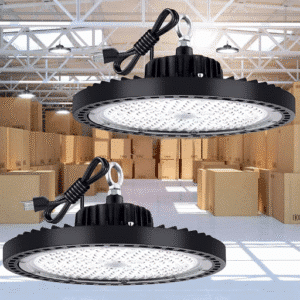
Assembly lines are the heart of most factories. Rough assembly, such as large-part fitting or material staging, needs 30 foot-candles. Ordinary assembly, where workers handle smaller components and read work instructions, needs 50 foot-candles. Fine assembly, such as electronics or small mechanical subassemblies, needs 75 to 100 foot-candles. For a deep dive on production line lighting, see our guide to (high bay lighting for factory) production lines.
Inspection and Quality Control Stations
Inspection stations demand the highest light levels in a factory. General visual inspection needs 50 to 100 foot-candles. Precision inspection, such as solder joint verification or surface defect detection, needs 100 to 200 foot-candles. Color-matching tasks also require high CRI (Color Rendering Index) of 90 or above.
Learn more about precision task lighting in our (precision manufacturing lighting guide).
Machining and CNC Cells
General machining operations need 30 to 50 foot-candles. Precision machining, where operators read fine scales and verify tight tolerances, needs 75 to 100 foot-candles. CNC cells also benefit from low-glare fixtures, since operators frequently look into the machine envelope to verify tool paths and part quality.
Welding and Fabrication Bays
Welding presents a unique lighting challenge. The arc itself produces intense light, but the surrounding work area still needs adequate illumination for setup, cleanup, and inspection of welds. General welding bays need 30 to 50 foot-candles. Precision welding or inspection of weld quality needs 50 to 75 foot-candles. The area around welding bays must also be well lit so that other workers can identify arc flash boundaries and avoid exposure.
Chemical Handling and Hazardous Zones
Chemical handling areas need 30 to 50 foot-candles for safe transfer and monitoring. Hazardous locations classified under Class I or Class II, Division 1 or 2, need a minimum of 50 foot-candles for safety. These areas also require explosion-proof or intrinsically safe fixtures that meet NEC and ATEX standards.
For hazardous environment fixture selection, see our guide to (explosion-proof lighting for factories).
Packaging, Shipping, and Material Handling
Packaging lines need 30 to 50 foot-candles so workers can read labels, verify barcodes, and spot damaged product. Loading docks need 10 to 30 foot-candles, though active loading areas with forklift traffic benefit from the higher end of that range. Forklift operators navigating docks need to see pedestrians, pallet positions, and trailer edges clearly.
How to Measure Factory Light Levels for Compliance

Equipment and Calibration
Use a calibrated illuminance meter, also called a light meter or lux meter. A smartphone app isn’t sufficient for OSHA documentation. Look for a meter that reads in both foot-candles and lux, with a resolution of at least 0.1 foot-candle. Check the calibration certificate annually. A meter that hasn’t been calibrated within 12 months won’t hold up under inspector scrutiny.
Measurement Points in a Factory
OSHA compliance is verified at the task plane. In a factory, task plane height varies by station. An assembly operator working at a bench may have a task plane 36 inches above the floor. A CNC operator leaning over a chuck may have a task plane at 42 inches. A quality inspector using a magnifier may work at 30 inches.
Measure at the actual height where the worker’s eyes and hands operate. Measure at worst-case points, not just the center of the room. Walk under overhead cranes. Stand in the shadow of a press or conveyor. Check the shift-change observation points where supervisors stand to monitor production.
These are the spots an OSHA inspector will test. These are also the spots where citations happen.
Take readings in a grid pattern. In a large production area, measure every 20 to 30 feet. Record the minimum, maximum, and average for each zone. The minimum reading determines compliance, not the average.
Documentation Standards
Keep a written log of every measurement. Include date, time, meter calibration date, meter serial number, and the person who took the readings. Photograph the meter display at each measurement point, especially at the darkest spots. Documentation is your best defense if OSHA ever questions your compliance status.
When OSHA arrived at a Georgia manufacturing plant for an unrelated noise complaint, the maintenance supervisor produced six months of documented light meter readings. The inspector verified two readings against his own meter and moved on in under 20 minutes. Documentation turns a potential citation into a five-minute conversation.
Emergency Lighting and Egress Requirements for Factories
NFPA 101 and OSHA Egress Standards
Emergency lighting requirements come from two sources: OSHA and NFPA. OSHA mandates that exit routes be adequately lit. NFPA 101, the Life Safety Code, specifies the technical details: emergency lighting must provide at least 1 foot-candle at floor level during a power failure, and it must remain operational for a minimum of 90 minutes.
Exit signs must be visible from any point in the exit access. In high-ceiling factories, standard exit signs mounted at 8 feet may be obscured by machinery or racking. Consider supplemental low-level exit marking or larger high-mount signs.
Factory-Specific Emergency Lighting Challenges
High-ceiling factories present a unique challenge for emergency lighting. A standard emergency fixture mounted at 30 feet may not deliver 1 foot-candle at the floor. The inverse square law works against you: doubling the mounting height quarters the illuminance at the work plane. Specify high-output LED emergency fixtures or integrate battery backup modules into your primary high bays.
Machinery can also obstruct exit routes. A well-lit egress path on the drawing board becomes a maze of dark corners when surrounded by presses, conveyors, and storage racks. Walk every exit route during a simulated power outage, not just during daylight with the lights on.
Testing and Maintenance Schedule
Test emergency lighting monthly with a functional test: press the test button and verify that the fixture illuminates. Conduct an annual 90-minute duration test: simulate a power failure and verify that all emergency fixtures maintain output for the full duration. Document every test. Fire marshals and OSHA inspectors both ask for these records.
OSHA Lighting Citation Response and Abatement
Understanding the Citation
OSHA classifies lighting violations as either Serious or Other-Than-Serious. A Serious violation exists when there’s substantial probability that death or serious physical harm could result from a hazard the employer knew or should have known about. Inadequate lighting near machinery, trip hazards in dark aisles, or missing emergency lighting typically fall into this category.
The abatement timeline is typically 30 days from the citation issuance date. Some conditions may qualify for a longer abatement period if the corrective action requires engineering analysis or procurement lead time. You’ll need to request and justify the extension.
The Abatement Process
Immediate temporary measures come first. Deploy portable task lighting, string lights, or battery-powered emergency fixtures in the affected zones. These temporary measures protect workers and demonstrate good faith to OSHA while you plan the permanent solution.
Permanent corrective action requires a documented plan. Identify the root cause. Was the design inadequate? Did fixtures degrade faster than expected? Did new machinery or racking create shadows that the original layout didn’t account for? The corrective action must address the root cause, not just the symptom.
For the follow-up inspection, OSHA will verify that the abatement is complete and effective. Have your light meter readings ready. Show the inspector the before and after measurements. Demonstrate that the corrective action meets or exceeds the standard.
2026 Penalty Structure

Effective January 2026, OSHA civil penalties remain at the 2025 levels adjusted for inflation. The current maximum fines are:
| Violation Type | 2026 Maximum Fine |
|---|---|
| Serious / Other-Than-Serious | $16,550 per violation |
| Failure to Abate | $16,550 per day beyond deadline |
| Willful or Repeated | $165,514 per violation |
A single lighting citation can trigger a broader inspection. Once OSHA identifies one violation, inspectors typically expand the scope. The 16,550 figure is the ceiling for a seriousviolation, but average settlements for lighting-related citations historically settle around 16,550, average settlements for lighting-related citations historically settle around 14,500, depending on case severity and the employer’s compliance history.
Preventing Citations Before They Happe
Self-audit your facility at least annually, and quarterly in high-risk zones. Use the checklist in the next section. Walk the floor with a calibrated meter, take photographs, and document everything. If you find deficiencies, fix them before OSHA does.
When the deficiencies exceed your internal capability, bring in a lighting consultant. A photometric study costs 500to500to2,000 for most factories. That is a fraction of the cost of a single citation. For proactive layout guidance, see our (factory lighting layout design) methodology.
Common Factory Lighting Compliance Mistakes
Designing to OSHA Minimums Instead of Task Requirements
Ten foot-candles is the legal minimum for general production areas. It isn’t enough to read work instructions, verify part alignment, or spot surface defects. ANSI/IES RP-7 recommends 30 foot-candles for rough assembly and 50 for ordinary assembly. Design to the task requirement, not the legal floor. Your workers’ safety and your quality metrics will both improve.
Ignoring Machinery Shadow Zones
Overhead cranes, stamping presses, and conveyor systems cast shadows that the original lighting layout may not have anticipated. Jake runs a fabrication shop in Ohio. His welding bays averaged 22 foot-candles, well above the OSHA minimum. But the grinding station between bays dropped to 6 foot-candles due to an overhead crane shadow. A near-miss incident report triggered an OSHA inspection. Jake upgraded to dual-row linear high bays flanking the crane path. The shadow was eliminated, and uniformity improved from 4.5:1 to 2.8:1.
Neglecting Vertical Surface Illumination
Horizontal foot-candles at the work plane are only half the story. Machine control panels, warning labels, and safety signs are vertical surfaces. A fixture that delivers ample horizontal light may leave vertical surfaces in shadow. Test vertical illuminance at machine controls and exit signs, not just the floor.
Inadequate Emergency Lighting in High-Ceiling Spaces
Standard emergency fixtures are designed for offices with 8- to 10-foot ceilings. In a factory with 30-foot ceilings, those fixtures cannot deliver 1 foot-candle at the floor. Specify high-output emergency units or battery backup modules integrated into your primary high bay fixtures. Verify the output with a light meter, not just the manufacturer’s claim.
Mixing Color Temperatures in Task Zones
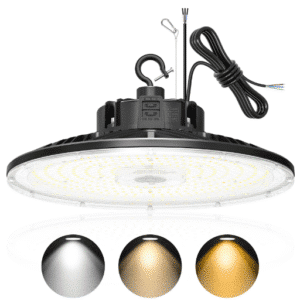
A factory that upgrades one section at a time may end up with 4000K fixtures in one zone and 5000K fixtures in an adjacent zone. Workers moving between the two zones experience visual adaptation delays. In inspection areas, mixed color temperatures can cause color judgment errors. Standardize on one color temperature per task zone.
Selecting Fixtures That Meet Factory Compliance Standards
Certifications to Require
Every fixture in your facility should carry a UL or ETL listing. These are NRTL (Nationally Recognized Testing Laboratory) marks that OSHA accepts as proof of electrical safety. Additionally, look for DLC qualification if you plan to apply for utility rebates. For dusty or damp factory environments, specify an IP65 rating minimum. This protects against dust ingress and moisture.
IP and IK Ratings for Factory Conditions
Ingress protection and impact resistance ratings define how well a fixture survives factory conditions. IP65 is dust-tight and protected against water jets. IP66 handles powerful water jets for washdown areas. IK08 withstands 5-joule impact, adequate for general factory use. IK10 withstands 20-joule impact and is required near stamping presses, forging equipment, and crane zones where swinging loads are a risk.
CRI for Inspection and Safety Sign Visibility
CRI (Color Rendering Index) measures how accurately a light source reveals true colors. For general production, CRI 80+ is the minimum. For inspection, paint matching, and electronics assembly, CRI 90+ is required. Poor CRI can cause inspectors to miss defects that would be obvious under quality light.
Beam Angle and Uniformity
Beam angle controls how light spreads from the fixture. A 60 degrees beam focuses light downward for high-ceiling task areas. A 90 to 120 degrees beam spreads light across a wider area for open production floors. For compliance, uniformity matters more than average foot-candles. IES recommends a uniformity ratio of 3:1 or better, meaning the brightest spot should not exceed three times the dimmest spot. Dark spots create tunnel vision and increase accident risk.
Factory Lighting Compliance Audit Checklist

Use this checklist to audit your facility before OSHA does.
Pre-Inspection Preparation
- Verify light meter calibration is current within 12 months.
- Map the facility into zones: assembly, machining, welding, chemical handling, inspection, packaging, offices, and emergency egress routes.
- Review previous inspection records and citations.
- Notify maintenance that you will need access to all areas.
Zone-by-Zone Audit Steps
- Enter the zone and let your eyes adapt for 30 seconds.
- Measure at the task plane at three to five points per zone.
- Record minimum, maximum, and average readings.
- Photograph the meter at the darkest point.
- Identify shadow zones from machinery, cranes, or racking.
- Check vertical illuminance at control panels, labels, and exit signs.
- Verify emergency lighting function with a 30-second test.
- Note any damaged fixtures, exposed wiring, or missing guards.
Post-Audit Actions
- Compare minimum readings against both OSHA and IES targets.
- Flag any zone where the minimum falls below the OSHA floor for immediate correction.
- Flag any zone where the minimum falls below the IES recommendation for planned upgrade.
- Prioritize corrections by safety risk: machinery proximity, trip hazards, and egress routes come first.
- Set a timeline for remediation and assign responsibility.
- Schedule the next audit.
Linda manages quality control at an electronics plant in Minnesota. Her team was preparing for an ISO audit, and she suspected the QC stations were underlit. The meter confirmed it: 35 foot-candles, below the 50 foot-candle IES minimum for inspection work. Linda switched to CRI 92+ task-integrated high bays over the stations. The new layout delivered 65 foot-candles average with a 0.72 uniformity ratio. Her plant passed the ISO audit with no lighting deficiencies, and inspection escapes dropped 11 percent in the first quarter.
Conclusion
OSHA factory lighting requirements set the legal floor at 10 foot-candles for general production areas. Meeting that minimum keeps you from getting cited, but it does not keep your workers safe. ANSI/IES RP-7 sets the operational target, and those numbers vary by task: 30 foot-candles for rough assembly, 50 for ordinary assembly, 75 to 100 for fine assembly, and 100 to 200 for precision inspection.
Factory environments demand task-specific illumination, not generic foot-candle compliance. Machinery shadows, crane envelopes, welding arc flash areas, and chemical handling zones each create unique lighting challenges that warehouse guides ignore. The OSHA floor applies to every factory equally. The IES target should be calibrated to your specific tasks.
Start with a self-audit. Measure at the task plane with a calibrated meter. Document every reading. Check your emergency lighting. Fix the dark spots before an inspector finds them. The cost of a planned upgrade is always lower than the cost of a citation, an accident, or a rushed abatement.
For the complete strategic framework on factory lighting, from fixture selection to layout design, see our factory lighting solutions guide.
Ready to verify your compliance before OSHA does? Probapro provides complimentary compliance photometric audits for manufacturing facilities. We will measure your foot-candles, identify shadow zones, and deliver a documented report you can present to an inspector. Request your free compliance audit.